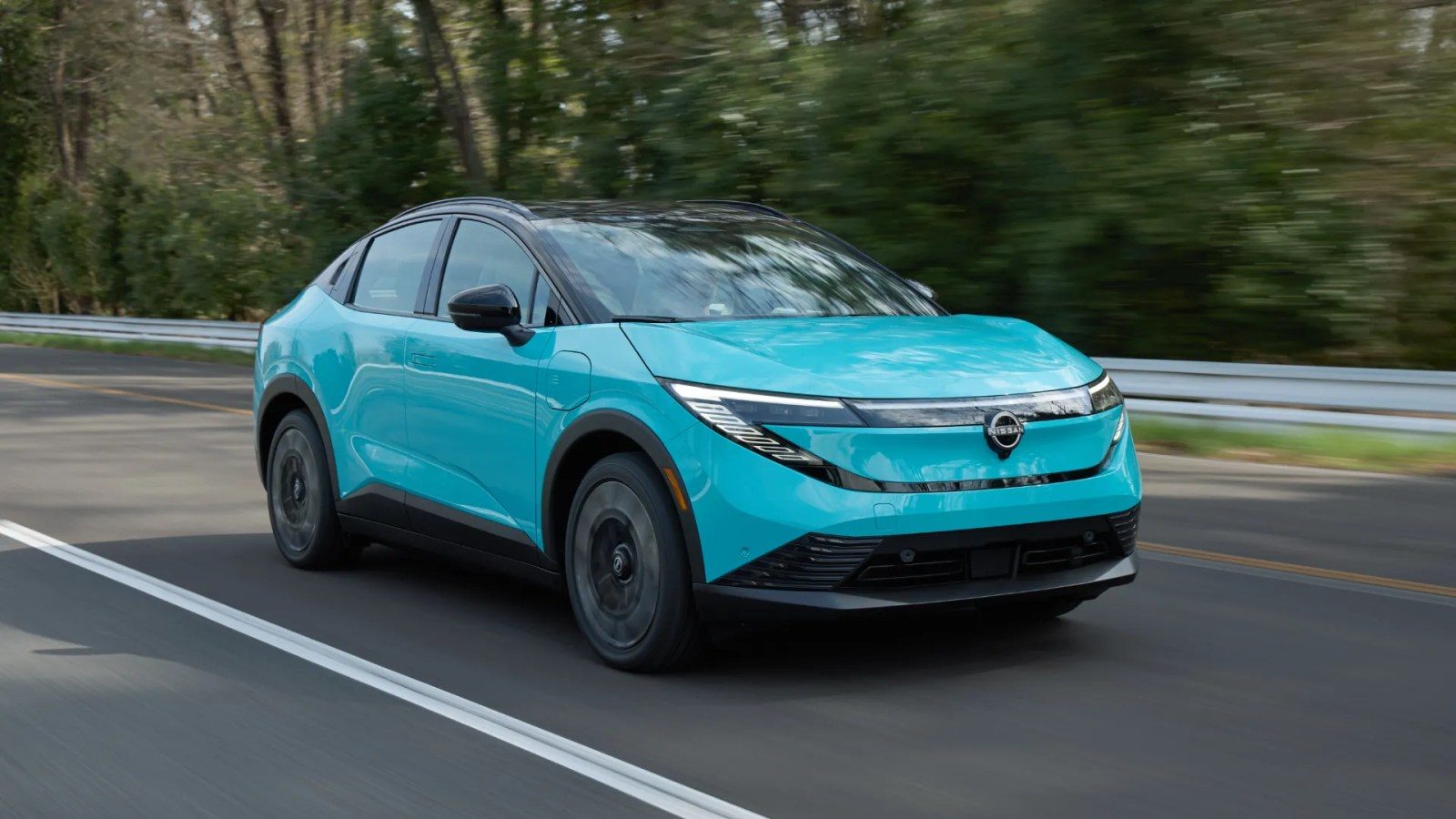

Nissan Motor Co. is considering exporting vehicles built at its joint venture with Dongfeng in China to Canada, leveraging on the recent trade deal inked between Beijing and Ottawa.
According to a Bloomberg report on Tuesday, Chairman of Nissan America Christian Meunier said that the company aims to leverage low-cost EVs manufactured through the Dongfeng partnership across several markets — including Brazil, Mexico, and potentially Canada.
“In Canada, the government has opened the door for some Chinese products,” Meunier stated. “We’re looking at this.”
The executive did not specify which Nissan–Dongfeng models are under consideration or when shipments might begin.
Nissan has established a manufacturing footprint in North America, spanning three major plants in Tennesse and Mississippi, United States.
The Japanese automaker does not, however, assemble or produce any vehicles in Canada.
According to Meunier, 80% of the vehicles sold in Canada come from factories outside of the United States.
Additionally, the company halted production of several models in the US last summer, citing the impact of tariffs.
Nissan saw Canadian auto sales decline by 11.3% year over year in the first quarter of 2026 to 26,947 vehicles.
A Broader China Export Push
The Canadian push is part of a wider strategy by CEO Ivan Espinosa to use China as a global export hub.
Espinosa has said Nissan plans to ramp exports from its Chinese operations to 100,000 units initially, eventually scaling to 300,000.
The first vehicles bound for Latin America will be an electric sedan called the N7 and a pickup truck dubbed the Frontier Pro.
The move reflects a broader shift across the global auto industry, as established carmakers lean on China’s lower production costs and faster EV development cycles to remain competitive against Chinese rivals that have reshaped the market over the past three years.
For Nissan, the urgency is acute.
The company is in the midst of a sweeping restructuring under the Re:Nissan recovery plan unveiled by Espinosa last year.
The plan involves consolidating 17 production plants to 10, cutting approximately 20,000 jobs — about 15% of its global workforce — and targeting 500 billion yen ($3.5 billion) in cost reductions by the fiscal year ending March 2027.
Nissan reported a net loss of 670 billion yen ($4.5 billion) for the fiscal year ended March 2025 — one of its largest losses to date — after years of management turmoil that saw four CEOs in under a decade.
A proposed merger with Honda collapsed after the two sides failed to agree on terms.
In its most recent full-year results, released last week, Nissan said it had made “steady progress” under the Re:Nissan plan, but acknowledged the business environment remains challenging.
The company said it is committed to achieving positive automotive operating profit and free cash flow by the end of FY2026 — excluding the impact of tariffs.
Dongfeng
Dongfeng has emerged as a central partner for legacy automakers seeking Chinese production capacity and EV expertise.
In addition to its long-running relationship with Nissan, the state-owned Chinese company recently expanded its partnership with Stellantis.
The two automakers signed a strategic cooperation agreement to produce new energy vehicles under the Peugeot and Jeep brands at the Dongfeng Peugeot Citroën Automobile Co., Ltd (DPCA) joint venture plant in Wuhan.
The deal involves a combined investment exceeding 8 billion yen ($1 billion). It includes two Peugeot-branded new energy vehicles and two Jeep-branded off-road new energy vehicles — intended for both the Chinese market and global export.
Production is expected to begin in 2027.
The joint venture — originally established in 1992 as one of the earliest Sino-foreign automotive partnerships — had seen its relevance erode as domestic Chinese competitors reshaped the market.
Stellantis has deepened ties with Chinese automakers on multiple fronts under Filosa’s leadership, from expanding its Leapmotor partnership in Europe to engaging BYD on idle factory capacity.
The Nissan–Dongfeng and Stellantis–Dongfeng partnerships illustrate a common thread of legacy automakers exploring joint production with Chinese companies.
On the flip side, Chinese carmakers have also been looking to use Western automakers’ manufacturing facilities in Europe to supply vehicles to the market and avoid tariffs on electric vehicles.
Canada Framework
Canada opened its market to Chinese-built electric vehicles earlier this year after Prime Minister Mark Carney struck a deal with Beijing in January allowing up to 49,000 Chinese-made EVs annually at a 6.1% most-favored-nation tariff rate.
The arrangement replaced the 100% surtax Ottawa had imposed in late 2024, mirroring the duty the Biden administration levied on Chinese EV imports into the United States.
The first tranche of 24,500 import permits opened on March 1.
The annual quota is set to rise to 70,000 by 2030, and the deal includes a clause requiring Chinese automakers to pursue joint ventures or local manufacturing in Canada within three years.
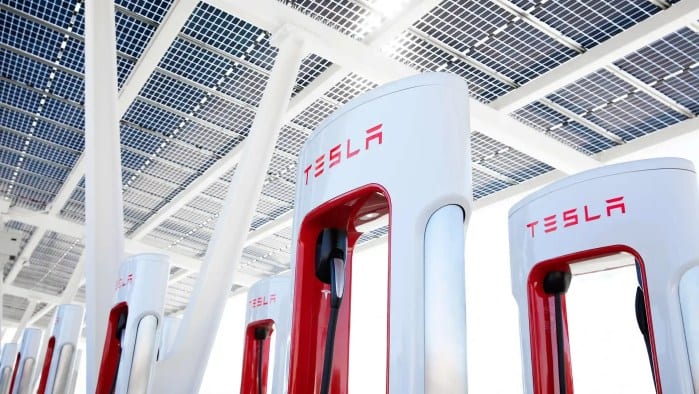
Tesla was the first company to operationalize the new framework.
The company slashed its Canadian Model 3 price to C$39,490 after shifting supply from its Fremont, California plant to the Shanghai Gigafactory, taking advantage of the 6.1% tariff rate — well below the 25% Section 232 duty applied to US-built vehicles entering Canada.
Three major Chinese-headquartered automakers — BYD, Chery, and Geely — are preparing for Canadian market entry by the end of the year, though none has yet shipped vehicles.
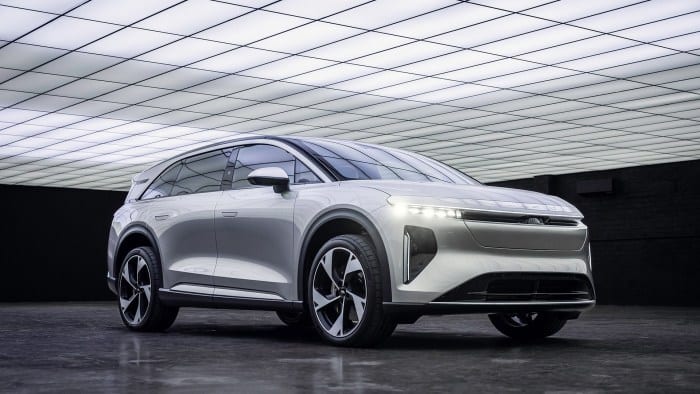
Lotus, a Geely-owned brand, has already shipped the first batch of Chinese-made Eletre SUVs to Canada.
The trade deal has drawn sustained criticism from both the Canadian auto industry and the United States.
Conservative leader Pierre Poilievre has pledged to scrap the quota and ban Chinese software in vehicles.
GM CEO Mary Barra labeled the deal a “slippery slope.”
US Trade Representative Jamieson Greer described the agreement as “problematic” and said Canada may regret it. The United States maintains its own 100% tariff on Chinese-made EVs.
Nissan’s Other China Angles
Beyond Canada, Nissan has also been exploring Chinese partnerships for its UK operations.
Espinosa declined last week to confirm whether Chery and Dongfeng are among the parties in discussions over spare capacity at the company’s Sunderland plant in northeast England — but acknowledged that talks are progressing.
Chery‘s potential involvement would mark the second high-profile use of a former Nissan facility by a Chinese automaker.
Chery reached an agreement to acquire the Japanese company’s Rosslyn plant in South Africa earlier this year.
If Nissan proceeds with Dongfeng-built exports to Canada, it would join a growing list of legacy and Chinese automakers competing for a slice of the 49,000-unit annual quota — a pool that Ottawa may further subdivide to prevent any single company from dominating access.