
XPeng said on Thursday it had partnered with Google Maps to power in-car navigation and support assisted driving in the vehicles it sells outside China.
The agreement unveiled shortly before the company’s L03 launch event in Munich, Germany.
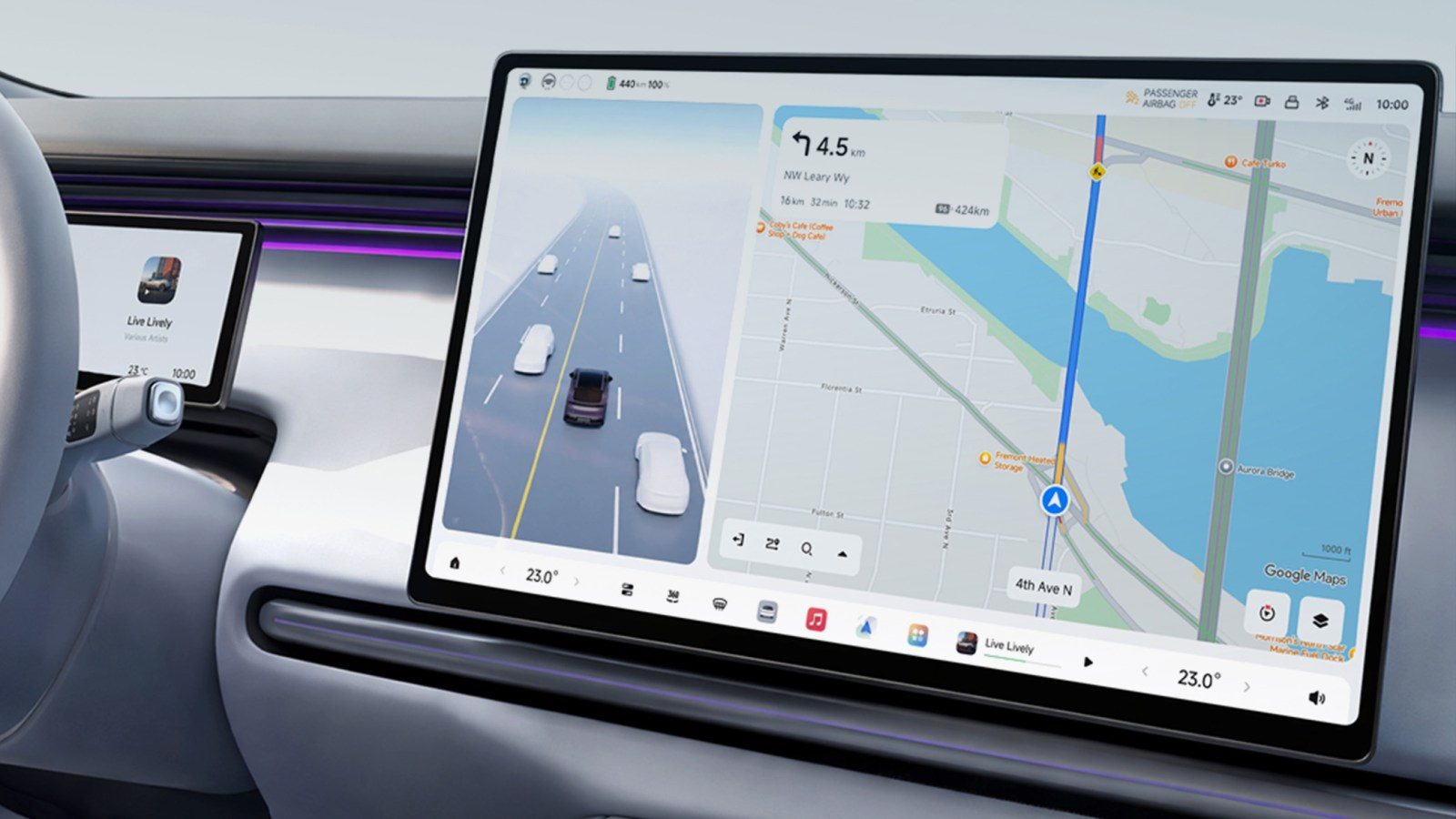
Under the deal, XPeng will build its own navigation system on Google Maps’ Auto software development kit, drawing on Google’s mapping technology while keeping an interface the Chinese company designs itself.
The arrangement also feeds Google’s in-vehicle map data into XPeng‘s driver-assistance stack, both the flagship Next Generation Pilot system known as NGP and the more basic XPILOT ASSIST.
First APAC Automaker on the Auto SDK
XPeng said it is the first automaker from the Asia-Pacific region to ship a vehicle using the Google Maps Auto SDK.
The kit lets carmakers design their own navigation on top of Google’s underlying technology, including traffic-aware routing, place search and energy estimates that account for an EV’s range and charging stops.
Drivers therefore neither download the Google Maps app nor mirror it from a phone, using instead a native XPeng map application with Google’s data underneath.
The interface, map rendering and controls remain XPeng‘s own design, the company said, while the routing, coverage and place information come from Google.
Overseas buyers of the L03 will be the first among XPeng models to receive the integration.
More than two billion people use Google Maps each month.
Fuel for the Self-Driving Push
XPeng has tied its overseas assisted-driving ambitions to the arrangement, arguing that taking NGP abroad depends on map data and navigation instructions the system can act on.
Google’s map data services, folded into the Auto SDK, give the company that foundation for a phased international rollout of its advanced driving software.
Founder and chief executive He Xiaopeng said this week that XPeng will bring NGP, powered by its second-generation Vision-Language-Action model, to Europe in early 2027, after rolling the system out across its Ultra models in China from March.
Xianming Liu, who heads XPeng‘s General Intelligence Center, said the software crossing to Europe is identical to the Chinese version.
“The same model, from China to Europe,” Liu wrote.
Liu said the team had spent recent days running the L03 with the system engaged on public roads in Munich, days after EV showed a camouflaged L03 carrying test decals through the city center.
He Xiaopeng framed the tie-up as a base for more than navigation, saying XPeng wants to bring its robotaxi fleet, running the same foundation model, to Europe through local partners.
The chief executive said the company had been testing on European roads for some time, with what he called positive results.
European Presence
XPeng already operates in 28 European countries and set a German monthly sales record for a fourth straight month in June, registering 922 vehicles in the region’s largest car market.
The company assembles the G6, G9 and P7+ from kits at Magna Steyr’s plant in Graz, Austria, and He Xiaopeng said a fourth model would start there soon, without confirming whether it would be the L03.
A China Proof Point
XPeng carries a domestic milestone into the European push.
Liu said the second-generation VLA system had reached a 50.4% share of assisted-driving mileage in China after nearly six months, which he described as the first time smart driving had passed human driving by total distance at fleet scale.
The company has licensed the same stack to Volkswagen, the first foreign automaker to adopt it, and has put its GX-based robotaxi into production in China on the same camera-only foundation.
XPeng delivered 40,126 vehicles in June, its strongest month of 2026, and is targeting 550,000 to 600,000 global deliveries this year as overseas sales hit a record 19.0% of shipments in the first half.