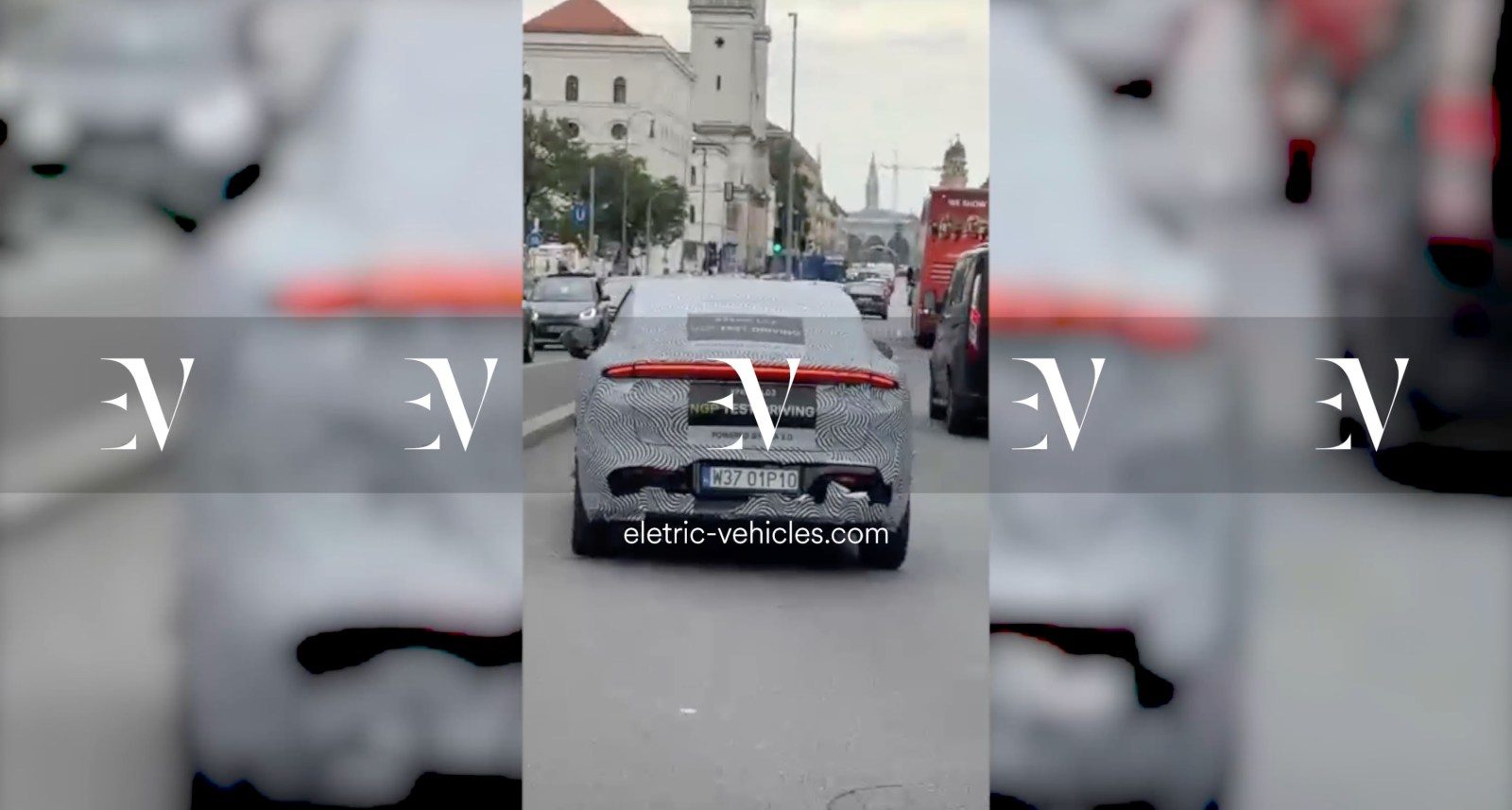

XPeng has been filmed testing its assisted-driving system on public roads in Germany, three days before the Guangzhou-based company stages the global launch of the vehicle in the same city.
Video obtained by EV on Monday shows a camouflaged XPeng L03, the first sport utility vehicle (SUV) under the cheaper series, driving through the center of Munich.
The car was fully wrapped, but the rear section carried the wording “XPeng L03 NGP [Next Generation Pilot] powered by VLA 2.0,” a reference to the company’s assisted-driving features underpinned by its second-generation Vision-Language-Action (VLA) system.
Watch the full video of the public road validation and testing below.
He Xiaopeng, founder and chief executive of XPeng, recently said the company plans to introduce its VLA technology to international markets beginning in 2027, alongside multilingual in-vehicle voice interaction capabilities.
A camouflaged L03 had already been spotted road-testing in Munich weeks earlier, but the Monday video is the first to show the car carrying test-driving decals for the assisted-driving stack itself.
A Test Run Days Before Launch
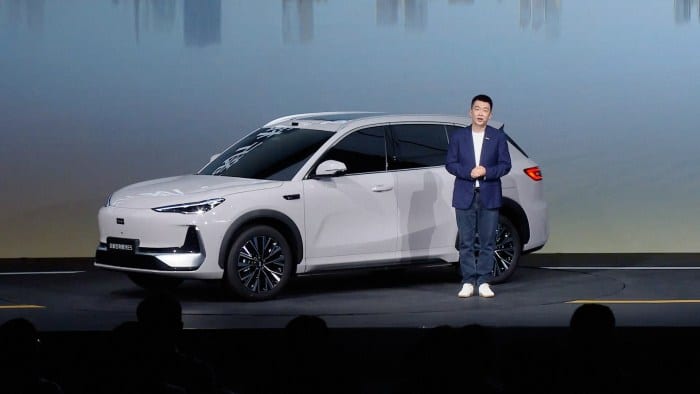
The spotting comes three days before XPeng hosts a brand and product launch event on July 16 at which the L03 will make its global debut, in what the company describes as its first model to go on sale simultaneously in China and Europe.
Founder and chief executive He Xiaopeng has said XPeng chose Munich for its first formal global launch because Germany is where the auto industry was born, and the company has said the L03 will reach 64 countries and regions this year.
He Xiaopeng first signaled the MONA series would reach Europe at the IAA Mobility show in the same city in September 2025, making the Munich launch the culmination of a plan nearly a year in the making.
In a post shared across social platforms on Monday, XPeng wrote that “a new chapter in global mobility begins,” adding that “smarter, easier, and safer journeys await.”
The same post carried teasers for the company’s flying car and its IRON humanoid robot, the non-vehicle products that sit alongside cars in the group’s self-styled physical-AI strategy.
The System Under the Wrap
Equipped with three XPENG Turing AI chips in its Ultra variant, the L03 achieves 2250 TOPS of total computing power.
Both support the second-generation VLA system, a camera-only approach that forgoes lidar and high-definition maps, the same architecture the company is taking global in 2027 after the United Nations cleared its first framework for automated driving.
The vision-only path mirrors the strategy Tesla has pursued with its Full Self-Driving (FSD) software, and the L03 brings that class of hardware into a vehicle that opened pre-sales in China from 143,800 yuan ($21,200).
The approach has drawn an outside endorsement, with Volkswagen Group having agreed to adopt XPeng‘s VLA 2.0 as the first external customer for both the software and the underlying Turing chip, a deal the company has cast as validation of a stack it developed in-house.
Bringing the L03 to Germany also anchors a wider push, with XPeng having confirmed the Mona rollout would begin in Europe from July with a premium SUV to follow, the company’s managing director for the UK and Europe, Elvis Cheng, told a London summit in May.
The company already operates in 28 European countries and assembles the G6, G9 and P7+ from kits at Magna Steyr’s plant in Graz, Austria, where Cheng has said capacity is no longer sufficient, prompting talks with shareholder Volkswagen Group and other partners about a second European site.
Where the L03 will be built for Europe remains unconfirmed, though the Graz plant is the most likely near-term option, and pricing on the continent is expected to land well above the Chinese figure while staying below the G6.
From Assisted Driving to Robotaxis
The Munich test lands days after Xiaopeng completed the company’s first end-to-end robotaxi ride in Guangzhou and opened internal beta testing.
The robotaxi, built on the GX platform and running four Turing chips for about 3,000 trillion operations per second, uses the same camera-only VLA 2.0 foundation as the passenger cars, a shared base the company says lets fleet and consumer software improve together.
He Xiaopeng described himself as the first user in the closed beta and said the program had reached a working end-to-end service in eight months, a pace he called faster than the company expected, with passenger pilots due in the second half of 2026 and driverless operation targeted for early 2027.
The Stakes for the L03
The L03 arrives as XPeng leans on new models to sustain a recovery, after the company delivered 40,126 vehicles in June, its strongest month of 2026.
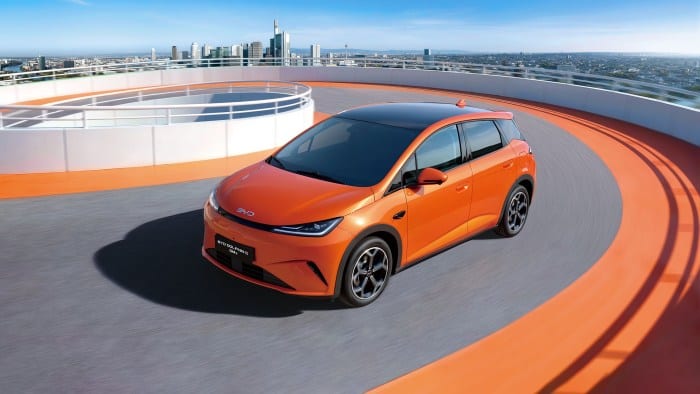
The MONA line has carried the company’s volume since the M03 sedan launched in August 2024 and became its best-selling model, and the L03 extends that formula into the larger SUV segment while doubling as the vehicle that introduces XPeng‘s driving software to European buyers.
XPeng is targeting 550,000 to 600,000 global deliveries this year and aiming to double its overseas sales to one million a year by 2030.