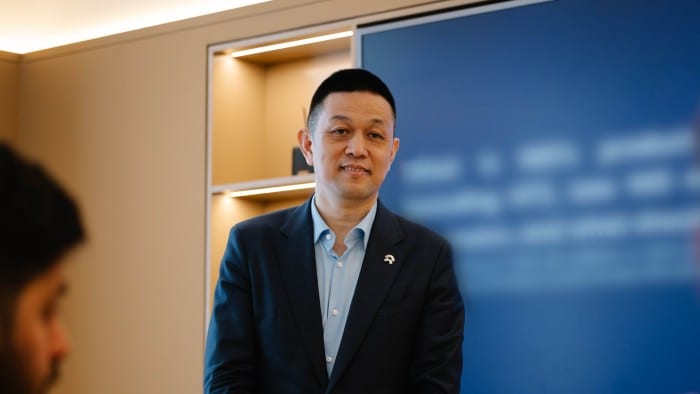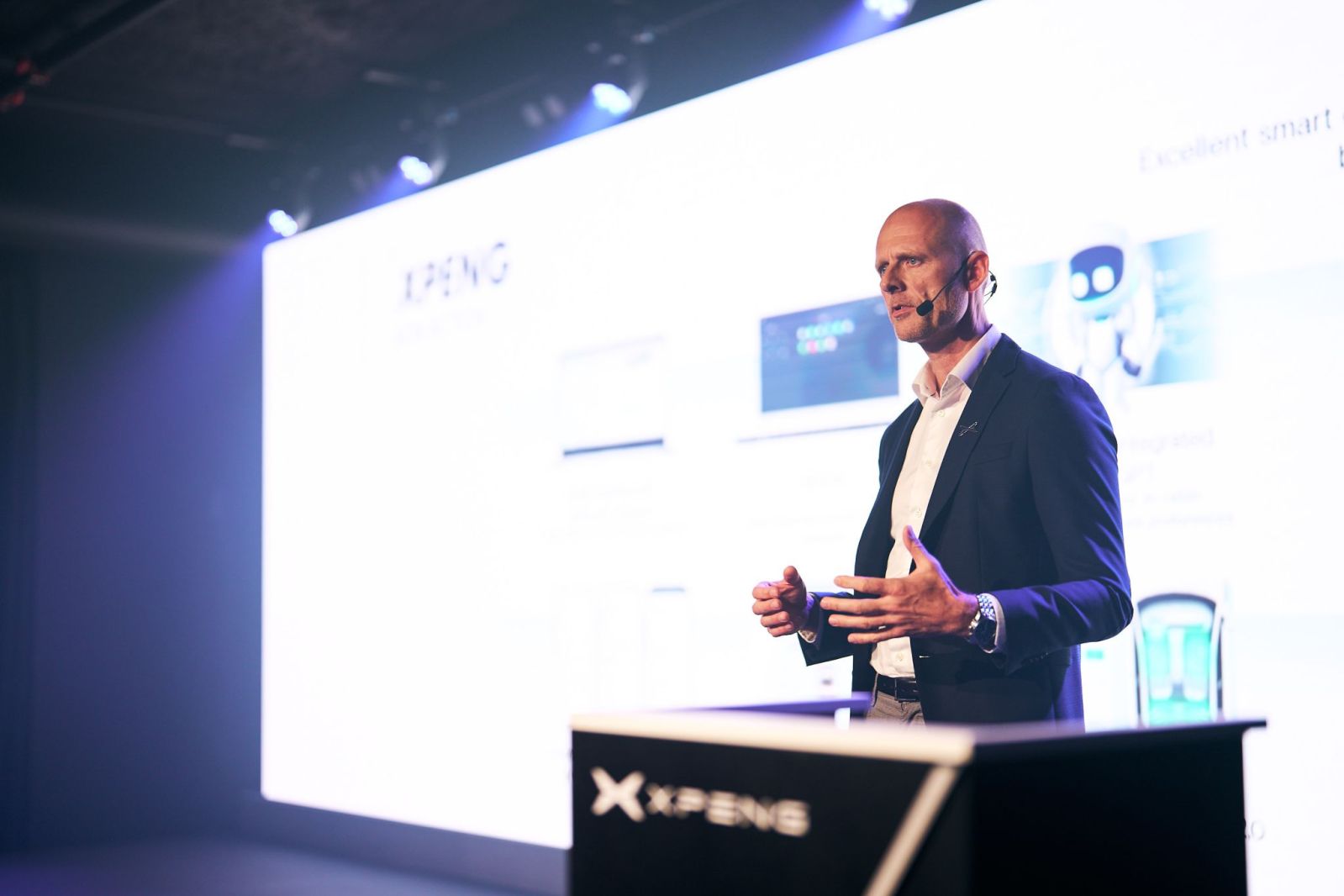

Xiaomi has appointed Jens Olsen as Head of Nordics, Central & Eastern Europe, hiring one of XPeng’s most senior European executives as the Beijing-based tech giant prepares to enter the continent in 2027.
“I’m happy to announce that I joined Xiaomi Auto Division, as Head of Nordics, Central & Eastern Europe,” Olsen wrote on LinkedIn on Friday, describing the role as a new “0 to 1” journey with the company.
He joins Xiaomi’s auto division from XPeng, where he served as Managing Director for Northern Europe from October 2025 until this month.
He announced his exit from XPeng in a separate post, writing that he had decided to leave and describing close to five years of building the brand in the region.
Olsen previously held the position of Executive General Manager for Northern Europe from February 2024 to August 2025.
Before joining XPeng, Olsen spent close to two decades in the traditional automotive industry.
He led Toyota Danmark’s sales operations for nearly 18 years, overseeing indirect retail turnover exceeding 1.5 billion DKK, according to his LinkedIn page.
He then moved to Ford Motor Company as Head of Passenger Car Business in Denmark from January 2020 to October 2021, before joining XPeng as Managing Director for Denmark in late 2021.
XPeng’s Nordic Track Record
Olsen’s departure comes as XPeng rides a sharp growth curve across the markets he helped build.
Denmark became the automaker’s third overseas market to surpass 10,000 cumulative deliveries in August, doubling the 5,000-unit milestone reached in July last year.
XPeng entered Denmark in April 2022 and needed about three years to reach the first 5,000 units.
The second 5,000 took about 13 months.
Norway, where XPeng began selling the G3 SUV in December 2020, crossed the 10,000-delivery threshold in May.
Israel had already passed the same mark by the end of the first half.
Across Europe more broadly, XPeng registered more than 4,619 vehicles in August alone — more than four times the 1,075 units recorded in the same month a year earlier, according to preliminary data compiled by EV from national registration authorities.
Germany led all markets for a fifth consecutive month at 1,163 registrations, a 311% year-on-year increase. Norway posted 795, up 249%. Denmark added 521, a 922% jump from the prior-year period.
The Guangzhou-based automaker doubled its global market presence from about 30 countries to 60 in 2025, fulfilling a target set by founder and CEO He Xiaopeng at the start of that year.
XPeng delivered 45,008 vehicles outside China in 2025, a 96% increase year over year. In 2026, the company is targeting a further doubling of overseas sales and set an internal goal of 550,000 to 600,000 total deliveries.
Xiaomi’s European Groundwork
For Xiaomi, the appointment of a seasoned Nordic automotive executive signals that the company is moving past high-level statements about European ambitions and into operational hiring.
Xiaomi confirmed at IFA Berlin on September 3 that it plans to start selling electric vehicles in Germany and other European markets in 2027.
At the consumer electronics trade show, the company signed memoranda of understanding with eight German automotive dealer groups, including Emil Frey Germany, LUEG Mobility, Ernst Dello, and Penske-Jacobs Innovation, established names in premium-brand retail across the country and beyond.
The other four are Autohaus Dinnebier, Fett & Wirtz Automobile, Hahn Automobile and SPT Avior.
The agreements are non-binding and Xiaomi has not yet disclosed which models will be offered, local pricing, or a specific delivery timetable.
Founder and CEO Lei Jun has said overseas sales will not begin until the second half of 2027.
Xiaomi opened its first overseas R&D and design center in Munich in September 2025, staffing the facility initially with about 50 employees focused on high-performance vehicle projects, EV technology development, and design adaptation for European standards.
The centre is led by Rudolf Dittrich, a former BMW manager, and EV reported its existence in April 2025, months before the official opening.
Yu Liguo, Vice President of Xiaomi Auto and head of its international business, said at the Berlin event the company is committed to long-term investment in the region.
The company told IFA it had delivered more than 700,000 vehicles in China since its first model, the SU7 sedan, reached customers in March 2024. Lei Jun put the cumulative total above 800,000 at the SkyNomad launch four days later.
Xiaomi delivered 30,153 vehicles in August, down 17.15% year on year and its second consecutive monthly decline, according to China Passenger Car Association data.
That left it with 246,475 units through eight months, or 44.8% of its full-year target of 550,000, and a required average of about 75,900 a month for the rest of the year.
Tariff Exposure Across the Lineup
Xiaomi’s European push would expose its full vehicle range to the EU’s countervailing duties on Chinese-made electric vehicles.
The scope is the point. The October 2024 regulation covers new battery electric vehicles propelled solely by electric motors, including range-extender configurations where the engine recharges the battery rather than driving the wheels.
Conventional plug-in hybrids fall outside it and pay only the standard 10% import duty. That means Xiaomi’s recently launched SkyNomad EREV series, its first models to use a combustion-powered range extender, would face the same tariff burden as its pure-electric SU7 and YU7.
Xiaomi did not participate in the European Commission’s original anti-subsidy investigation, which opened in October 2023 — months before the company delivered its first car.
As a non-cooperating exporter, Xiaomi would likely face the highest residual duty of 35.3%, on top of the standard 10% import tariff, unless it negotiates a separate arrangement with Brussels.
Brussels and Beijing have been discussing minimum import prices as an alternative to the duties since 2025, and the Commission issued guidance on how it would assess such offers in January, though no mechanism has replaced the duties.
The SkyNomad series launched in China on September 7 with four versions priced between 209,900 and 299,900 yuan ($31,300 to $44,700): the five-seat N70 Pro and N70 Max and the seven-seat N90 Max, alongside an N90 Max Explorer Edition camper variant.
The line uses a 1.5-litre range extender with either a 52 kWh lithium iron phosphate or a 76 kWh ternary battery.
Xiaomi said the lineup secured more than 10,000 locked-in orders within four minutes of launch, and deliveries began on September 12 across 75 Chinese cities.
Xiaomi has not disclosed which models it plans to bring to Europe first, nor whether the EREV lineup will be part of its initial offering.
The Commission has also been preparing to extend the duties to plug-in hybrids from China, Handelsblatt reported in June, after Chinese brands pivoted to PHEV exports. No such duty has been imposed.
Olsen takes the role as Xiaomi prepares to expand its European dealer partnerships beyond Germany ahead of the planned 2027 launch.