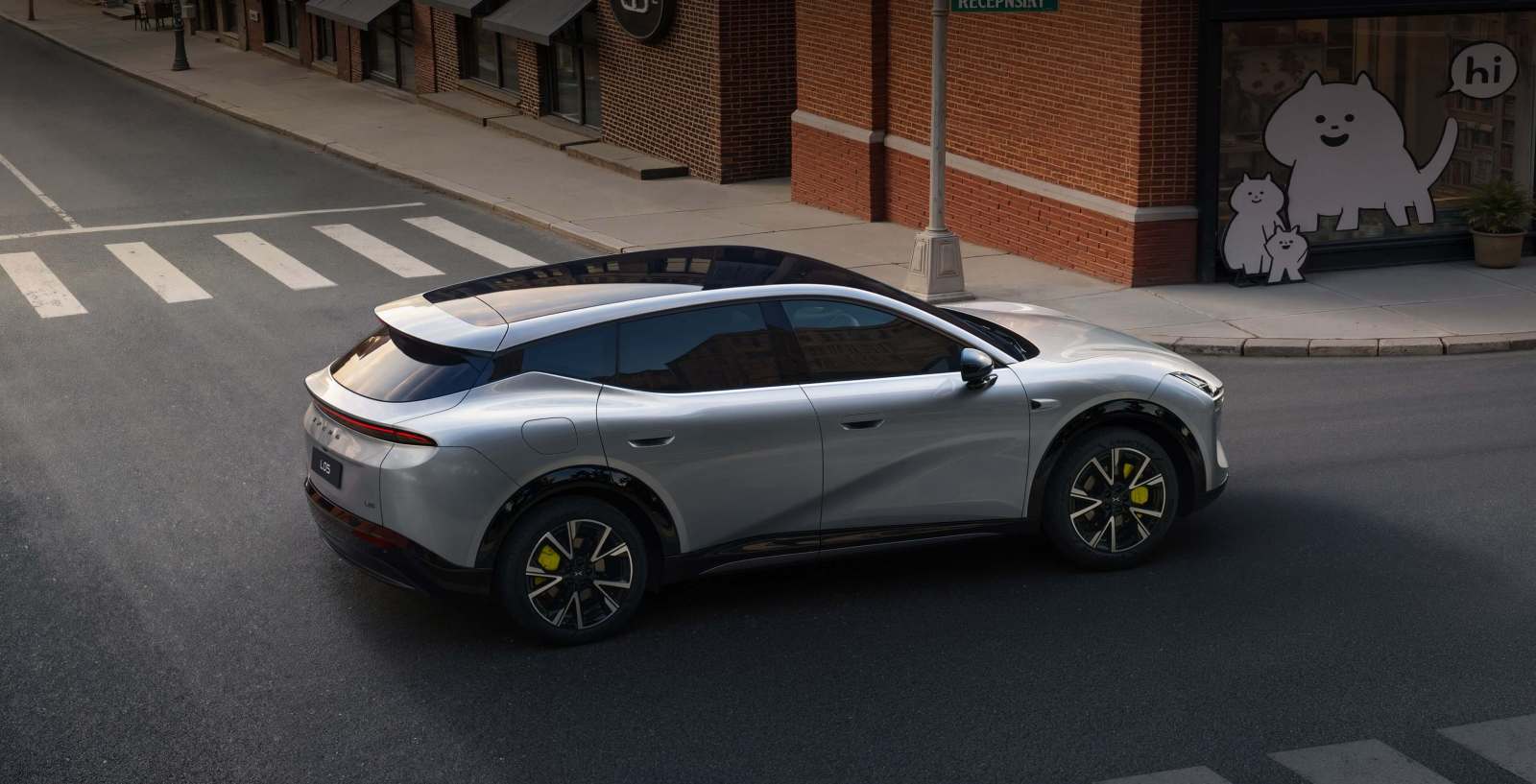
XPeng invited EV to be among the first news outlets to ride in a vehicle running its second-generation Vision-Language-Action (VLA) system on Friday, taking the assisted-driving software onto the busy streets of Munich months before a planned European launch.
The drive, in the early afternoon before rush hour, was the first time the Guangzhou-based automaker had allowed outside testers to experience the system, which powers its Next Generation Pilot, or NGP, feature.
XPeng‘s founder and CEO He Xiaopeng said earlier this week that the comapny plans to roll the technology out to European customers in early 2027.
The test took place in Munich, where XPeng established a research and development (R&D) centre earlier this year with Product Development member Stephan Schneider seating behind the wheel.
A day earlier — and also in Munich — the company launched its L03 coupe SUV at prices starting around €35,000.
Munich’s Tricky Streets
The Bavarian capital is a complex proving ground for assisted driving.
Trams run down the middle of some streets, leaving little room between the rails, the passing trams and the cars alongside them.
Intersections throw together cyclists, Lime scooters, pedestrians and other traffic in ways that demand a high level of development.
XPeng‘s team set the route, which ran along streets limited to 30 kilometres per hour, and others capped at 50.
The company had already been filmed testing the system on Munich’s roads in the run-up to the L03 launch, with Friday marking the first external rides.
How the System Drove
In a city thick with bicycles, it kept its distance, holding back behind riders and pulling past only once it had a clearly safe margin, threading the tight gaps between cars, trams and bikes without fuss.
The system did not make any hesitant turns or face blackout moments, which would force a disengagement by the safety driver.
Where it fell short was in reading one of the traffic lights.
The VLA 2.0 was slow to register a signal that had turned green, because the light sat high above the car rather than directly ahead, outside the cameras’ best line of sight.
The lapse could have been avoided had the car stopped a little further back, far enough to keep the light in frame.
A 2027 European Launch
XPeng will bring the software to Europe in early 2027, founder and chief executive He Xiaopeng said on Tuesday, days before the L03’s regional launch and as the company steps up its challenge to Tesla‘s Full Self-Driving in the region.
He said XPeng had “been testing on European roads for quite some time and results are pretty positive,” and that NGP, powered by VLA 2.0, would follow its rollout in China.
The system reached Chinese customers across XPeng’s Ultra models in March, starting with the P7, G7 and X9.
Exactly which cars will get it in Europe next year is still being decided.
The L03 is confirmed, but XPeng says the rollout to other models depends on their computing power, and it has not said which of them will offer the feature in 2027.
Widening the Lineup
XPeng will now escalate its European testing while broadening the range it plans to sell in the region.
In recent months it has announced the X9 minivan, the L03, and the P7 in Europe.
The G9L has not yet launched in China, and EV has already seen it road-testing earlier on Friday near XPeng‘s Munich centre, the hub for adapting the software to European roads and driving styles.
XPeng already sells in 28 European countries and set a German monthly sales record for a fourth straight month in June.
How VLA 2.0 Works
The system runs the Vision-Language-Action model, which XPeng first showed in November 2025.
The design feeds camera images straight into driving decisions, dropping the intermediate language step of earlier architectures, a change the company says cut response times below 80 milliseconds and lets the system generalise to new cities without re-engineering.
XPeng says the software was trained on nearly 100 million clips of difficult driving, largely from Chinese roads, with a companion model handling scene reasoning and the multilingual voice control planned for export markets.
Cameras do the work, with radar and ultrasonic sensors kept as backup, and the software runs on XPeng‘s in-house Turing chips, a single chip on the L03’s Max trim and a pair, for 1,500 TOPS, on the Ultra SE.
Like Tesla, XPeng forgoes LiDAR and HD maps.
Racing Tesla
XPeng has made Tesla its explicit benchmark, and has claimed VLA already beats FSD on China’s narrow roads.
Both charge for the software, though XPeng bundles its system into the vehicle price while Tesla sells FSD by subscription at 9 a month in the US and €99 in Europe.
Tesla has itself been rolling out a supervised version of FSD in Europe, and the version it offers in China remains narrower than its American one.
Volkswagen has agreed to become the first outside customer for VLA 2.0 and the Turing chip, the first time a major Western carmaker has adopted Chinese-developed autonomous-driving software.