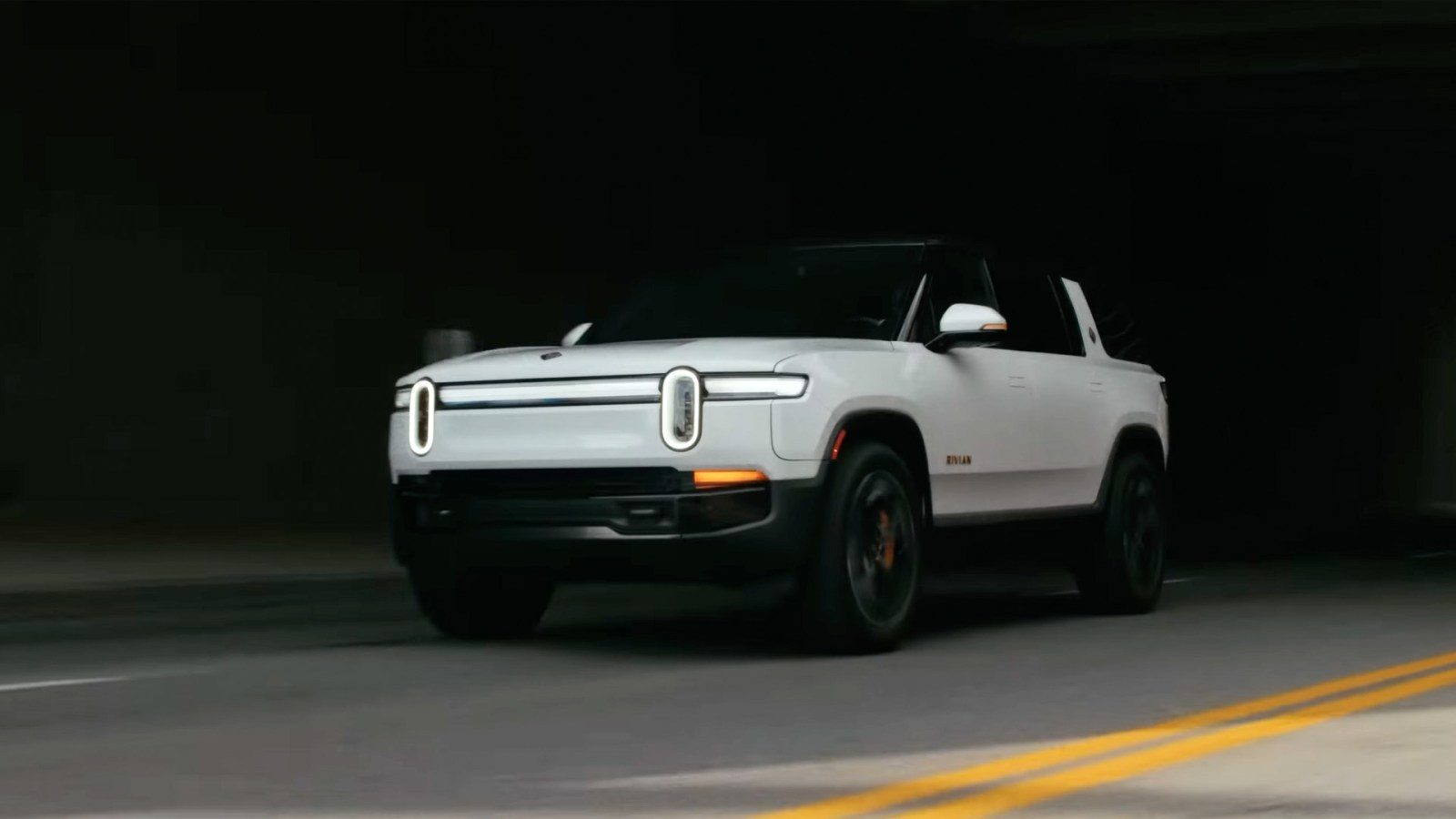

Rivian has filed a new recall covering 3,829 additional R1T and R1S vehicles, after determining that the same turn signal defect it encountered last year was never fully contained by its supplier.
The recall, filed with the National Highway Traffic Safety Administration (NHTSA) on August 6, is formally an expansion of 25V-387 — first issued in June 2025, with repairing first started in September.
The notice affects 3,204 model year 2025-2026 R1S units built between June 12, 2024 and May 26, 2026, plus 625 model year 2025-2026 R1T units built between October 1, 2024 and March 19, 2026.
Rivian estimates that 0.6% of the total could actually have the defect.
According to the filing, “one or both front turn signal lamps may not illuminate and flash,” which suggests the vehicles may not fulfill the requirements of FMVSS 108 — the federal standard covering lamps, reflective devices, and associated equipment.
The EV maker acknowledged the risk that “diminished front turn signal lamp performance may cause reduced awareness of the vehicle’s intent to turn for road users in front of the vehicle,” which “may increase the risk of a crash.”
As with the original recall, Rivian says it is “not aware of any crashes, injuries, or fatalities related to this condition.”
Drivers whose turn signal fails will see a message on the display reading “Turn signal lights not working. Service it soon,” paired with double-speed blinking and turn signal sounds from the working side.
Supplier Issue
The bigger issue is what happened between the two filings.
Rivian‘s chronology tells NHTSA that from June 2025 to July 2026, the company “continued to monitor field performance and identified 17 instances of turn signal failure that appeared identical to the condition of” the original recall.
Further investigation found the failures were “a result of the same condition occurring in turn signal supply that was not properly contained by the supplier.”
That supplier is Myotek, a Tier 1 supplier based in Farmington Hills, Michigan, that also produced the parts behind the original recall.
Rivian‘s filing states the newly added vehicles “may have been built with parts that were not properly quarantined by the supplier,” which suggests that some of the defective turn signal lamps kept making it onto the assembly line well after the company believed the bad batch had been isolated.
On July 31, Rivian decided the additional 3,829 vehicles needed to be folded into the existing recall.
NHTSA, however, asked Rivian to file the expansion as its own separate report rather than amend 25V-387.
The company will inspect and, where needed, replace the front turn signal lamps with parts that meet current production specs.
Notification letters go out on or before September 29, and the affected VINs become searchable in NHTSA’s database on August 31.
The filing lists “Do Not Drive” and “Park Outside” among its consumer advisories.
Rivian’s Quality Issues
The turn signal expansion lands amid a broader stretch of scrutiny over Rivian’s build quality, as the company ramps up production of the R2 SUV.
The model has already generated several quality complaints by owners — spanning paint mismatches, a bugged adaptive-headlight feature, a wrong-color bumper that scrapped a delivery, a battery communications module holding up handovers, and, most recently, a buyer who documented camera glitches, distorted call audio, and a blown subwoofer.
None of the R2 reports has produced a formal recall so far, and Rivian says nothing inside the battery pack’s cell volume requires service.
A source familiar with the matter exclusively told EV that layoffs late last year have directly impacted pre-delivery inspection quality now affecting these builds.
In May, NHTSA opened a preliminary investigation into 114,922 R1S and R1T units over rear toe links that may separate while driving, after two owner complaints described the component failing mid-drive and sending vehicles swerving across multiple lanes, with one resulting in a collision.
The probe followed a January recall of 19,641 R1 vehicles tied to the same joint, and regulators are now examining whether the failures reach beyond cars touched by the earlier faulty repair procedure.
Lucid’s Supplier Issues
Rivian isn’t the only EV maker whose supplier problems turned into a public recall this year.
Lucid Motors went through a comparable episode with its Gravity SUV in mid-February, which led to the halt of deliveries — after discovering a defective middle seat component that needed to be swapped out before vehicles could reach customers.
The disruption ran for 29 days, according to then-CEO Marc Winterhoff, and stemmed from an unauthorized change made by Lucid‘s seat supplier.
That change resulted in improperly welded seatbelt anchors on Gravity units built between December 2024 and February 14, 2026, which led Lucid to recall 4,476 vehicles.
The recall hit nearly all Gravity vehicles produced until then.