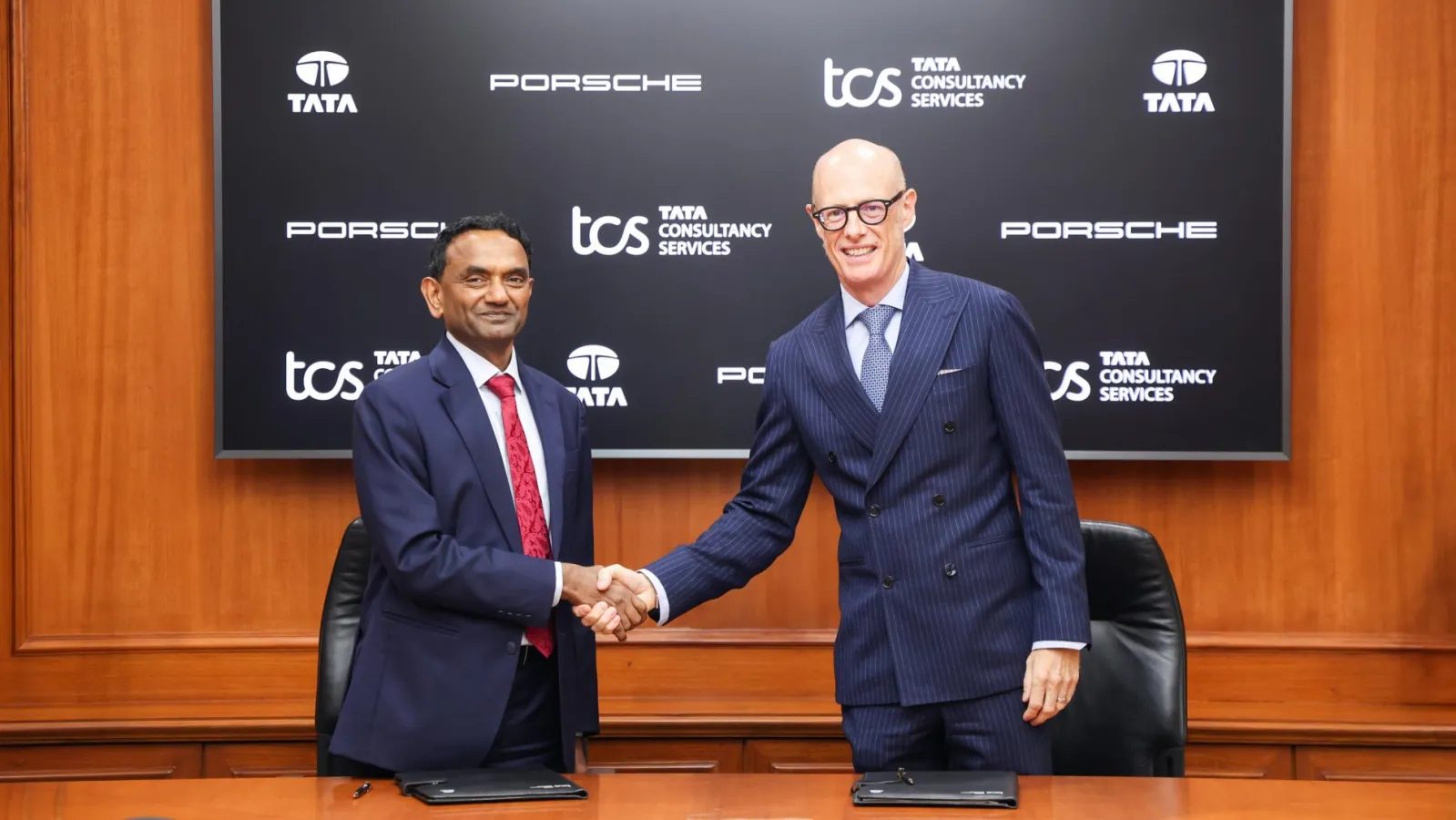

Porsche AG agreed on Monday to sell its management and IT consultancy MHP to Tata Consultancy Services for an enterprise value of €320 million ($373.3 million), shedding another non-core asset.
The German sports-car maker continues to accelerate a restructuring that has set out plans to cut 9,000 jobs by 2035.
TCS, India’s largest IT services company by revenue, will acquire 100% of MHP through its Dutch subsidiary, TCS Netherlands B.V.
MHP will retain its brand and operate independently under its existing name once the transaction closes, which is expected within three to four months pending regulatory and competition-law approvals.
Alongside the sale, Porsche signed a separate five-year strategic agreement valued at €1.25 billion, committing business to TCS and MHP.
On the disclosed terms Porsche receives €320 million and commits close to four times that sum back to the buyer, a net outflow of roughly €930 million across the arrangement.
The price represents 0.43 times MHP’s 2025 revenue.
Under the arrangement, TCS will establish a dedicated AI Mobility Centre of Excellence to support Porsche across engineering, manufacturing, operations and customer experience.
The European automaker becomes a net new client for the IT consultancy firm.
Bought Out, Then Sold
Porsche announced in July 2023 that it would acquire the remaining 18.2% of MHP from co-founder Ralf Hofmann, taking the consultancy to full ownership by January 2024.
Lutz Meschke, then Porsche’s deputy chairman and chief financial officer, said at the time that the company had big plans for MHP, that the consultancy should grow strongly including into areas such as software as a service, and that Porsche was open to further acquisitions.
Porsche agreed to sell 31 months later.
Sportwagenschmiede 35 in Practice
Porsche CEO Michael Leiters framed the divestiture as another milestone in the company’s ‘Sportwagenschmiede 35’ strategy, which aims to refocus the business on designing, engineering and building high-performance sports cars while moving peripheral operations off the books.
Leiters has presided over a rapid reshaping of the company since taking over at the start of the year.
A second restructuring package agreed with the works council in July raised total planned job cuts to 9,000 by 2035, more than doubling the scope of the original programme.
Porsche and its works council simultaneously committed €2.1 billion ($2.4 billion) in investment at the Stuttgart-Zuffenhausen factory and the Weissach research centre, and agreed to keep all sites open through the end of 2035.
The financial impetus is clear.
Porsche’s 2025 operating profit collapsed to €413 million ($481.8 million) from €5.64 billion ($6.6 billion) a year earlier, cut by roughly €3.9 billion ($4.5 billion) in exceptional charges tied to a retreat from the brand’s original electric-vehicle strategy, battery-related costs and US tariffs.
First-half 2026 results showed a 33.9% rise in operating profit to €1.35 billion ($1.6 billion), though almost all of the improvement came from an accounting swing — the absence of prior-year restructuring charges — rather than from the underlying business.
Adjusting for the swing, underlying operating profit fell roughly 20%.
Deliveries dropped 16.5% in the first half to 122,306 vehicles, with China volumes plunging 32% to just 14,501 cars.
Battery-electric share fell to 19.4% of deliveries from 23.5% a year earlier, well below the full-year guidance range of 24% to 26%.
Earlier this month Porsche left the Volkswagen Group’s EU CO2 emissions pool and formed a new open pool with Chinese automaker XPeng for the 2026–2027 compliance period, a move that underscored the brand’s worsening electric-sales trajectory.
What MHP Brings to TCS
MHP, founded in 1996 near Stuttgart, has grown into a leading European management and IT consultancy with deep roots in the automotive and manufacturing sectors.
Porsche first took a 51% equity stake in the firm in 1998, raised it to 81.8% in 2011, and completed the move to 100% by January 2024.
MHP reported revenue of around €743 million ($866.8 million) in calendar year 2025 and employs around 4,500 people across offices in Germany, the United States, the United Kingdom, Romania, China and India.
The company’s expertise spans business consulting, digital transformation, artificial intelligence, SAP transformation, manufacturing digitalization, and software-defined mobility solutions.
The firm serves more than 300 clients across automotive, aerospace, defence, energy and the public sector.
MHP also holds the naming rights to VfB Stuttgart’s stadium, formerly the Mercedes-Benz-Arena and now the MHP Arena, and is main and shirt sponsor of 1. FC Heidenheim. Neither company has said what becomes of those agreements under TCS ownership.
The Tata Group’s Automotive Footprint
The deal deepens ties between Porsche and a conglomerate that already has a significant stake in the global automotive industry.
TCS is a subsidiary of Tata Sons Private Limited, the principal holding company of the Tata Group, which owns approximately 71.7% of TCS’s shares.
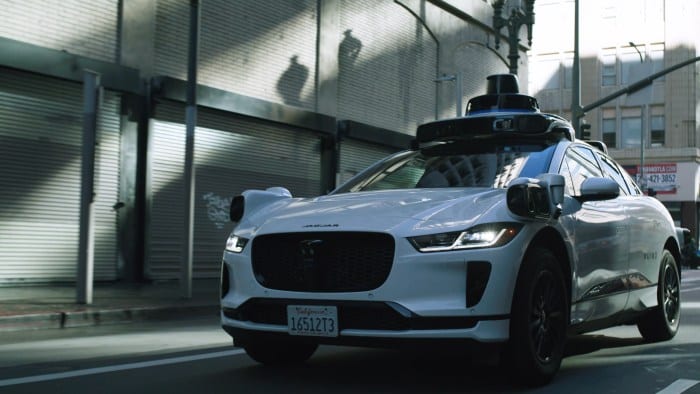
Tata Sons also controls roughly 40% of Tata Motors, the Indian automaker that acquired Jaguar Land Rover from Ford Motor Company in 2008 for $2.3 billion.
JLR, now a wholly owned subsidiary of Tata Motors, produced 428,854 vehicles in fiscal year 2025 and generated revenue of £28.96 billion ($39.5 billion).
TCS already serves as a key technology partner to JLR under a multi-year deal valued at more than £800 million ($1.1 billion), providing application development, cloud migration, cybersecurity and data services.
European Auto Restructuring
Porsche’s divestiture of MHP fits within a broader pattern of European automakers stripping back to their core operations as they absorb the costs of electrification, navigate US tariffs and face growing competition from Chinese rivals.
Parent Volkswagen Group is pushing to double group-wide job reductions to as many as 100,000 positions.
Mercedes-Benz and BMW are also cutting costs as Chinese brands led by BYD, Chery, SAIC and Leapmotor doubled their combined European market share through May from a year earlier.
For Porsche, selling MHP converts a consulting operation into a €320 million cash payment and a five-year, €1.25 billion service commitment from a global technology partner with the scale to deliver AI and digital capabilities the sports-car maker would struggle to build internally.