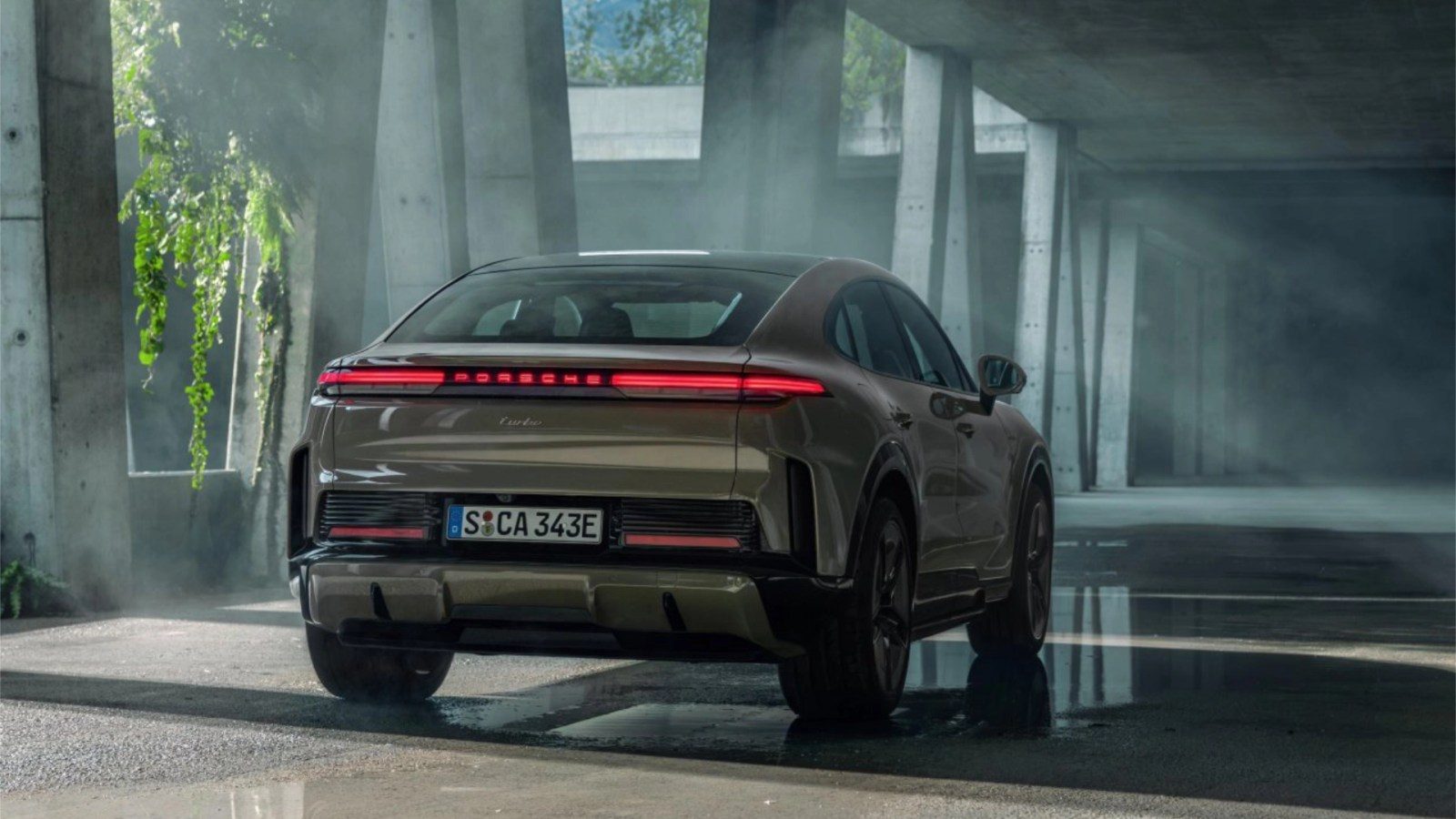

Porsche AG has left the Volkswagen Group CO2 emissions pool and will instead form an open pool with Chinese automaker XPeng for the 2026–2027 period, according to an official filing with the European Commission dated August 5.
Under EU Regulation 2019/631, manufacturers can pool their fleets so that higher-emitting brands offset their CO2 averages against lower-emitting ones — typically pure electric makers that generate surplus credits.
The details were first reported by Schmidt Automotive Research on Tuesday.
Porsche had previously averaged its sports-car emissions across the broader VW Group fleet — which includes Volkswagen, Audi, Škoda and SEAT/Cupra.
Leaving the group pool means Porsche must now meet EU fleet requirements separately from its sister brands, while XPeng stands to gain what Schmidt Automotive Research describes as a regulatory credit windfall.
Financial terms of the arrangement have not been disclosed.
The structure also loops back on itself: Volkswagen Group holds a 5% stake in XPeng, so the group’s sports-car brand will be buying compliance headroom from a company its parent part-owns.
Porsche is directing the new open pool and has invited other manufacturers to join, subject to a confidentiality agreement.
Spanish outlet El Español reported a deadline of around September 5 for additional participants to enter.
VW Group’s Compliance Problem
Volkswagen Group has recorded an average of approximately 100 g/km across its EU new-car fleet in 2025, missing its regulatory target of roughly 93.6 g/km, according to the company.
EU rules impose a fine of €95 ($110) per gram of CO2 over the limit, per vehicle registered.
A three-year flexibility mechanism introduced in March 2025 allows manufacturers to average their performance across the 2025–2027 period.
The overshoot means VW Group must overcomply during the remaining two years to avoid heavy penalties at the close of the window.
Independent tracking underlines the gap.
Through June 2026, the International Council on Clean Transportation put the Volkswagen pool 7 g CO2/km above its 2025–2027 target — the furthest from compliance of any manufacturer pool it monitors.
VW Group‘s CFO Arno Antlitz put a number on the exposure during the company’s first-quarter earnings call in May.
According to Antlitz, the group anticipates annual EU CO2 costs of €400 million ($462.1 million) to €500 million ($577.7 million), totaling close to €1.5 billion ($1.7 billion) across the three-year period.
The CFO framed the penalty as a deliberate trade-off between the cost of fines and the margin loss from pushing EV volumes above natural demand.
Porsche’s ICE Pivot Deepens the Drag
Porsche has been a relative liability within that compliance effort, and its trajectory is worsening.
Taycan sales fell approximately 20% year-on-year through June, while Macan registrations in Europe dropped roughly 30% over the same period.
The new Cayenne EV was the only model to post growth, though from a near-zero base as deliveries begin.
Schmidt Automotive Research data showed Porsche‘s overall fully electric sales across Western Europe fell by approaching 30% year-on-year in the first half of the year, to approximately 23,700 units.
Battery electric models (BEV) made up roughly 30% of the luxury brand’s regional new volumes during the period, down from nearly 40% a year earlier.
A strategic pivot back toward combustion-engine sales compounds the pressure.
Porsche‘s Macan ICE variant — unavailable for roughly two years after a 2024 cybersecurity and type-approval update — is expected to return, which will further raise the brand’s average fleet emissions.
Removing Porsche from the group pool improves VW Group‘s prospects of hitting the three-year average through its own BEV product cadence, including the upcoming ID. Polo, reducing the risk of non-compliance fines or additional pooling costs at the settlement date in late 2027.
XPeng’s European Surge
XPeng entered Europe in 2021, through Norway. It is now present across more than 25 markets.
European registrations more than doubled year-on-year to approximately 19,000 units in the first six months of 2026, according to Dataforce figures cited by Automotive News.
Schmidt Automotive Research data, which tracks Western Europe specifically, put the figure at just under 20,000 for the first half.
Full-year regional deliveries are projected to approach 50,000 units.
Schmidt data suggests XPeng is on track to overtake Polestar as the leading Chinese premium OEM in Western Europe later this year, aided by volume models including the L03 coupe-SUV, which launched across several European markets in July.
XPeng currently assembles the G6, G9 and P7+ from semi-knockdown kits at Magna Steyr’s facility in Graz, Austria, and a fourth model is expected to enter local production before year-end.
Local assembly allows the brand to sidestep the European Commission’s additional countervailing duties on Chinese-built EVs, which stood at 20.7% for XPeng before Austrian production began in September 2025.
Deepening Partnership
The pooling arrangement sits atop a relationship that already runs deep.
Volkswagen invested approximately $700 million for a 4.99% stake in XPeng in 2023, and the two companies have since expanded their collaboration across EV platforms, autonomous driving software and charging infrastructure in China.
The German automaker adopted XPeng‘s second-generation Vision-Language-Action (VLA) autonomous driving solution earlier this year, becoming the first major Western automaker to integrate China-developed AD software commercially.
Manufacturing discussions are also advancing.
XPeng‘s UK and Eastern Europe managing director Elvis Cheng confirmed in May that the Chinese automaker was in early talks with Volkswagen Group about potential European manufacturing arrangements to supplement the strained Graz facility.
Founder and CEO He Xiaopeng went further at the L03 launch in Munich in July, telling WardsAuto he hoped to finalize a partnership with VW Group and identifying southern Germany as the leading candidate for additional vehicle production and R&D facilities.
Industry-Wide Pooling Landscape
Emissions pooling is a well-established compliance tool across the European auto industry.
Two open pools have been declared for 2026, led by Tesla and Mercedes-Benz, alongside closed pools including BMW‘s — which groups BMW M and Rolls-Royce for 2026 and 2027 — and Hyundai‘s, which consolidates the group’s Czech and Turkish operations.
Additional manufacturers can join certain pools through to the end of the calendar year.