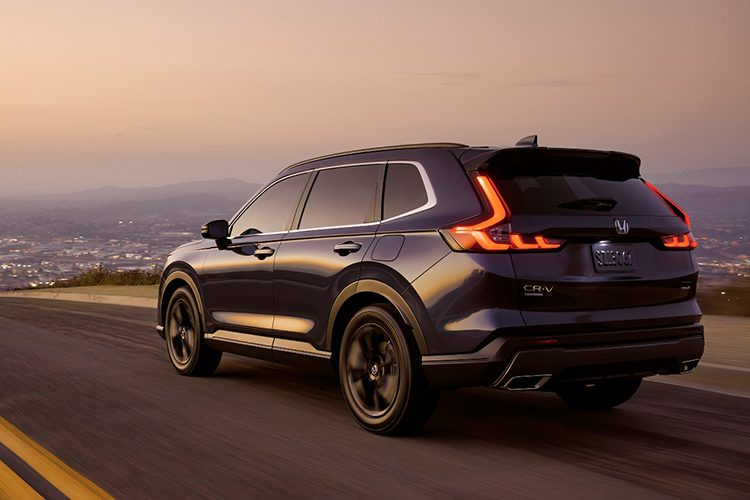
Honda Motor Co. is in the final stage of preparations to build a new hybrid vehicle assembly plant in Ohio, investing about 300 billion yen to 400 billion yen ($1.9 billion to $2.5 billion) in the facility.
Production is expected to start in 2030, Nikkei reported on Thursday.
The start of operations depends on the outcome of negotiations with Ohio over state subsidies, according to the Japanese business daily, which cited unnamed sources.
Honda has not confirmed the project and says it has made no final decision, according to CBT News.
If approved, the facility would be Honda’s first new US auto assembly plant since its Greensburg, Indiana, factory opened in 2008.
Nikkei linked the move to rising US demand for fuel-efficient hybrids, which the outlet attributed to higher gasoline prices following the US war with Iran.
Two Large Crossovers Planned
According to Nikkei, the Ohio plant would build two large crossovers, one each for the Honda and Acura brands.
Ohio is already central to the company’s US footprint.
The state hosts several of Honda’s 12 US plants, including the Marysville Auto Plant, where the company began building cars in America in 1982.
Honda currently runs four assembly plants in the US at Marysville, East Liberty, Alabama and Indiana, two in Canada and one in Mexico.
North American Plants Near Capacity
Chief Executive Toshihiro Mibe signalled the need for more capacity in July.
In an interview with Yomiuri Shimbun, he said the seven existing plants, with an annual capacity of 1.67 million units, are operating at near full capacity, and that expanding production capability is essential for sales growth.
“If you don’t have a buffer, you can’t recover production,” Mibe told the newspaper.
Honda’s US factories in Ohio, Indiana and Alabama operate at 85.0% of their 1.2 million total vehicle capacity, according to GlobalData.
North America accounts for more than 40.0% of Honda’s global sales.
American Honda is targeting more than 9.0% US market share in 2026.
From EV Hub to Hybrid Pivot
Thursday’s report follows a string of retreats from electrification.
In May, Honda confirmed an indefinite hold on its C$15 billion EV complex in Alliston, Ontario, as it disclosed its first annual net loss as a listed company, a 423.9 billion yen ($2.7 billion) deficit for the fiscal year ended March 2026.
Two months earlier, the automaker cancelled three EV models planned for US production, two from its flagship 0 Series and the Acura RSX.
Sony Honda Mobility scrapped the Afeela days later.
Ohio was the intended base for much of that EV programme.
In 2022, Honda said it would spend $700 million to retool three of its Ohio plants to build electric vehicles, branding the Marysville, East Liberty and Anna sites the Ohio EV Hub.
Honda has also withdrawn its target for battery-electric and fuel-cell vehicles to make up 100% of its global sales by 2040.
Mibe said the decision to halt EV development was correct when considering the overall picture, citing the abolition of EV subsidies under the Trump administration.
In May, the company said it plans to launch up to 15 next-generation hybrid models globally by the end of March 2030, with most aimed at North America.
Hybrids Outsell a Shrinking EV Segment
US sales data supports the shift. Hybrid penetration reached a record 17.3% in May, Macquarie analysts said, while battery-electric share held at 6.0%, down from a peak of 11.6% in September 2025.
Honda’s hybrid sales rose 22.0% year-over-year that month. American Honda set a monthly hybrid record of 42,583 units, led by 24,401 hybrid CR-Vs.
Hyundai-Kia hybrid sales jumped 126.0% over the same period, and Toyota’s electrified volumes, mostly hybrids, climbed 15.0% to 57.0% of its US sales.
EV demand contracted after the federal $7,500 tax credit expired on September 30, 2025.
JD Power and GlobalData projected EVs would account for 7.0% of US retail sales in May, down 1.2 percentage points year-over-year.
Tariffs Pull Production Into the US
Tariffs are also driving Japanese automakers to add US capacity.
On July 6, Toyota Motor North America announced it will invest $3.6 billion to expand its San Antonio manufacturing campus with a second vehicle assembly line to support the Tacoma truck.
The new line is scheduled to begin operations in 2030, creating over 2,000 new jobs and raising the plant’s annual production capacity by approximately 150,000 units, according to Toyota.
Toyota will transition Tacoma production from its Baja California plant in Mexico to Texas over an approximate four-year period.
The expansion brings Toyota’s total investment in San Antonio to $8.3 billion since breaking ground in 2003.
Honda faces similar pressure.
Ongoing tariffs have made it difficult for Honda to turn a profit in the United States, Mibe said in the July interview, according to Carscoops.
“The basic idea is to produce in a place where there is demand,” he said.