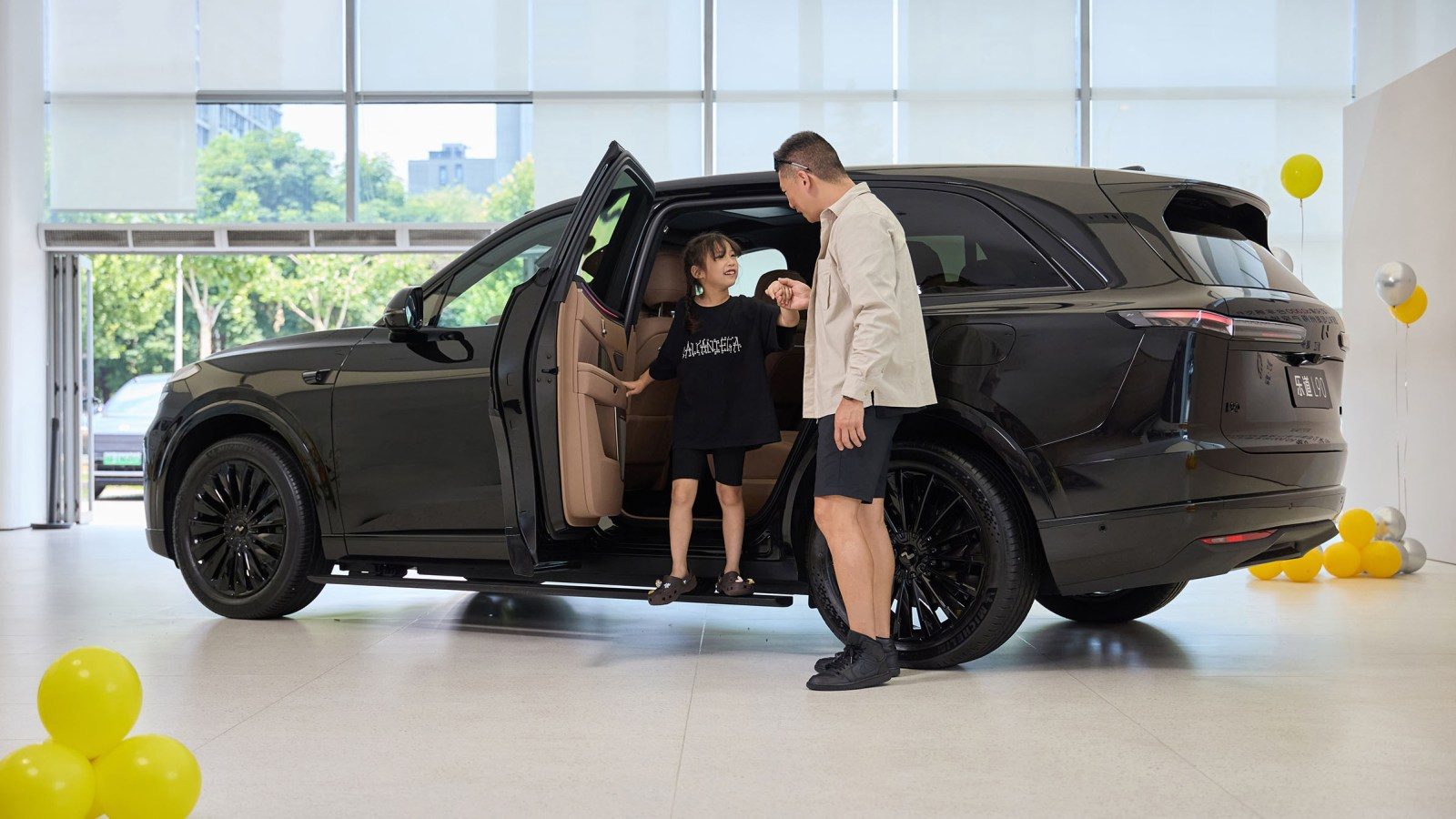

Onvo‘s insurance registrations fell for the second straight month in July, with the three-row L90 posting its weakest non-holiday result since launch.
July was the first month in which the brand sold its complete three-SUV range with no new model or refreshes starting deliveries inside the period — stripping away the launch-driven surges that had lifted each of the prior months.
Only the refreshed L60 gained ground, reclaiming the top spot in the lineup by volume, while the newest five-seat L80, which debuted on May 15, saw a delivery decline for the second consecutive month.
Q2 Lineup Update
Onvo spent the second quarter overhauling its entire range.
The revamped L90 launched on April 21 as the first Onvo model to carry a LiDAR sensor and Nio‘s in-house Shenji NX9031 autonomous-driving chip, reversing the sub-brand’s original vision-only approach.
The model entered the market at 242,800 yuan, or 156,800 yuan under Battery-as-a-Service.
The third-generation L60 went on sale in late May at a reduced starting price of 192,800 yuan, also gaining a LiDAR variant and the Shenji chip, and started deliveries in June.
The sequence was designed to lift Onvo‘s volumes decisively.
Founder and CEO William Li told staff in mid-April that the L80 was one of the group’s two most important launches of the quarter.
By the end of June, Onvo‘s full lineup offered LiDAR-equipped variants across all three models, aligning the brand’s sensor strategy with the main Nio brand’s standard approach.
L90 Hits Non-Holiday Low
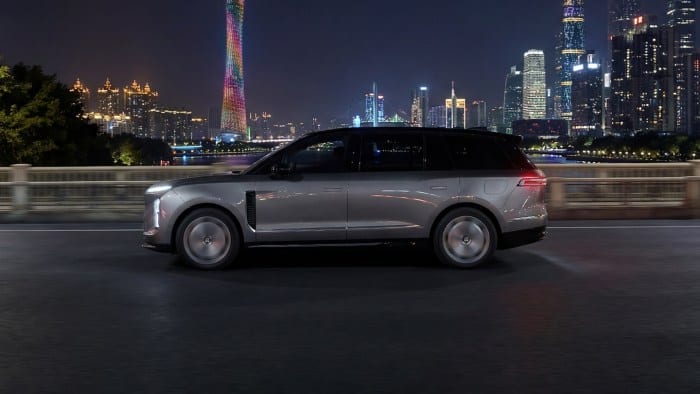
Onvo‘s three-row SUV recorded 1,972 insurance registrations in July, a 43.0% decline from 3,457 in June and the model’s weakest result outside the Chinese New Year-distorted months of January and February, when it posted 1,502 and 1,317 respectively.
Unlike those winter figures — compressed by factory shutdowns and the holiday period — July’s result landed in a full selling month with no public holidays.
The figure is also below April’s 2,066 registrations, a month shortened by the three-day Qingming Festival.
Those winter and spring months predate the refresh, so the comparison runs across the nameplate rather than the current car.
The L90 had passed 60,000 cumulative deliveries just weeks earlier, a milestone that brand chief Shen Fei had framed as evidence of the model’s staying power against range-extended rivals.
Ten days later, on the model’s first anniversary, Fei Shen used the same 60,000 figure to mount a defense of battery-electric powertrains against range-extended rivals, speaking hours before Xiaomi‘s launch event for its first extended-range models.
The trajectory raises questions about the effectiveness of the refresh.
Deliveries of the revamped L90 began on May 9, and the model climbed to 4,052 registrations that month. Two months later, demand has fallen by more than half.
The refreshed car has fared worse than the original on the same measure.
The L90 launched on July 31, 2025 and began deliveries the following day, clearing 10,000 units a month across its first three months and peaking at 11,722 registrations in October before declining through February.
The refresh peaked in its first month on the road and has fallen in each month since.
L80 Decline Continues
Onvo‘s five-seat L80 recorded 3,232 registrations in July, a 20.9% fall from 4,086 in June and a continuation of the steep descent that began after the model’s launch in mid-May.
Measured across full months, the only like-for-like comparison available, the L80 has fallen 20.9% between its first and second complete months on sale.
Onvo said the model delivered 5,949 units within 15 days of its May 15 launch, a company figure covering the launch window rather than a calendar month, and one the brand called a delivery-speed record for the segment.
Reading that fortnight as a monthly run rate would import exactly the launch-backlog distortion that July’s clean selling month removes.
Nio‘s co-founder and President Qin Lihong separately dismissed concerns the five-seat SUV would cannibalize sales of the five-seat ES8 variant launched on July 9, pointing to the more than 100,000-yuan price gap between the two models.
The five-seat ES8 starts at 382,800 yuan, 140,000 yuan above the L80.
July’s result leaves the L80 as the middle performer in a three-model range it was launched to lead, in a five-seat mid-to-large segment where Onvo had expected stronger demand.
L60 Extends Rebound
Against the declines in its two siblings, the L60 delivered a second straight month of recovery.
Onvo‘s original model recorded 4,949 insurance registrations in July, up 17.9% from 4,196 in June and the highest monthly figure since the original launch period in late 2024.
The rebound was driven by the third-generation L60, which went on sale at 192,800 yuan — 14,100 yuan below the outgoing model — while adding LiDAR and the Shenji NX9031 chip.
Deliveries began in early June, and the model has now sustained demand into its second full month on the market, a better trajectory than either the L90 or L80 managed after their respective refreshes.
July also marked the first time since the L80’s launch that the L60 led Onvo‘s lineup by volume, outselling both the L80 and L90 by a significant margin.
Cumulative deliveries of the L60 surpassed 100,000 units in June.
The gen-3 car reached pre-sale at the end of May and launched in June, after L60 deliveries had fallen below 2,000 units a month in January and February, the model’s worst figures since deliveries began in September 2024.
Three Models, Less Volume
The combined July figure of 10,153 registrations across three models is lower than any single month during which all three SUVs were simultaneously on sale.
May produced 12,024 and June yielded 11,739.
May was itself a partial month for the L80, which reached customers on the 15th, leaving June as the only prior full-range month for comparison.
Onvo contributed 28.3% of Nio Inc.‘s 35,934 July deliveries and has accounted for 23.2% of the group’s year-to-date volume of 227,057 units — well below the 55% long-term share that the founder William Li has described as the brand’s eventual destination under a 55-35-10 split with the main Nio marque and Firefly.
Both shares are calculated on the company’s delivery figures rather than the registration series above.
William Li has described a long-term 55-35-10 split across Onvo, the main Nio marque and Firefly, with the family brand carrying 55% of group volume.
Reaching that share would require roughly double the brand’s current monthly run rate, an outcome Li has framed as an eventual destination rather than a target for this year.
No new model launches are scheduled for 2026, leaving the existing three SUVs to carry the brand through the remaining five months of the year.
Li told analysts on the first-quarter earnings call that Onvo would add new products next year.
Brand awareness remains a constraint Li himself has acknowledged, comparing Onvo‘s recognition levels to those of the main Nio brand in late 2019.