
US autonomous driving startup Nuro said on Thursday that it is establishing operations in Germany, opening its first European office in the Munich area as it expands its Level 4 AI driving platform.
The Munich office will serve as Nuro’s European hub, supporting engineering, operations, and partner engagement, according to the Softbank-backed company.
The European hub will allow Nuro to validate and adapt its technology for European driving conditions and regulatory frameworks.
“Expanding to Germany is an important step in Nuro becoming a truly global autonomy company,” said Dave Ferguson, co-founder and co-Chief Executive Officer of Nuro.
“We’re developing a universal Level 4 platform that can serve partners across vehicle categories and regions, and this expansion brings us closer to the partners, road conditions, and regulatory environments that will shape long-term deployment,” Ferguson added.
The Universal Autonomy Platform Strategy
Nuro’s approach is intended to reduce integration complexity, accelerate development cycles, and establish a consistent technical foundation across the full range of vehicle applications.
The strategic positioning distinguishes Nuro from autonomous driving competitors that have focused narrowly on a single vehicle category — such as Waymo’s robotaxi-only deployment, or autonomous trucking startups focused exclusively on logistics.
By developing a single Level 4 platform adaptable to multiple vehicle types, Nuro is positioning itself as a horizontal supplier to OEMs and ride-hailing operators rather than a vertically integrated competitor.
The Japan Precedent
Nuro’s Munich expansion builds directly on the company’s Japanese operations, which served as the first validation of its universal platform thesis.
In Tokyo, Nuro demonstrated what it calls “zero-shot autonomy” with the Nuro Driver — showing that its platform could operate in a new driving environment without prior training on local driving data.
Germany introduces a broader range of road infrastructure and regulatory frameworks that will further strengthen the generalisability of the Nuro Driver, the company said in its announcement.
The Lucid-Uber Robotaxi Partnership Context
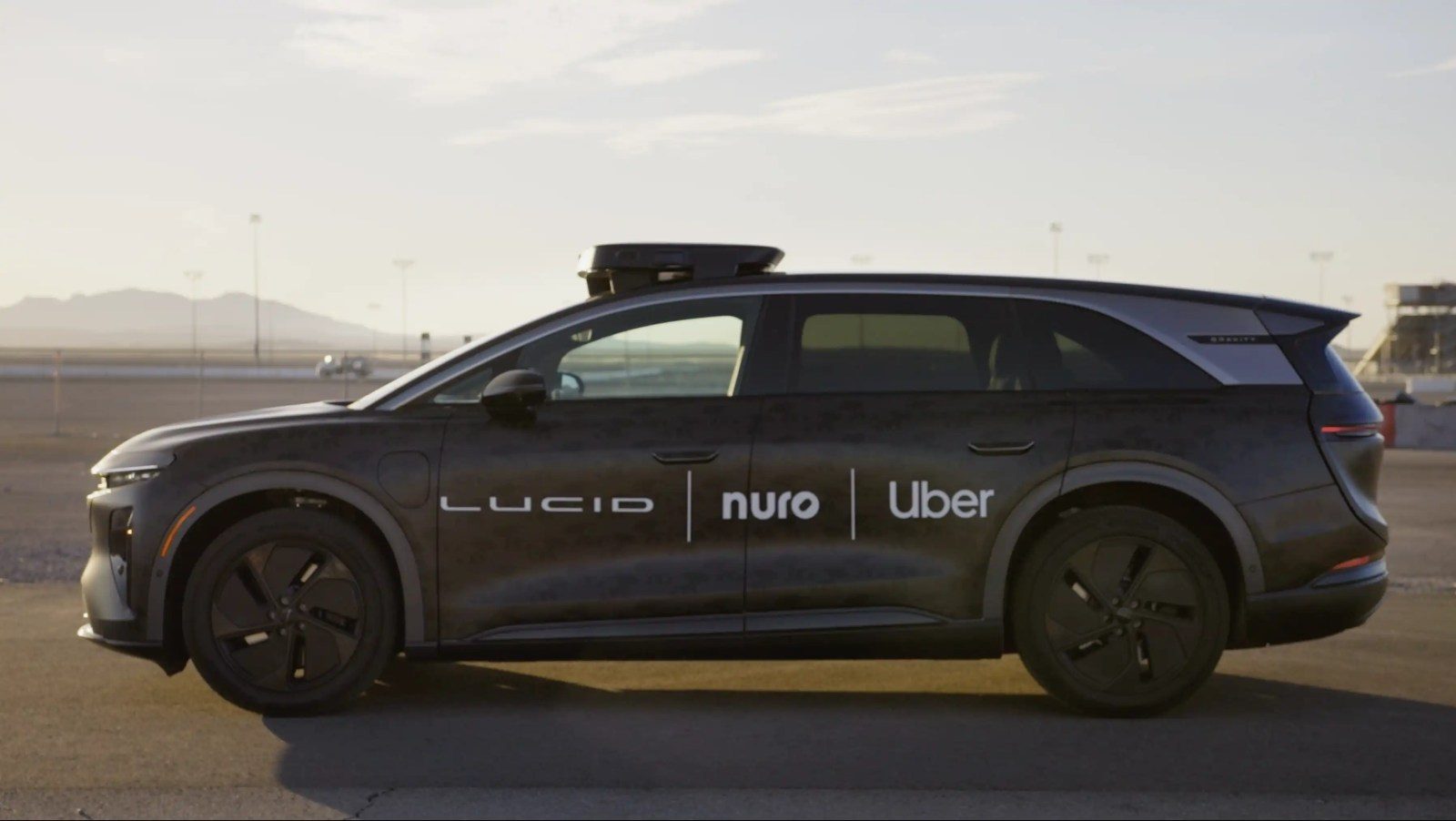
The German expansion arrives as Nuro’s commercial trajectory has accelerated sharply through its partnership with Lucid Motors and Uber on the autonomous robotaxi program scheduled to launch in late 2026.
Uber’s purchase commitment to the Lucid-Nuro robotaxi program reached at least 35,000 vehicles last month — up from the original 20,000 Gravity SUVs agreed under the July 2025 deal — while investing an additional $200 million in Lucid to raise its total stake to $500 million.
Nuro operates a fleet of approximately a hundred Lucid Gravity SUVs as part of the robotaxi engineering program, with autonomous on-road testing under way in the San Francisco Bay Area since December and vehicles also spotted in Houston.
Last month, the testing expanded to allow Uber employees to request autonomous rides through the Uber app — the first commercial-style end-to-end ride test of the program.
The commercial service is expected to launch in the San Francisco Bay Area in late 2026, the same target Lucid’s management and Nuro have maintained since the partnership was announced.
California Permit Progress
Nuro’s German expansion comes a week after the company added a second key California permit for its autonomous testing operations.
The AV technology company secured a California Public Utilities Commission Drivered Pilot Permit, allowing it to conduct pilot testing of autonomous passenger service with a safety driver while carrying passengers on public roads.
The CPUC permit builds on a separate milestone — Nuro’s California Department of Motor Vehicles Driverless Testing Permit, which the company has held for six years and has now been extended to also cover Lucid Gravity vehicles.
Nuro’s existing driverless permit previously covered only the low-speed autonomous delivery vehicles the startup operated before pivoting to licensing its technology to ride-hailing partners.
Neither permit currently authorises paid rides, and the CPUC Drivered Pilot Permit does not allow for driverless passenger operations.
Germany’s Autonomous Driving Act, passed in 2021, established a federal framework for Level 4 vehicle approvals — making the country among the first European jurisdictions to provide a clear legal pathway for fully autonomous commercial operations.