
Tesla sold an estimated 40,816 vehicles in the United States in August, a 26% decline from the 55,500 units registered in the same month a year earlier, according to data from Motor Intelligence released on Tuesday.
The result marks the steepest year-over-year decline Tesla has posted in any month of 2026, surpassing the 21% drop recorded in July and the 20% decline that made June the previous low point.
August and September 2025 were Tesla’s two highest-selling months last year, as buyers rushed to secure the $7,500 federal EV tax credit before it expired on September 30 under the One Big Beautiful Bill Act.
Motor Intelligence data showed monthly volumes of 53,816 in July 2025, 55,500 in August and nearly 58,750 in September.
Sales in the months that followed never came close to those levels, and the year-over-year comparisons have grown progressively more unfavourable as 2026 enters the same calendar window.
2025 vs 2026
Year-to-date, Tesla has moved an estimated 321,494 vehicles domestically, down about 16.3% from the 383,954 sold in the same period of 2025.
Monthly volumes have settled into a narrow band. Every month this year has landed between 37,550 and 42,435 units, a range of fewer than 5,000 vehicles separating the worst month from the best.
The pattern suggests underlying demand has stabilized around 40,000 units per month — well below the 47,000-unit average Tesla carried through the first half of 2025 and far below the tax-credit-inflated third quarter.
September’s comparison stands to be even more lopsided.
Tesla sold 58,750 vehicles in September 2025, the highest monthly tally in its US history, driven by last-minute purchases ahead of the credit’s expiration.
A result near the current run rate would imply a year-over-year decline exceeding 30%.
Lineup Changes
Tesla’s lineup has completely changed in the past year as well.
The company ended production of its two flagship models, the Model S and Model X, by the end of the first quarter, as it focuses on autonomy — with the Fremont production lines being converted to manufacture the Optimus humanoid robot.
The company built 250 final Model S and 100 Model X units as a limited Signature Edition before the lines shut down permanently in May.
At the same time, it has extended the existing lineup offers for its best-selling Model Y and Model 3.
The company launched cheaper Standard variants of both models on October 7, cutting the Model Y entry price by $5,000 to $39,990 and bringing the Model 3 to $36,990.
The refreshed Model Y Performance had arrived just days earlier, launching hours before the federal credit expired on September 30.
Tesla then reintroduced a seven-seat configuration for the Model Y in January, available only on the Premium AWD trim for an additional $2,500.
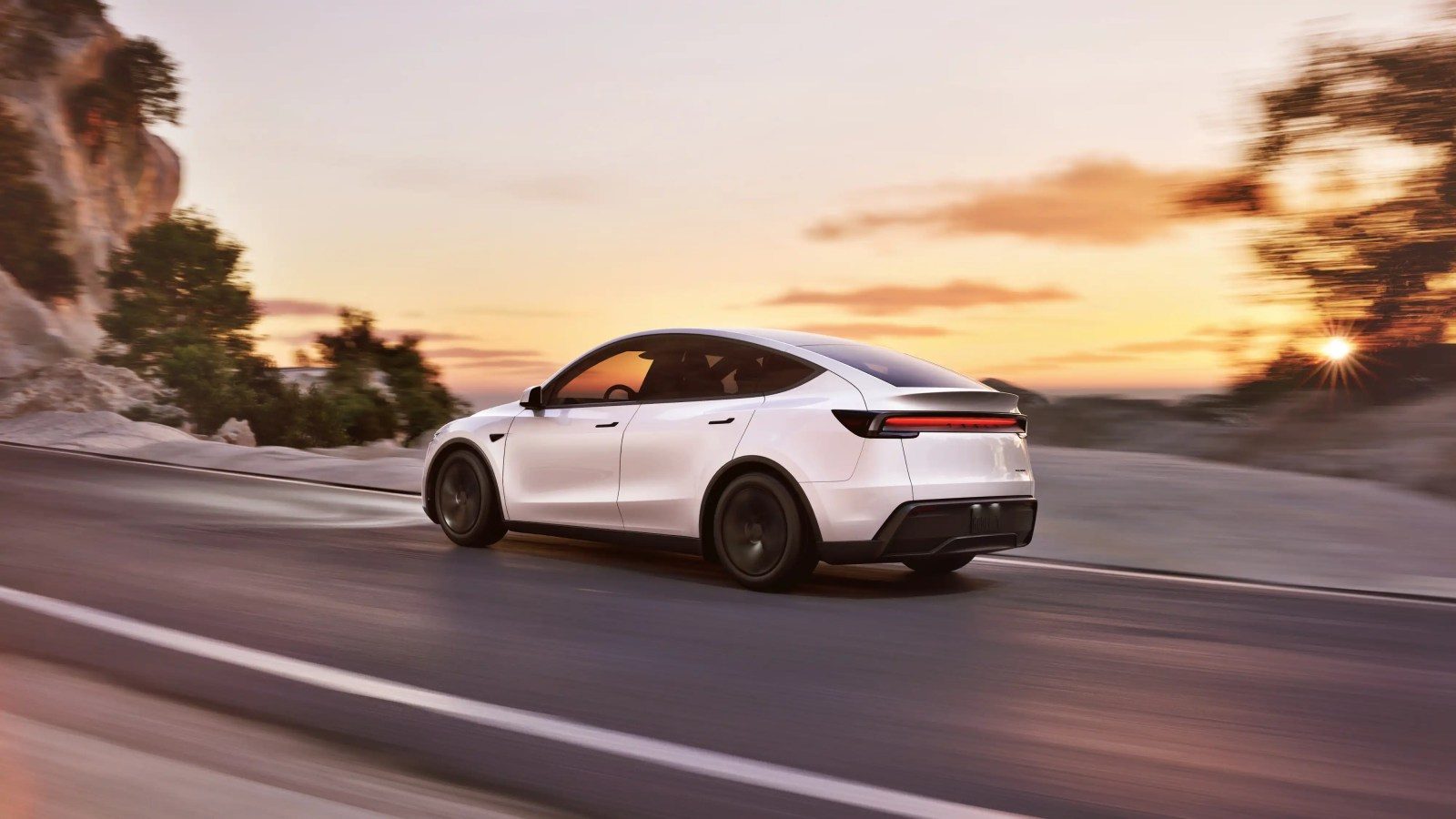
The newest addition is the Model Y L.
Tesla began assigning delivery windows for the Model Y L in August, a six-seat variant built at Gigafactory Texas that represents the company’s first new passenger model in the domestic market since the Cybertruck.
First customer deliveries started arriving in late August and early September.
California’s MyFirstEV rebate programme, a $3,500 point-of-sale incentive for first-time zero-emission vehicle buyers, also launched in early August.
Tesla’s allocation was fully claimed within days, stretching Model 3 Standard delivery estimates into early 2027.
The company simultaneously expanded its certified pre-owned programme, offering used vehicles from $20,600 — a pricing floor aimed at buyers priced out of the new-car market after the federal credit’s removal.
None of those moves altered the monthly sales trajectory.
CEO Elon Musk had framed Full Self-Driving as a demand driver on the company’s second-quarter earnings call on July 22, telling investors that US buyers were coming into stores wanting FSD “with whatever car comes with it essentially.”
Cybercab Launch
As retail sales continue to slide, Tesla is preparing to fold its purpose-built Cybercab into the commercial robotaxi service it has operated in Texas since mid-2025.
The company will hold an invite-only Cybercab launch event in Austin on Thursday (September 3), with a livestream planned for a wider audience.
The Cybercab is a two-seat vehicle with no steering wheel and no pedals, designed to operate entirely on Tesla’s FSD software.
Production began at Giga Texas in February, and the company started engineering tests on Austin’s public roads at the end of June.
The broader fleet is also scaling.
Tesla added 79 Model Y robotaxis to the Texas registry in a single day in late August, lifting the total to 270 registered vehicles across Austin, Dallas and Houston.
Broader Market Decline
Tesla was not alone in posting weaker August numbers.
Motor Intelligence estimates showed all four publicly tracked pure-play EV makers in the US recording year-over-year declines, though the magnitude varied widely.
Rivian sold an estimated 4,537 vehicles, down 6% from 4,825 a year earlier.
The result follows a strong July that had been the company’s best month of 2026, powered by the first full month of R2 customer deliveries.
A 6% decline against an August 2025 base that did not include the R2 at all is a comparatively modest pullback.
Lucid registered an estimated 837 vehicles, down 16% from 993.
Polestar posted the sharpest decline among the group, falling 48% to 295 units from 570 a year earlier, as the brand is winding down its US EV sales operations.