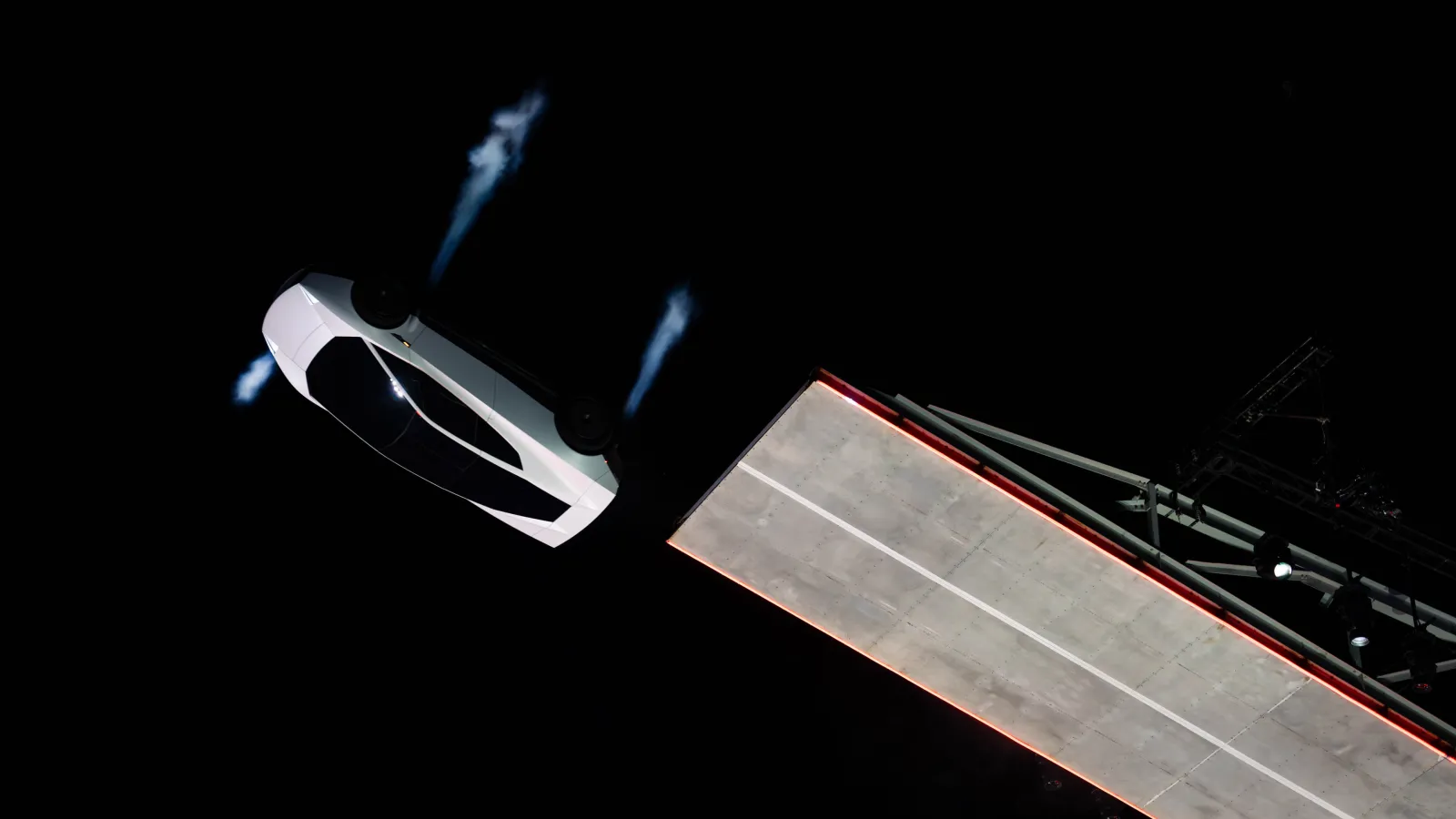
Tesla expanded the area covered by its Robotaxi service in Austin on Monday, three days before the company holds a launch event in the same city for the Cybercab and the first one in ten months.
Before-and-after maps of the boundary circulated on X on Monday, posted by several Tesla owners and shareholders pointed to an expansion of about 8%.
The new boundary extends north along the US-183 corridor, while the southern, western and eastern edges appear unchanged. Pflugerville and Manor were already inside the fence set in June.
The company holds its Cybercab launch event in Austin on Thursday, September 3, an invite-only gathering open to riders selected from a sweepstakes covering Robotaxi trips taken between August 17 and 23 and to mail-in entrants, with RSVPs closing last Sunday and the proceedings to be livestreamed.
What Changed
Tesla has run two boundaries in Austin for most of the programme’s life, including an overall service area, and a smaller zone inside it where vehicles operate without a safety monitor in the passenger seat.
The outer boundary reached roughly 245 square miles and then stopped moving, while the internal line between supervised and unsupervised operation crept outward over the following months.
On June 3 the two became one, when the driverless zone was extended to match the full service area and Tesla’s Robotaxi account posted that unsupervised Robotaxi was now available across the entire Austin metro.
As the two boundaries have been identical since then, Monday’s change reads as the first outward move of the overall service area in months, though Tesla has published nothing to confirm which line shifted.
The Expansion Record
Tesla launched the service on June 22, 2025 with a geofence of about 18 to 20 square miles, a fleet variously reported at ten to twenty Model Ys, and a safety monitor in every passenger seat.
The first expansion came on July 14, 2025, taking the area to about 42 square miles, followed by a move to somewhere between 80 and 85 square miles on August 3, a figure Teslarati derived from an AI estimate rather than a published measurement.
The third expansion landed on August 26, 2025, when Merritt measured the area at 171 square miles against Waymo’s 88; Tesla put the figure at 173 and confirmed a 50% increase in the Austin fleet the following day.
The fourth came on October 28, 2025, when Tesla’s Robotaxi account posted that the service was available in more of Austin, taking the area to about 243 to 245 square miles, roughly twelve times the launch footprint and, on TeslaNorth’s measurement, about 3.7 times Waymo’s Austin zone.
That outer boundary then sat still for seven months while Tesla worked on removing safety monitors rather than adding territory, until the June 3 alignment.
Monday’s change marks the sixth.
Coverage Against Fleet
Each expansion has been reported as growth, and measured against the number of cars actually working the map, the service has been thinning out.
At launch, ten to twenty vehicles covered 18 to 20 square miles, or roughly one to two square miles each.
The most generous recent count comes from the crowdsourced Robotaxi Tracker, whose creator Ethan McKanna told The Verge that all 170 Austin rides logged by the app over two weeks to August 20 were unsupervised and involved 54 distinct vehicles, a figure that counts cars seen at any point in a fortnight rather than cars running at once.
Tesla’s Robotaxi account said last week that the unsupervised fleet is “a lot bigger,” attaching no number, and announced service hours of 6 a.m. to 10 p.m. seven days a week alongside changes to vehicle distribution and routing, a network-wide window that Austin, previously running to 2 a.m., may not share
Texas registration data moved sharply in the same week.
Tesla added 79 robotaxis in a single day last week, after a batch of 58 in July, taking its registered count from 191 to 270, a 41.4% rise, against 736 for Waymo.
Registration is not deployment, and the Texas filings do not say which city a vehicle serves or whether it runs unsupervised, so the gap between 270 registered and the couple of dozen trackers observe circulating remains the central question.
Waymo was delivering more than 500,000 paid rides a week across eleven US cities as of April, with a stated target of one million by year end.
The Timing Pattern
Several previous Robotaxi milestones have landed immediately before scheduled corporate events.
Tesla opened unsupervised service in Dallas and Houston on April 18, four days before first-quarter earnings, with a single vehicle in each city at launch.
It announced expansion to Orlando and Tampa on July 21, the day before second-quarter earnings.
The first fully unsupervised vehicles appeared in Austin in late January, shortly before the company reported its 2025 results.
Thursday’s Event
The Cybercab is a two-seat vehicle with no steering wheel and no pedals, and it runs the same Full Self-Driving stack as the Model Ys already carrying passengers in Austin.
The first production unit came off the Giga Texas line on February 17 and volume production followed in April, with Tesla beginning engineering tests on Austin public roads on June 30.