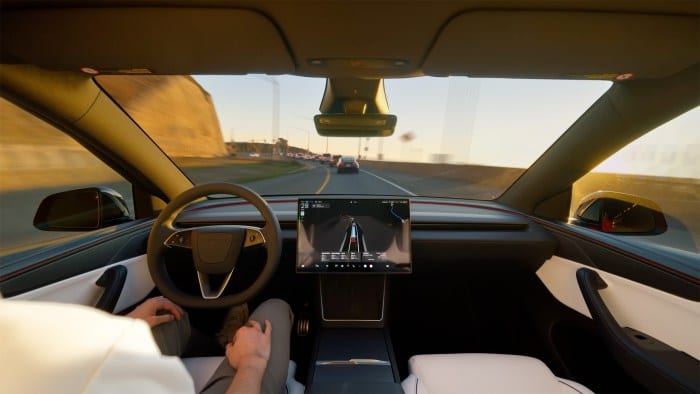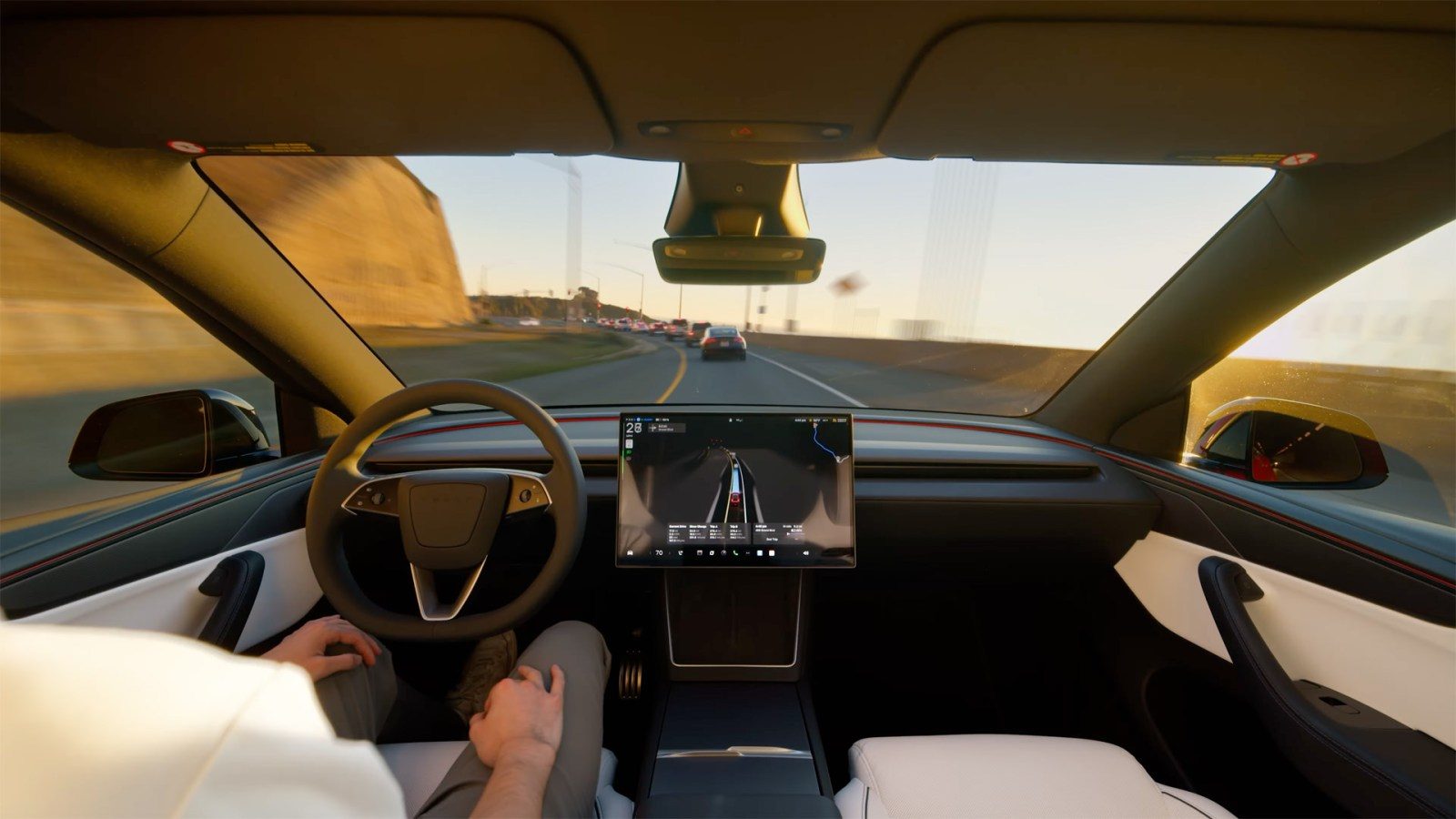

Germany’s vehicle authority is telling Tesla and the Dutch regulator where Berlin stands on Full Self-Driving (Supervised) exceeding speed limits by the system’s own choice.
It is the first time a federal ministry letter has named a specific concern about the software.
The Kraftfahrt-Bundesamt (KBA) is in contact with the Dutch regulator RDW and Tesla “to make clear the position of the Federal Republic of Germany on the system-initiated exceeding of permitted maximum speeds,” Christian Hirte, Parliamentary State Secretary at the Federal Ministry of Transport, wrote.
Hirte made the comments in a September 14 letter answering a written question from Maximilian Kneller, a Bundestag member for the Alternative for Germany (AfD) party.
Kneller, who was elected to the Bundestag in 2025, is Deputy Leader of the AfD in Bielefeld.
Kneller posted the letter on X on Wednesday.
“When using the system, the impression of autonomous driving can arise, although responsibility for driving the vehicle remains entirely with the driver,” Hirte wrote.
He said the KBA is still evaluating the documents behind the Dutch approval.
The letter did not say when the review would end or what result to expect, although Kneller’s question asked for both.
Speed at the Centre
The letter singles out one feature while the wider review of the Dutch file continues.
In letters to voters in July, Hirte described a broad traffic-safety review. He said the KBA expected to receive a Tesla that month for its own testing.
The September letter does not mention that vehicle.
The ministry has not said whether the KBA received the car or what its testing found.
Speed has been the objection other European regulators raise most often.
France’s Transport Minister Philippe Tabarot said in July that the system can drive at 70 km/h in a 50 km/h zone when surrounding traffic is faster, and can exceed limits by up to 50%.
He made the comments in a video answer on the French government’s Agora platform, where he also said the system does not guarantee enough driver attention in cities.
After a video call with Elon Musk on September 2, Tabarot said Tesla would give French authorities two cars for road tests.
“We are now entering a new phase: that of road tests,” he said, according to MacGeneration.
Sweden told the TCMV in a letter before its June 30 meeting that Tesla’s “Speed Offset” function, which lets the car drive faster than the limit, should be removed, Swedish outlet Elbilen reported.
Norway and Finland backed the Swedish demand.
Regulators from Sweden, Finland, Denmark and Norway raised speed-limit handling and icy-road performance when the RDW first presented the file in Brussels in May.
Denmark went on to recognise the Dutch approval on June 9.
Brussels in October
Hirte wrote that a possible EU-wide recognition of the Dutch approval is expected to be discussed at the Technical Committee on Motor Vehicles (TCMV) in October.
The letter says the committee will “deliberate” on the approval. It does not say a vote will be held.
Tesla supporters have pointed to October 6 as the date of a vote. That date has not been confirmed by the European Commission.
The RDW granted the approval on April 10 under Article 39 of EU Regulation 2018/858, an exemption route for new technologies. The approval is provisionally valid only in the Netherlands.
EU-wide validity requires a qualified majority in the committee, meaning at least 15 of the 27 member states representing at least 65% of the bloc’s population.
Seven countries have recognised the Dutch approval nationally: the Netherlands, Lithuania, Estonia, Denmark, Belgium, Slovenia and Czechia. Together they account for less than 12% of the EU’s population.
Germany alone accounts for about 18.6% of the EU’s population.
If the Commission refuses authorisation, the provisional approval is revoked six months after that decision, under Article 39.
Berlin Waits for the EU
Germany has declined to follow the countries that recognised the Dutch approval on their own.
Patrick Schnieder, who stepped down as Transport Minister in July, wrote in a September 7 reply to a voter that approval can only happen “once the planned European procedure is concluded and the road-safety requirements are met.”
His successor, Steffen Bilger, has not commented publicly on the system since being named in July.
In a July 8 reply to a freedom-of-information request on FragDenStaat, the KBA said it received the Dutch file on April 29.
It said it could not give a decision date, citing the system’s complexity and continuing inquiries with the RDW and Tesla.
German customers cannot use the software.
Tesla has offered demonstration rides with a safety driver at ten German locations since late November 2025.
It has also run a supervised shuttle pilot in the rural Eifel district of Bitburg-Prüm since December 2025.
Tesla published safety data from European roads ahead of the committee meeting. The data covers the period before the European rollout it is meant to support.
Separately, a Reuters investigation in June found that crash comparisons based on US data, which Tesla had shown to Swedish and Dutch regulators, were called misleading by most of the independent researchers Reuters consulted.