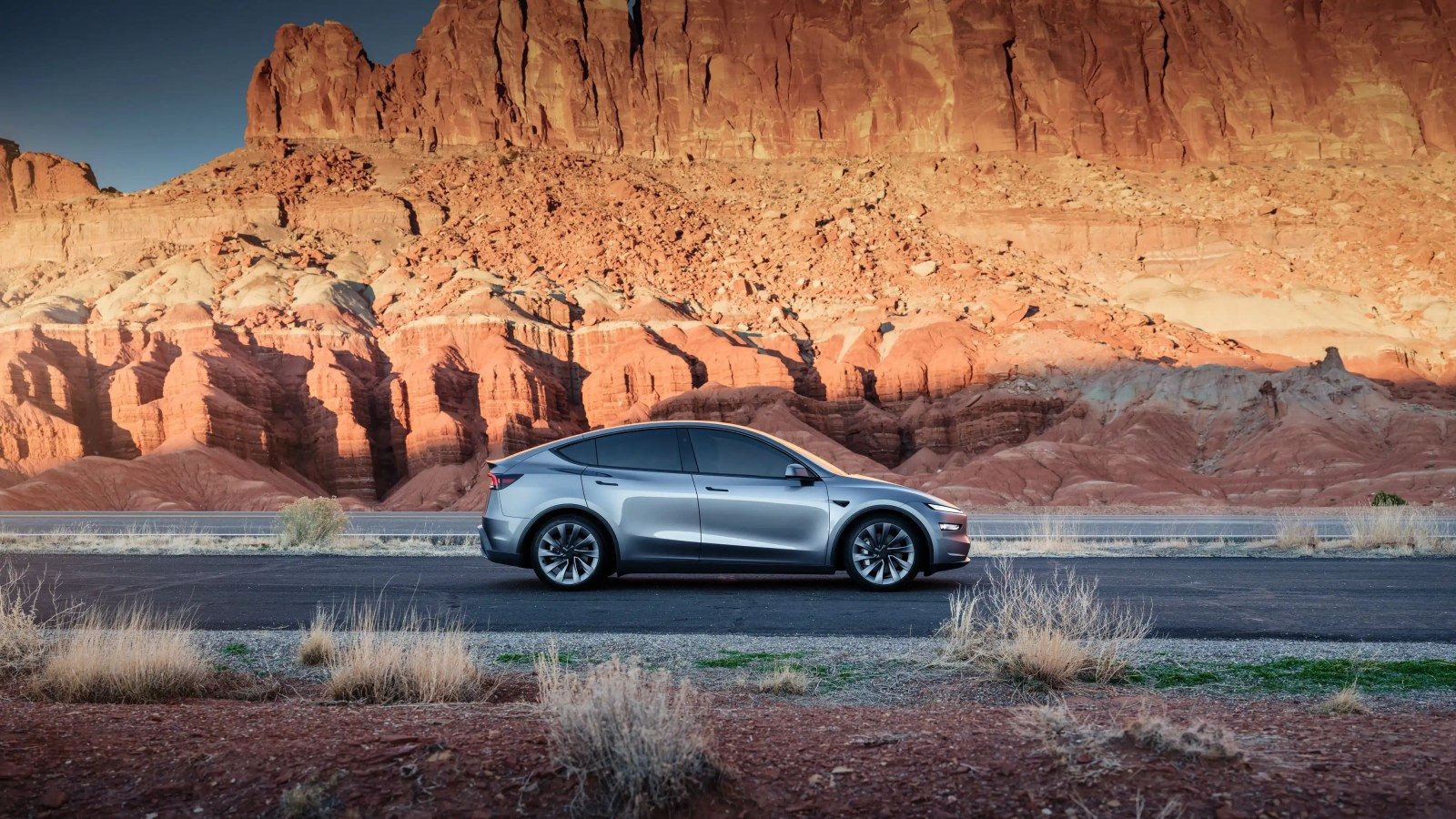

Tesla sold 36,642 vehicles in the United States in June, a 19.7% decline from the 45,628 units sold in the same month a year earlier, estimates released on Thursday by Motor Intelligence showed.
The result marked the company’s weakest monthly showing in over two years and extended a streak of year-over-year declines to nine consecutive months.
Every month in 2026 so far has posted a year-over-year decline in US sales, with the losses ranging from 8% in March to 20% in June.
The downturn accelerated in June, which posted the steepest year-over-year drop of any month this year.
April had previously held that distinction at 18%.
Sales across the three-month period totaled 114,770 vehicles, down 16.6% from 137,653 in the second quarter of 2025.
In the first half of the year, Tesla moved an estimated 234,425 vehicles in the US, roughly 40,200 fewer than the 274,638 sold in the same period of 2025 — a decline of approximately 14.6%.
Tesla‘s US sales have fallen on a year-over-year basis every month since October 2025, the first full month after the $7,500 federal EV tax credit expired at the end of September.
The third quarter of 2025 had been Tesla‘s strongest in the US, as buyers rushed to take advantage of the subsidy before it was eliminated.
Motor Intelligence data showed monthly volumes above 53,000 in July and August of last year and nearly 59,000 in September.
The months since have not come close to matching those levels.
Cox Automotive projected ahead of the quarterly data that Tesla‘s domestic second-quarter sales would fall roughly 20% year over year, shrinking the company’s overall US new-vehicle market share to approximately 2.9%.
Cybercab
While US sales weakened, Tesla advanced several projects during the month that underscore the company’s strategic shift toward autonomy and AI.
The company began engineering tests of its first production Cybercab on public roads in Austin.
The milestone followed months of accelerating production at Giga Texas, where drone footage had shown the company shifting to steering-wheel-free builds as early as April.
Tesla‘s Cybercab was first spotted testing on California roads in late October 2025 with manual controls fitted for safety; by January, testing had expanded to five US states.
FSD Lite
Last week, Tesla also rolled out FSD V14 Lite to Hardware 3 vehicles, a long-promised update for the roughly four million cars built with the older compute platform between April 2019 and late 2023.
VP of AI Software Ashok Elluswamy said the build was reaching early-access customers first, with wider availability expected over the following weeks.
The update distills the driving behavior of the Hardware 4 version of V14 into the older system’s cameras and compute, though it remains a supervised, hands-on system —
Tesla confirmed on its first-quarter earnings call that Hardware 3 vehicles cannot achieve unsupervised Full Self-Driving.
V14 Lite marks the first major FSD build for Hardware 3 cars, which had been frozen on version 12.6 since early 2025.
Global Delivery Figures
Tesla is expected to release its second-quarter global production and delivery figures later on Thursday, in what analysts have described as one of the company’s most consequential data points in two years.
The sell-side consensus compiled by Tesla‘s investor relations team from 22 analysts — including Morgan Stanley, Goldman Sachs, JPMorgan, Wedbush, Barclays, UBS, and Cantor Fitzgerald — stands at 406,024 global deliveries for the quarter, with a median estimate of 408,609.
A separate Bloomberg consensus, drawn from roughly 20 analysts, placed the figure lower at 396,466 vehicles.
Meeting the consensus would represent a roughly 5.7% increase from the 384,122 vehicles delivered globally in the second quarter of 2025 — a period that itself saw a 13% year-over-year decline.
Tesla delivered 358,023 vehicles in the first quarter of 2026, missing the consensus of 365,645 while producing 408,386 — leaving a gap of more than 50,000 vehicles that went into inventory.
Barclays analyst Dan Levy wrote in a recent note that Tesla‘s vehicle delivery volumes have “increasingly become an afterthought” in investor conversations, with the stock driven primarily by expectations around the company’s robotaxi, Optimus humanoid robot, and AI projects.
Cantor Fitzgerald’s Andres Sheppard described 2026 as a “transformational year” for Tesla as it deepens its push into autonomy, AI and robotics.
The analyst called the Cybercab, Semi, and Megapack 3 “material catalysts” that remain on track for volume production this year.
Earlier this week, VP of Vehicle Engineering Lars Moravy teased “cool news” on Giga Texas scaling for July 7, describing the forthcoming update as part of a broader effort at the facility — which also houses Tesla‘s 4680 battery cell operations, a Dojo supercomputer cluster, and a dedicated Optimus humanoid robot factory under construction.
The company raised its fiscal 2026 capital expenditure guidance to more than $25 billion on the first-quarter earnings call — roughly three times the $8.5 billion spent in 2025.
CFO Vaibhav Taneja stated directly that free cash flow would be negative for the remaining three quarters of the year as the company accelerates spending on its autonomy and robotics infrastructure.
The company’s stock traded around $425 heading into the delivery report, up roughly 24% from its April low of $343.25, which followed the first-quarter delivery miss.