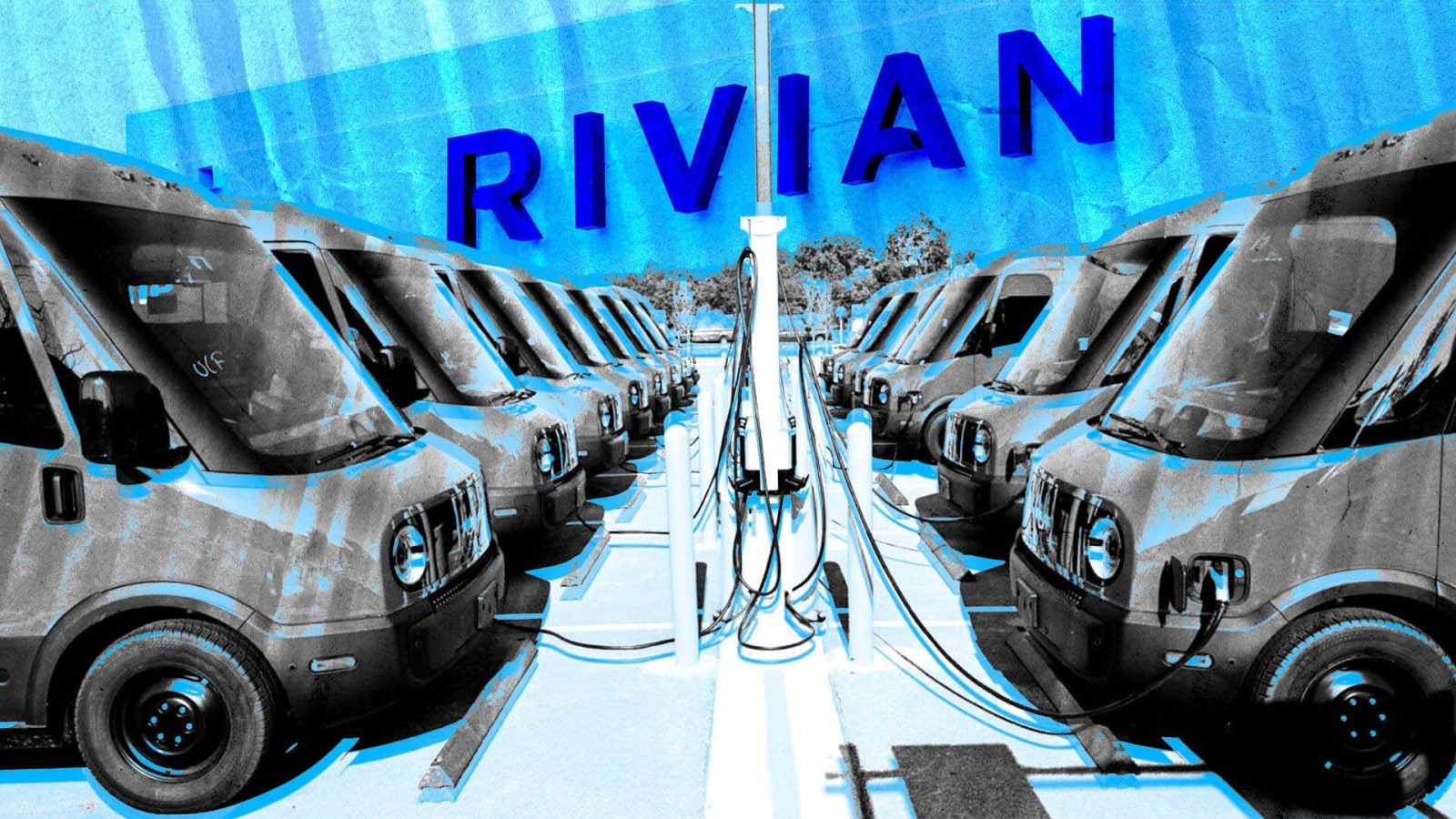

Rivian said on Thursday its commercial van platform surpassed one billion cumulative miles driven in the second quarter, the first mileage figure it has published.
Additionally, the EV maker said that Amazon‘s fleet of its custom-built electric delivery vans passed 40,000 across thousands of cities in North America, up from the more than 30,000 reported in February.
The fleet figure implies roughly 10,000 vans added in about five months, a pace that outruns the 7,216 US van registrations Cox Automotive counted across the entire first half — a total that spans all of Rivian‘s fleet customers, not Amazon alone.
The letter’s own framing has also widened, from vans delivering “across thousands of cities in the U.S.” in February to “North America” now, after Amazon’s first Canadian fleet of 50 began operating in Greater Vancouver in October.
Rivian did not reconcile the two figures.
Shortly after Rivian published its second-quarter results, the shares were trading 1% higher at $17.02 in after-hours trading, after jumping 3.06% during the regular session.
The Quarter
Commercial vans supplied 4,003 of Rivian‘s US registrations in the second quarter on Cox Automotive figures, 32.8% of the 12,194 vehicles it delivered in North America.
Van registrations rose 48.0% year over year from 2,701 and 25.0% sequentially from the first quarter’s 3,213, making it the strongest quarter in more than a year.
First-half volume reached 7,216, up 73.0% on 4,170 a year earlier, and already exceeds the 6,809 vans registered across the first nine months of 2025 — a year in which US registrations fell 27.0% to just under 10,000.
Rivian‘s van outsold every rival combined in the quarter, ahead of Chevrolet BrightDrop — since discontinued by General Motors — the Mercedes-Benz eSprinter, the Ford E-Transit and the Ram ProMaster EV.
Amazon Is Now the Majority of Auto Revenue
Amazon accounted for 52.0% of Rivian’s automotive revenue in the first quarter, up from 11.0% a year earlier, supplying $468m of the $908m total — the most recent breakdown the company has disclosed.
Amazon ordered 100,000 vans in 2019, with the balance scheduled through 2030 — a fleet now past the 40,000 mark on the letter’s figure, against the more than 20,000 in service at the end of 2024.
Amazon said on 4 June that its global electric delivery fleet had passed 50,000 vehicles, halfway to its goal of at least 100,000 by 2030, and that the fleet delivered more than 2.4 billion packages in 2025. The Rivian units are overwhelmingly deployed in the US, with about 600 in Germany alongside the Vancouver fleet; the vans delivered more than one billion US packages in 2024.
A demand tailwind sits behind the order book. Amazon is preparing to cut its shipping partnership with the US Postal Service, of which it supplied about 7.5% of revenue last year, with volume already declining and a full reduction reported likely by the fall.
Absorbing more than a billion packages a year in-house adds last-mile demand — particularly on the suburban and rural routes the new van variants are aimed at.
Scaringe reaffirmed the 100,000-unit target in March and said Rivian is already weighing what comes after the initial contract.
Rivian repeated in the letter that it is developing all-wheel-drive and larger-battery variants of the van to support Amazon’s needs, with the larger pack adding roughly 30% of range — but again gave no timeline.
Goldman Sachs analyst Mark Delaney asked on the first-quarter call when to expect the new variants.
Rivian left the timing unanswered then too, with Scaringe saying only that the company expects some growth in van demand this year and that the variants will “help unlock specific use cases within the Amazon network.”
Rivian has since rehired Aaron Hensler from General Motors as chief engineer of the commercial van platform to lead the program’s next phase.
The Margin Tension
Rivian stated in its first-quarter filing that automotive revenue per unit delivered fell partly because of a higher mix of commercial vans, alongside a $100m decline in regulatory credit sales.
That is the plainest statement available that the van business dilutes the metric the company most needs to improve.
Management has guided R1 and commercial van volumes to stay roughly in line with 2025’s 42,247 units, making the R2 the sole source of growth — though Scaringe said in May he expects some growth in van demand this year, and first-half van volume of 7,216 annualizes well above the 2025 run rate.
Beyond Amazon
Rivian opened commercial van sales to fleets of all sizes on 10 February 2025, after its Amazon exclusivity ended in November 2023. The RCV 500 starts at $79,900 and the RCV 700 at $83,900, both front-wheel drive, on a roughly 100 kWh lithium-iron-phosphate pack giving about 160 miles.
HelloFresh was the first publicly declared customer, taking 70 vans — nearly a quarter of its fleet — since deployed across 14 US markets and driven more than 250,000 miles.
Rivian added the Canadian startup Jetson to the customer base in July, the first observed home-services operator to run the van with its own branding.
Other operators including Slice, Cintas, Wm. Masters and Xcelerate Auto have been observed running the vehicle without confirmed orders, and DHL piloted it in 2024 without a disclosed deal.
Regulatory
NHTSA opened a preliminary evaluation on 22 September into 17,198 vans built in 2022 and 2023, after six complaints that the steel-braided cable anchoring the driver’s seat belt could fray, break or unravel.
Rivian escalated to a voluntary recall of 34,824 vans on 2 December — nearly every van built between December 2021 and November 2025 — attributing the pretensioner damage to drivers repeatedly sitting on a buckled belt.
The remedy pairs an over-the-air misuse-detection update with physical inspection and free replacement of the assembly where needed; no crashes or injuries have been linked, and vans built since early November carry the detection feature from the factory.
Separate over-the-air updates have addressed drive-unit faults and added Google Maps.