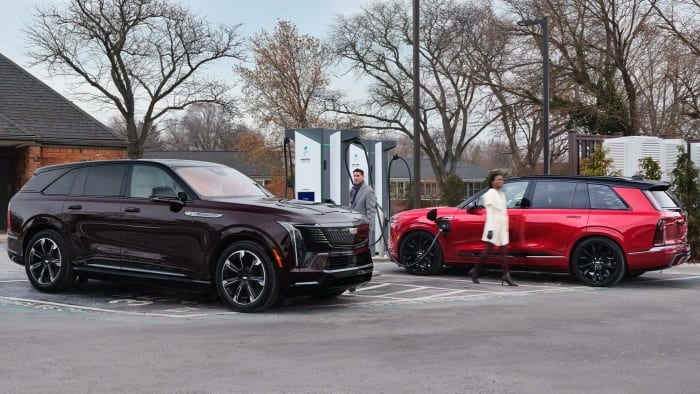

Canadian officials are discussing a proposal to accept US tariffs on auto exports in exchange for reduced levies on vehicles that comply with the United States-Mexico-Canada Agreement (USMCA).
The information was reported by The Globe and Mail on Wednesday, citing US and Canadian industry sources.
Under the plan, President Donald Trump’s 25% auto tariff — imposed under Section 232 of the Trade Expansion Act of 1962 — would be nearly halved for all Canadian auto exports that meet USMCA rules of origin.
American content in Canadian-made vehicles would continue to be excluded from the tariff calculation.
A car assembled in Ontario with 50% US content would face the reduced levy on only half its value, bringing the effective rate to single digits.
Canadian officials have also floated a separate proposal that would apply tariffs only to content originating outside North America, according to the report.
Mexican negotiators have made a similar pitch in their own bilateral talks with Washington, arguing the approach would incentivize auto investment within the trade bloc.
Negotiations Ahead of Aug. 19
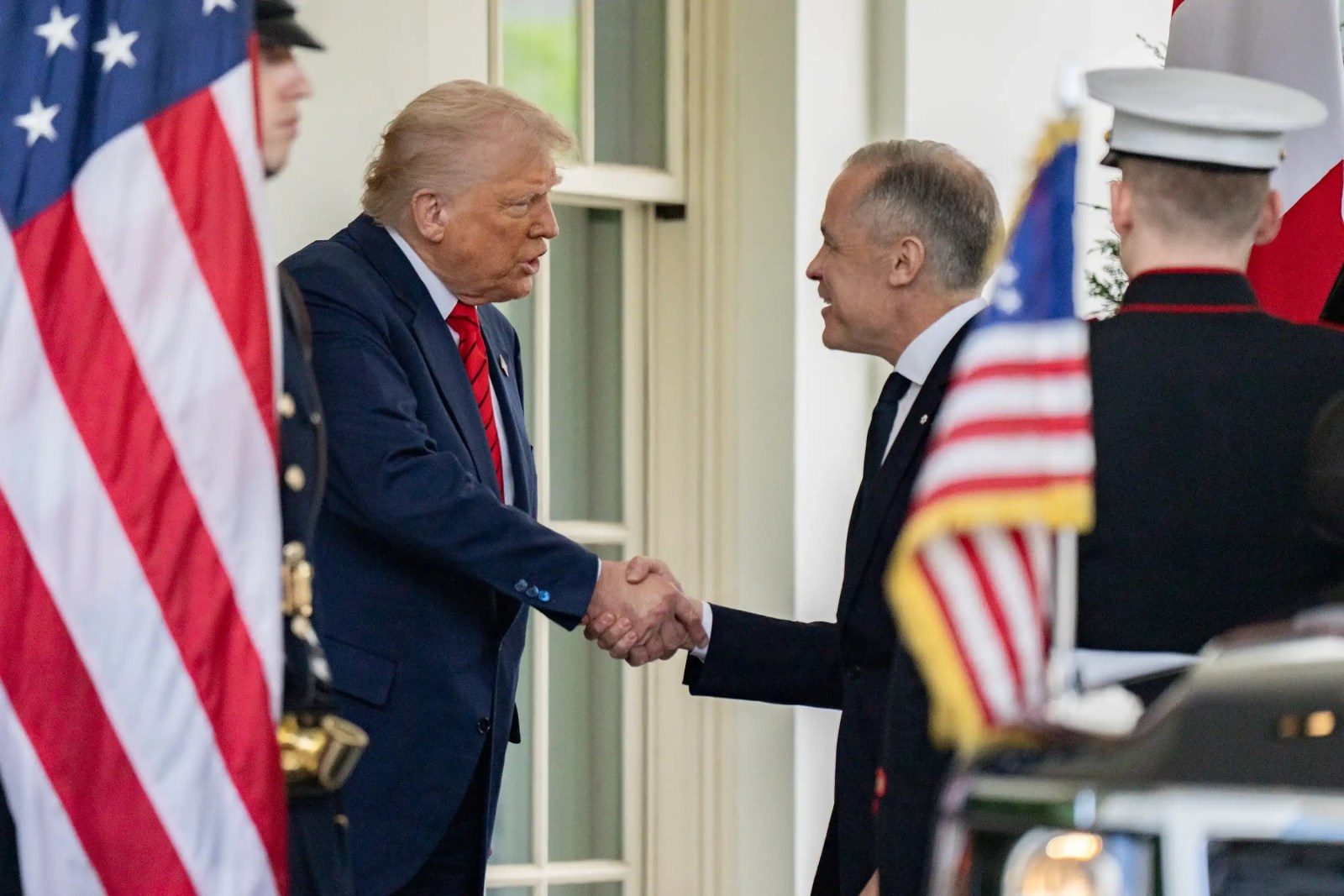
Prime Minister Mark Carney has committed to reaching a deal that reduces Trump’s tariffs on autos, steel, aluminum and forest products.
For that, Trade Minister Dominic LeBlanc and chief negotiator Janice Charette met US Trade Representative Jamieson Greer at his office in the Winder Building near the White House on Tuesday, according to the report.
Officials from both countries exchanged written proposals during the meeting, their third sit-down in as many weeks.
Canada had previously submitted written proposals, and Greer provided feedback on them at last week’s session, a US industry source told The Globe and Mail.
Canadian officials are rushing to finalize terms before August 19, when Trump has threatened to impose 50% tariffs under Section 338 of the Smoot-Hawley Tariff Act of 1930 on an additional $20 billion of Canadian exports.
Trump signed three proclamations in mid-July imposing those duties on goods ranging from wine to cement, citing Canadian trade practices the White House called discriminatory.
An outline of a steel and aluminum agreement has been clearer than one for autos, which US negotiators have reportedly held back as their strongest point of leverage.
Tolerance for a Reduced Tariff
Canadian negotiators have consulted with auto industry leaders to determine acceptable concessions, according to the sources.
A provincial source briefed on the talks said the auto sector has indicated a tariff of 10% to 15% would be manageable, provided American content remains excluded from the calculation.
About 50% of a Canadian-made car originates in the United States, owing to deeply integrated cross-border supply chains.
At a 12.5% tariff with the US-content exemption, an Ontario-assembled vehicle with typical content splits would face an effective levy of about 6% to 7%.
However, Flavio Volpe, Head of the Automotive Parts Manufacturers’ Association, has pushed back against that range.
A tariff of 10% to 15% “does not work for car makers or parts makers,” he told the newspaper.
Volpe said he had spoken with both Canadian officials and US industry representatives and remained optimistic about the broader negotiations, while acknowledging significant gaps.
Unifor national president Lana Payne argued Ottawa should not accept any US auto tariff in the deal.
Doing so would lay the groundwork for Washington to push for permanent tariffs under a renegotiated USMCA, the representative stated, warning that agreeing to levies in writing would guarantee long-term plant closures and layoffs.
The union represents 40,000 auto workers across the country.
A Sector Already Under Severe Pressure
Canada’s auto industry has absorbed the brunt of the trade war since Trump’s tariffs took effect in April 2025.
Conservative leader Pierre Poilievre catalogued layoffs earlier this year: Stellantis Brampton (3,000 positions), GM Oshawa (700), GM CAMI (1,000), Magna London (49), Autonium London (118), TFT Global (245) and positions in Quebec totalling 475.
BMO warned in March that Canadian vehicle production had fallen 33% below pre-pandemic levels, with the country assembling just 1.2 million passenger vehicles in 2025.
Canada’s auto sector supports more than 500,000 workers and contributes over C$16 billion ($11.5 billion) annually to GDP, according to government figures.
More than 90% of Canadian-made vehicles and 60% of domestically produced auto parts are exported to the United States.
Canadian auto parts that do not comply with USMCA rules currently face a 25% tariff under Section 232 when entering the US.
Canada’s counter-tariffs cut American auto exports to Canada by $5.6 billion between April 2025 and March 2026 — a 22% drop, according to White House figures.
USMCA in Limbo After July 1
Any bilateral auto tariff deal would take shape against the backdrop of the USMCA’s uncertain future.
Greer has said he wants “interim” deals with both Canada and Mexico before moving to a larger trilateral overhaul, which would include auto content requirements.
In talks with Mexico, Greer has already demanded a 50% US content requirement for vehicles.
Auto talks carry additional political weight, as Washington has demanded Canadian provinces lift their bans on American alcohol sales as part of any broader agreement.
Securing that concession would require approval from Ontario Premier Doug Ford, whose province contains the majority of Canada’s auto manufacturing base.
Ford has been a vocal critic of Ottawa’s separate trade deal with China on EVs, calling Chinese EVs “subsidized spy cars,” and of Trump’s extra duties on the country last month, calling the US President a “bully” several times over the past weeks.