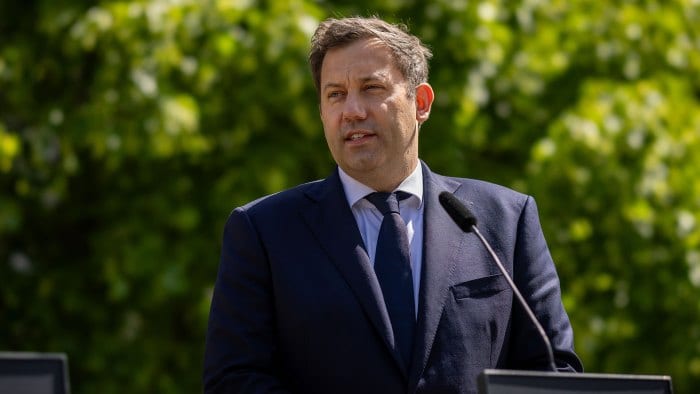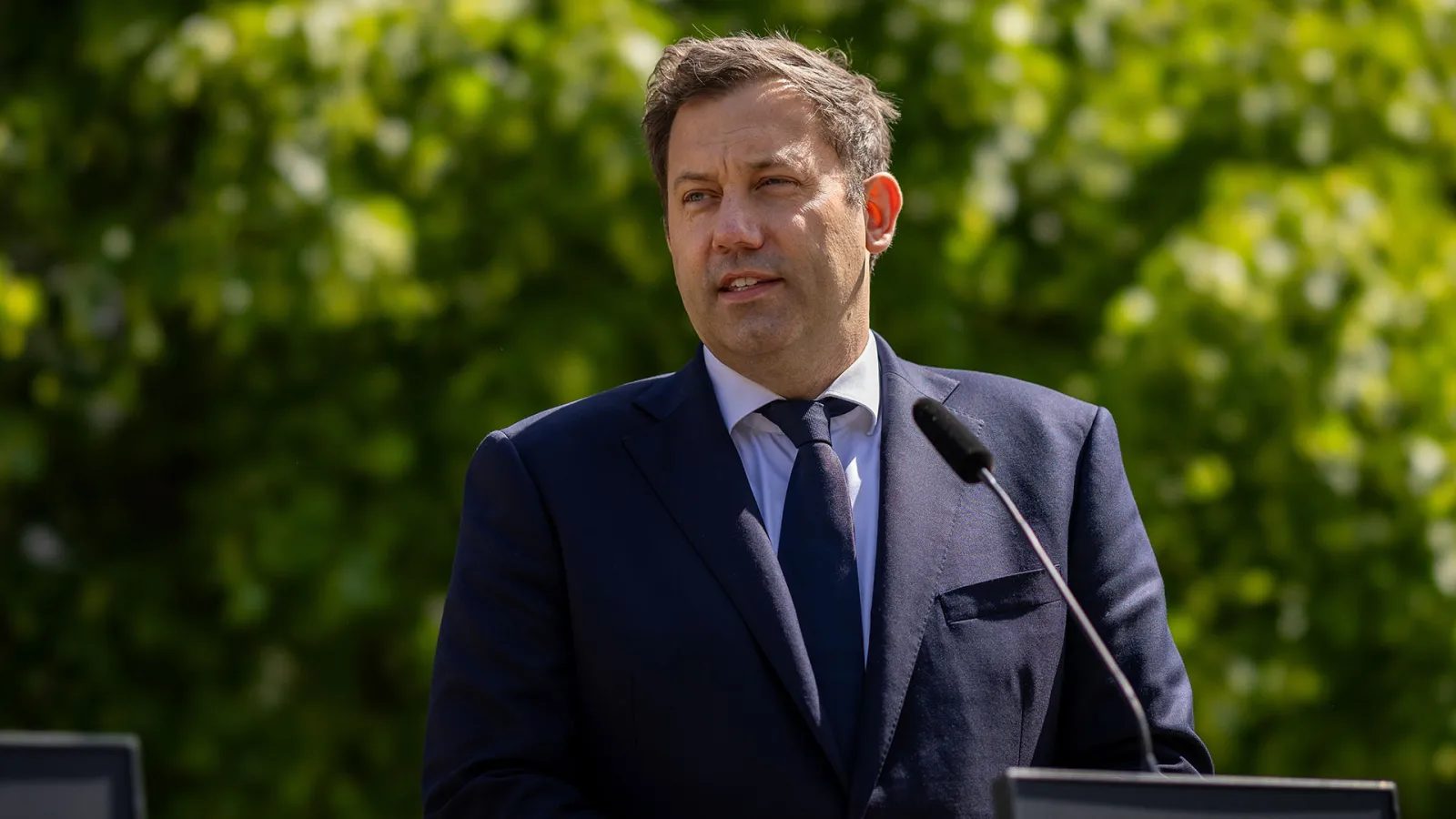

Germany’s Vice Chancellor Lars Klingbeil called on Thursday for the European Union to impose tariffs on Chinese-made plug-in hybrid cars and tighten local-content rules, speaking outside Volkswagen’s headquarters in Wolfsburg two weeks after the carmaker approved its deepest restructuring in decades.
The Vice Chancellor serves as Finance Minister and is the most senior Social Democrat in Chancellor Friedrich Merz’s coalition.
He made the remarks after meeting works council leaders from Volkswagen and subsidiaries including Audi and Porsche, where the premier of Lower Saxony, Volkswagen’s second-biggest shareholder, was also present.
“I am in favour of us standing up against unfair trade practices, and for Germany to adopt a different level of self-confidence and assertiveness towards countries that threaten our industry,” Klingbeil told reporters, according to Reuters.
Klingbeil also said Chinese firms that want to do business in Europe should be required to form joint ventures, mirroring the rules Western brands lived under in China. “I have long asked myself why we cannot use the same instruments. We have to play by the same rules.”
The intervention lands in a week of fast-moving trade pressure on Beijing.
The Financial Times reported on Thursday that Brussels is asking China to voluntarily cap hybrid exports at about 15% of the European market.
Nissan‘s top European executive additionally said on Wednesday that the United Kingdom may need to raise import tariffs on Chinese vehicles to remain inside the EU’s emerging trade protections.
Klingbeil is pushing duties and origin rules while Brussels is still trying a negotiated cap.
The Hybrid Gap
Brussels imposed anti-subsidy duties on China-built fully electric vehicles in October 2024, ranging from 7.8% for Tesla to 35.3% for SAIC, on top of the standard 10% import duty.
Plug-in hybrids were excluded. They still enter the bloc at the baseline 10%.
Chinese manufacturers shifted their export mix toward the gap.
Chinese hybrid imports into the EU rose from about 3,800 vehicles in October 2024 to 50,000 in July 2026 — a thirteenfold increase that began the month the battery-electric duties took effect, according to the Financial Times.
The European Commission publicly denied having an active investigation into Chinese hybrids as recently as January.
Eight months later, the position has moved.
How Fast the Share Is Growing
Registration data from the European Automobile Manufacturers’ Association show the scale of the shift.
The five largest Chinese-owned automakers — BYD, SAIC, Chery, Leapmotor and Geely — registered 791,958 vehicles across the EU, EFTA and the United Kingdom in the first half of 2026, about 11% of the market.
Inside the plug-in-hybrid segment the shift is sharper: Chinese brands took about 28% of European PHEV sales in the first half and 34% in June, which is the category still paying only the 10% duty.
Jato Dynamics projects Chinese brand registrations in Europe will exceed 1.3 million vehicles this year, up from about 50,000 in 2020.
BYD alone registered 174,144 vehicles in the six months, overtaking Tesla’s 170,351 for the first time, on a range that combines fully electric cars with plug-in hybrids including the Seal U DM-i, Atto 2 DM-i and Dolphin G.
Leapmotor’s European registrations rose 558% in the first half to 56,005 through its Stellantis venture.
Plug-in hybrids took 9.8% of the EU market in the first half, up from 8.5% a year earlier, with 577,735 registrations.
Growth was steepest in Italy at 84.3%, Spain at 39% and Germany at 17.9%.
Why They Are Coming
The domestic market is collapsing under them.
Passenger car sales in China fell 23.7% in August to 1.55 million, according to the China Passenger Car Association — the eleventh consecutive monthly decline.
Exports rose 77.5% in the same month to 894,000. The association forecasts 12 million exports this year.
BYD’s domestic sales are down 33% in the first eight months of 2026, while overseas sales rose 86%.
Geely Auto exported 110,094 vehicles in August, up 205%, its eighth consecutive monthly record.
Chery exported 196,984 vehicles in August, accounting for 70% of its group sales, and became the first Chinese manufacturer to pass seven million cumulative exports.
Every one of them is now selling more cars abroad as a share of output than it was a year ago, and Europe is where the hybrids go.
Volkswagen’s Overhaul
Volkswagen’s supervisory board unanimously approved CEO Oliver Blume’s “Future Plan 2030” on September 3, in a surprise vote that came a day ahead of schedule.
The restructuring calls for 50,000 additional job cuts globally by 2030, on top of 50,000 already agreed with unions in late 2024 — doubling the total workforce reductions across Volkswagen Group brands.
About half of the new cuts would fall in Germany.
Four plants — in Emden, Zwickau, Hannover and Neckarsulm — face potential closure or reallocation of production from early next decade unless alternative uses can be found.
Klingbeil acknowledged the overhaul but framed it as a process with political backing.
“We are aware that this is the beginning of a transformation but employees can be assured that I, we, stand by them in solidarity,” he told reporters, according to Reuters.
An IG Metall deal on the first round of cutbacks was reached at the start of this month.
Building From Inside Europe
Chinese manufacturers are already moving production into the bloc, a pattern that would reduce their exposure to any new duties.
Chery is due to start building at a former Nissan plant in Barcelona this year.
Geely took a 34% stake in Ford’s Valencia plant in July, with production from 2028.
BYD is getting ready to begin production in Hungary, where it built a plant, and to establish production in already existing facilities across the continent.
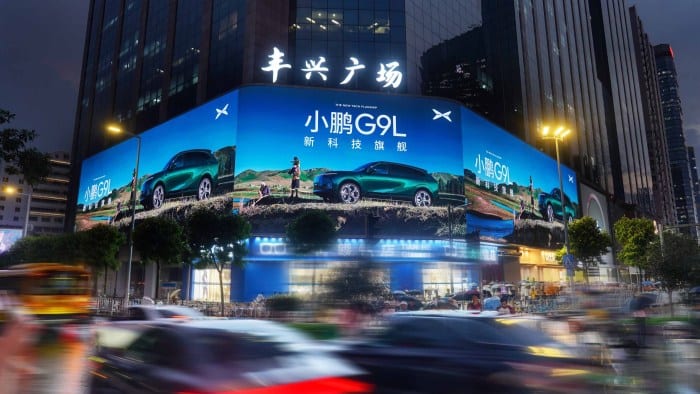
XPeng assembles through Magna in Austria, while Leapmotor builds on Stellantis lines.
The precedent is Japan’s 1986 voluntary export restraint with the European Community, under which Tokyo capped car shipments rather than face quotas.
Its lasting effect was Japanese plants across Europe — Nissan’s Sunderland, Toyota’s Burnaston, Honda’s Swindon.
Commission President Ursula von der Leyen told the European Parliament on Wednesday that a second wave of Chinese industrial competition was already under way.
She put the EU’s goods deficit with China at €360.6 billion for 2025, widening by about €1 billion a day in the first half of this year.
Trade Commissioner Maros Sefcovic was due to speak with China’s Commerce Minister Wang Wentao on Thursday ahead of a visit to Beijing in early October.
Beijing has rejected the overcapacity argument as protectionist.
On September 1, China’s Commerce Ministry and two other agencies issued compliance guidelines for overseas competition in the car industry, and BYD, Chery and Geely pledged to follow them.