BYD has entered exclusive negotiations to buy Ineos Automotive’s car plant in Hambach, France, the Chinese EV maker said on Tuesday, a deal that would give it a second car plant in Europe as Brussels prepares local-content rules.
“Our commitment to Europe is long term,” Executive Vice President Stella Li said in a statement. “Our proposed investment in Hambach reflects our confidence in France and our ambition to keep growing in Europe.”
“We want to give European consumers the choice of vehicles built in France that bring our technology and our innovations in electric mobility closer to home,” she said.
BYD said the proposed transaction “remains subject to consultation with the relevant works councils.” It said it was determined to keep the plant in production and support local jobs.
The company said it aims to use the site to produce vehicles “specifically designed for European motorists,” according to the statement as carried by AFP.
Neither company gave a price.
Ineos Automotive, the off-road vehicle maker owned by industrialist Jim Ratcliffe, confirmed the talks and said separately that it would begin building its Grenadier in the United States in 2028.
CEO Lynn Calder told the Financial Times that several other Chinese carmakers had approached the company. It chose exclusive talks with BYD after assurances on job protection and long-term production, she told the newspaper.
The plant can build up to 120,000 vehicles a year, while Ineos produces only about 11,000, according to the report.
France’s Industry Minister Sébastien Martin welcomed what he called BYD’s “willingness to commit for the long term to production on French soil,” AFP reported.
He said the decision “gives visibility to the more than 1,200 employees of the site” and that the project would follow “Made in Europe” terms agreed between France and Germany, with “70% European components and a gradual incorporation of our batteries.”
How France Got on the List
BYD’s public position on taking over an existing European factory has shifted this year.
In May, asked whether plants owned by established carmakers in France or Germany held any appeal, Li said BYD preferred to operate independently.
The following month the position had changed. “We would prefer to take over an existing plant,” Li said at a press event in Berlin in June.
By September, the company’s special adviser for Europe, Alfredo Altavilla, said BYD was looking “to acquire and refurbish an existing facility rather than build a new plant from scratch,” with Spain and France among its preferred locations.
He said then that BYD expected to decide on a second manufacturing site by the end of the year.
Li named France herself at the Paris Motor Show on October 12, when she said BYD aimed to build two more plants in Europe.
“France is on the shortlist because your energy is very competitively priced,” she told French broadcaster BFM Business, adding that BYD was closely studying a French factory.
“We will try to build a second and third plant in Europe. What interests us is the long term,” she said in the same interview.
“My goal is very simple: I want French consumers to love BYD, to see BYD as a French brand,” Li said.
Two weeks later, Vice President Liu Xueliang said new European plants were due to start “soon.”
Hungary, Turkey and Spain
Hambach would add to a European footprint that has run behind schedule.
“Hungary is the number one priority right now,” Li told Reuters in June. “The second priority will be to focus on finding a second facility in Europe.”
BYD’s first European car plant, in Szeged, Hungary, began trial production on January 29 and is about a year behind its original timetable. Li said in Paris that BYD was preparing to start mass production there in the fourth quarter, and Altavilla had pointed to early December.
Reuters reported on Tuesday that mass production in Hungary is expected in early 2027. BYD’s statement on Hambach did not address the Hungarian schedule.
The Szeged project also faces a review by Hungary’s new government of investment agreements signed with Chinese companies under former Prime Minister Viktor Orbán. Li has said BYD complied with all local rules and remains committed to the plant.
In Turkey, a planned $1 billion factory in Manisa with capacity for 150,000 vehicles a year is on hold. Li said in June that construction had not started and gave no timeline. Turkey suspended BYD’s import tax exemptions that month and warned it could seek repayment.
Spain has stayed in the running. Li told Spanish news agency Europa Press in a recent interview in Abu Dhabi that the country was among those shortlisted for a plant. “We’ll see how the process goes,” she said, according to Spanish outlet Híbridos y Eléctricos.
Tuesday’s statement did not mention Spain.
Altavilla said in September that the company would need more than two sites. “Over the longer term, we will need three assembly plants and one battery plant,” he said.
Why BYD Wants to Build Locally
The push follows a tightening of European trade rules on Chinese cars.
The European Union’s draft Industrial Accelerator Act would set a threshold of about 70% local content for subsidies and public procurement. Brussels has also imposed tariffs on Chinese-built EVs and moved to cap imports of Chinese hybrids.
The European Commission published the hybrid quotas on Tuesday. They limit imports from China to 191,780 vehicles between December 1 and June 18, 2027.
“Manufacturing closer to our customers is part of our strategy to strengthen our leadership in electric mobility and contribute to the growth of the European automotive industry,” BYD said on Tuesday.
BYD’s share of the market in Europe and the United Kingdom rose to 2.8% in the first 10 months of the year from 1.3% a year earlier, putting it ahead of Nissan, Tesla and Ford, the Financial Times reported, citing industry body ACEA.
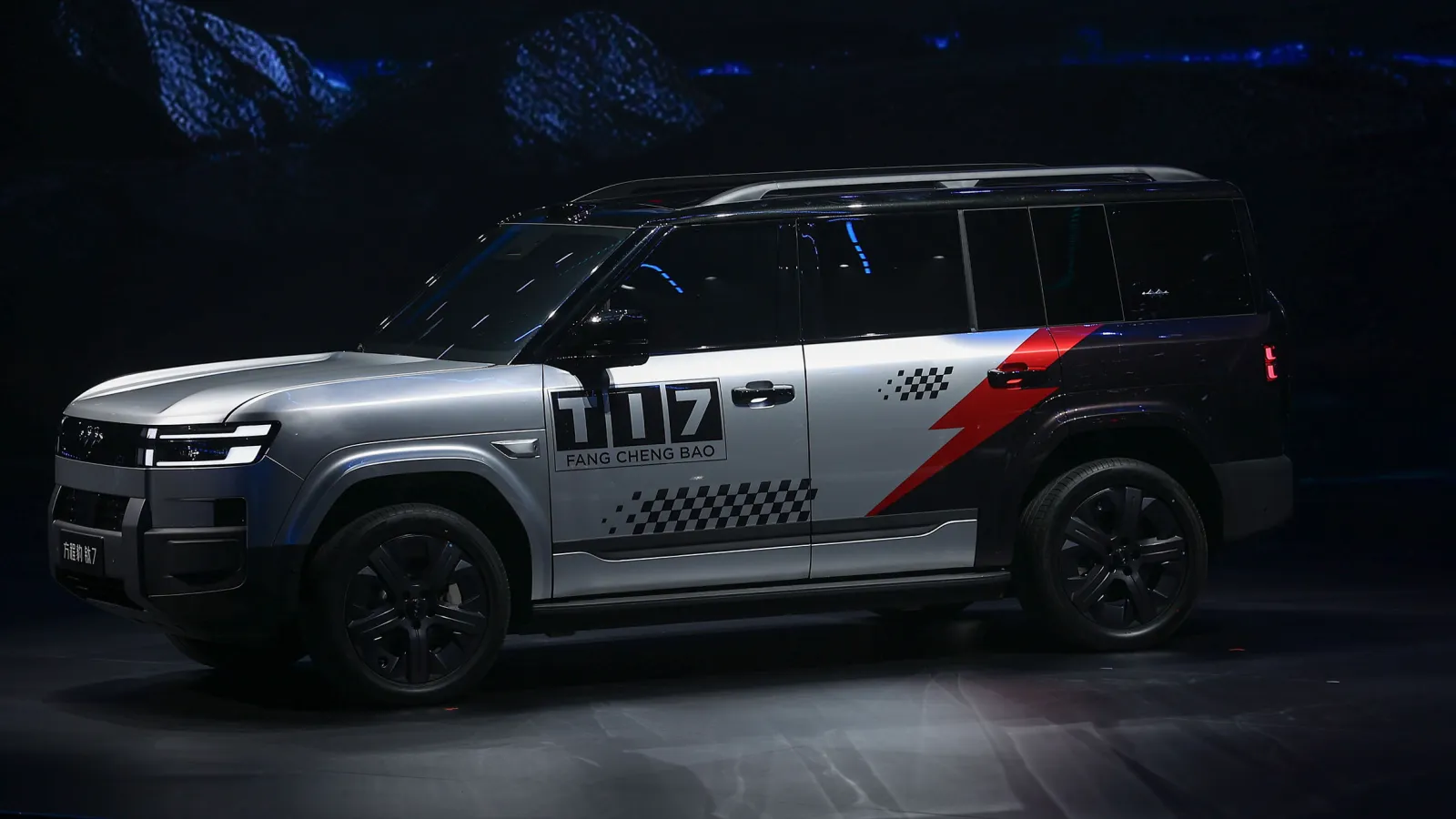
The company suffered a setback last week, when a Dutch court barred it from selling its Ti7 SUV in the European Union over the design of the Land Rover Defender. BYD has said it will appeal.
Other Chinese carmakers have mostly chosen to share European factories. Dongfeng is due to build cars at a Stellantisplant in France and Geely at a Ford plant in Spain, according to Reuters.
Chery took over a former Nissan plant in Barcelona in 2023. It has said it prefers partnerships using existing factories to heavy investment in a new plant, and has also named France as a possible location.
Ineos Looks to the U.S.
For Ineos, the sale would accompany a move toward its largest market.
The United States accounts for 70% of Grenadier sales, the company said. It has shortlisted production sites there and expects to make a final decision “within the next few months.”
“This is arguably the biggest moment in the history of Ineos Automotive,” Calder said in a statement. She said Americans “have already taken the Grenadier to their hearts.”
If the talks succeed, the Grenadier and the Quartermaster pickup “would continue to be produced at Hambach for the medium term,” Ineos said.
The company lost €701 million ($768.7 million) last year, compared with a loss of €290 million ($318 million) in 2024, and has been hit by the 15% U.S. tariff on European car imports, according to the Financial Times.
“We’ve barely scratched the surface of what our potential is in the United States,” Calder told the newspaper.
The Hambach plant was previously owned by Mercedes-Benz. Ineos took it over in 2021.
Signs of BYD’s interest had already surfaced at the plant. A union source told French regional daily Le Républicain Lorrain earlier this month that visitors wearing BYD badges had been on site, and that the plant had lost about 300 workers in a year and was building about 50 vehicles a day.
“We are not against BYD coming if it can save our jobs,” the source said.
BYD’s Hong Kong-listed shares closed down 1.5% at HK$60.30 ($7.69) on Tuesday and its Shenzhen-listed shares fell 2.7% to 75.96 yuan ($11.40).
Both markets had closed before the companies confirmed the talks.