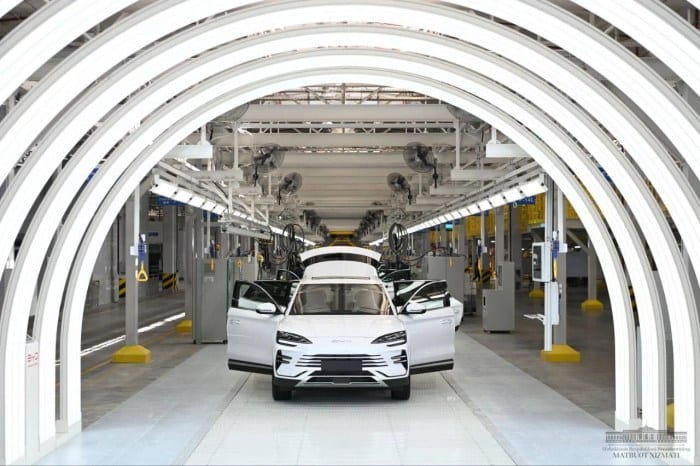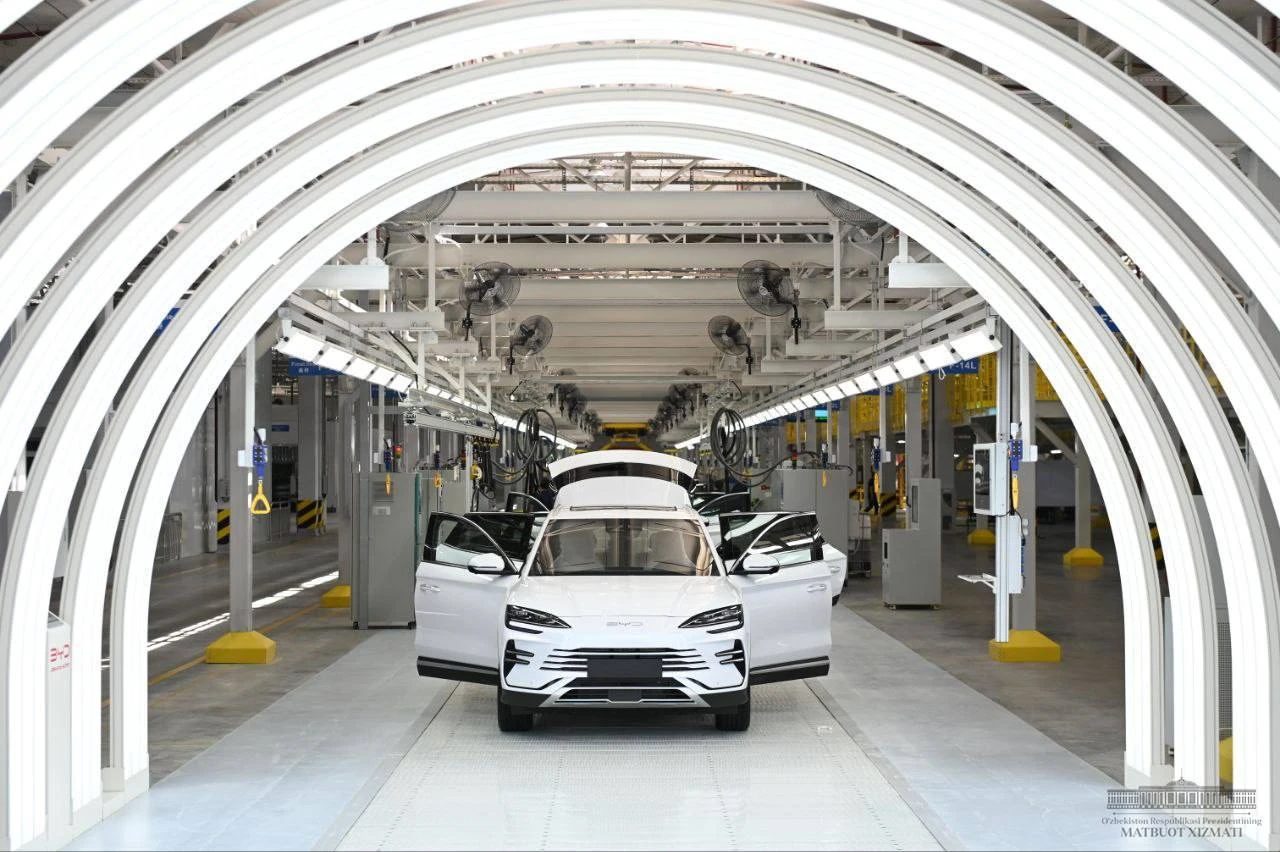

BYD will need three vehicle assembly plants and one battery factory in Europe over the longer term to pursue its growth plans and comply with EU regulations, its special adviser for Europe said.
The Chinese giant is currently in trial production at its first European plant in Hungary and expects to decide by the end of the year on a second manufacturing site, Alfredo Altavilla said at the opening of a Denza sales centre in Turin on Wednesday.
The company is looking to acquire and refurbish an existing facility rather than build a new plant from scratch, with Spain and France among its preferred locations, he said.
Italy was not on the list. A year ago, at a conference in Milan, Altavilla told Reuters it was “hard to imagine” a plant in countries “not friendly with Chinese cars,” and noted that Rome had supported the EU’s tariffs on Chinese electric vehicles.
Altavilla stated that “over the longer term, we will need three assembly plants and one battery plant.”
“Obviously, this is not something that will happen overnight,” he noted, adding that, “however, it is clear that, to achieve the volume targets we have in mind, while at the same time complying with European regulations, that is what we will need.”
Altavilla has previously said the company still had to decide whether to prioritize a third assembly plant or a battery facility, noting that energy costs would weigh heavily on the choice.
The European Union’s draft Industrial Accelerator Act would set a threshold of about 70% local content for subsidies and public procurement, a figure that was still in square brackets when the proposal was published in February.
It is not yet a manufacturing obligation, but it strengthens the case for both vehicle and battery production on the continent.
Overseas Sales Targets
The manufacturing roadmap tracks an overseas sales machine that has consistently outrun management’s own projections.
BYD has raised its overseas sales target to 1.9 million–2.0 million vehicles for 2026, up from 1.5 million set in March, which itself had been increased from 1.3 million in January.
The latest figure came from an investor briefing on September 7, disclosed in a Deutsche Bank note the following day.
The bank also reported that overseas profit per vehicle ran at about 20,000 yuan ($2,950) in the first half, and that management sees shipping capacity, not manufacturing, as the constraint on exports this year. BYD owns its own vehicle carriers and plans to expand the fleet.
Through the first eight months of 2026, overseas sales reached 1,162,260 units, up 85.7% year over year.
August alone accounted for a record 189,466 vehicles, a fifth consecutive monthly record.
Exports were 43% of August volume, and 43.6% of the eight-month total, up from about 25% at the start of the year.
Overseas revenue exceeded domestic revenue for the first time in the first half, representing 53% of the company’s total.
BYD in Europe
European registrations have mirrored that pace. Sales rose 169.7% year over year to 50,646 units in the first quarter of 2026, lifting market share to 1.8% from 0.7%.
BYD registered 174,144 vehicles across the EU, EFTA and Britain in the first half of 2026, overtaking Tesla’s 170,351 for the first time and lifting its share of the EU market to 2.4% from 1.0%, according to ACEA data.
Full-year 2025 registrations across the same markets reached 187,657, up about 270% from the year before.
The growth has unfolded while BYD faces a combined 27% tariff on China-built EVs — a 17% countervailing duty imposed by the European Commission in October 2024 on top of the EU’s standard 10% import tariff.
Building locally would allow the company to sidestep those levies.
Hungary and Turkey
BYD’s first European passenger car plant, in Szeged, Hungary, began trial production on January 29 with 960 employees.
Executive VP Stella Li told Reuters in June that vehicle assembly would begin in the fourth quarter of 2026, with equipment still being installed.
Management told analysts on September 7 that it expected assembly to begin in November or December.
The plant is designed for 200,000 vehicles a year at full ramp, though BYD has said output will run well below capacity for at least two years.
However, the Szeged project has faced several headwinds.
Hungary’s new government under Prime Minister Péter Magyar is reviewing investment and subsidy agreements signed with Chinese companies under his predecessor Viktor Orbán and has tightened environmental enforcement at their factories, Nikkei reported.
A police investigation into the removal of contaminated soil from the construction site remains open.
Li has said the company complied with all local rules.
BYD has been in Hungary since 2016, when it opened an electric bus assembly plant at Komárom.
The company has moved its European headquarters to Budapest last year.
Additionally, a $1 billion factory announced in Turkey in 2024 is on hold. Li told Reuters in June that construction had never begun and that no timeline had been set, adding that Hungary was the priority.
That is a reversal from what Altavilla himself said in September 2025, when he told Reuters the Turkish plant would come on line in March 2026 and that Hungary and Turkey together would have 500,000 vehicles of annual capacity.
Acquiring Rather Than Building
BYD’s preference for buying an existing facility reflects conversations already underway with European automakers.
In May, Li said BYD was in talks with Stellantis and other carmakers about acquiring underutilized factories across the continent, including in Italy.
“We are looking for any available plant in Europe because we do want to utilize this kind of spare capacity,” Li told Bloomberg in May.
The approach marks a shift from the greenfield investment in Hungary toward taking over established manufacturing infrastructure from incumbents dealing with overcapacity.
BYD has repeatedly said it will not pursue joint ventures or contract manufacturing arrangements with European OEMs.
Li told Bloomberg in May that a joint venture arrangement would not work for the company — a position consistent with her earlier stance on potential manufacturing in Canada.
BYD wants to keep its processes and platforms in-house.
Trucks Built Locally
BYD unveiled the ETT 44, a battery-electric 44-tonne tractor unit, at IAA Transportation in Hannover earlier this week.
The truck features a 651 kWh Blade Battery and a claimed range of up to 600 kilometers.
Customer deliveries are targeted for the second quarter of 2027.
Li said at the event that BYD intends to build in Europe whatever it sells there, a commitment that extends to its commercial vehicle lineup.
A production site for the European truck line has not been chosen.
BYD’s European commercial vehicle portfolio already includes electric buses, built at Komárom since 2016, and the E-Vali electric van.
A Shrinking Home Market
The European manufacturing push comes as BYD’s domestic business contracts.
Sales in China fell 32.7% to 1,505,755 vehicles through August, dragged down by a price war that has compressed margins industry-wide. August alone was 250,827, down 14.3% from a year earlier.
Chairman Wang Chuanfu warned in March that competition in China’s EV market had reached “fever pitch,” describing the sector as undergoing a “knockout stage.”
Second-quarter net profit reached 8.2 billion yuan, up 30% year over year, snapping a four-quarter losing streak.
International demand provided the lift that BYD’s home market could not.
The company reported a first annual profit decline in four years for 2025, when net profit fell 19% to 32.6 billion yuan despite a record 4.6 million units sold.
BYD’s Hong Kong-listed shares closed Wednesday at €8.75 in Frankfurt, down 1.5% on the day, 18% this year and 29% over twelve months, about 30% below the October high of €12.49.