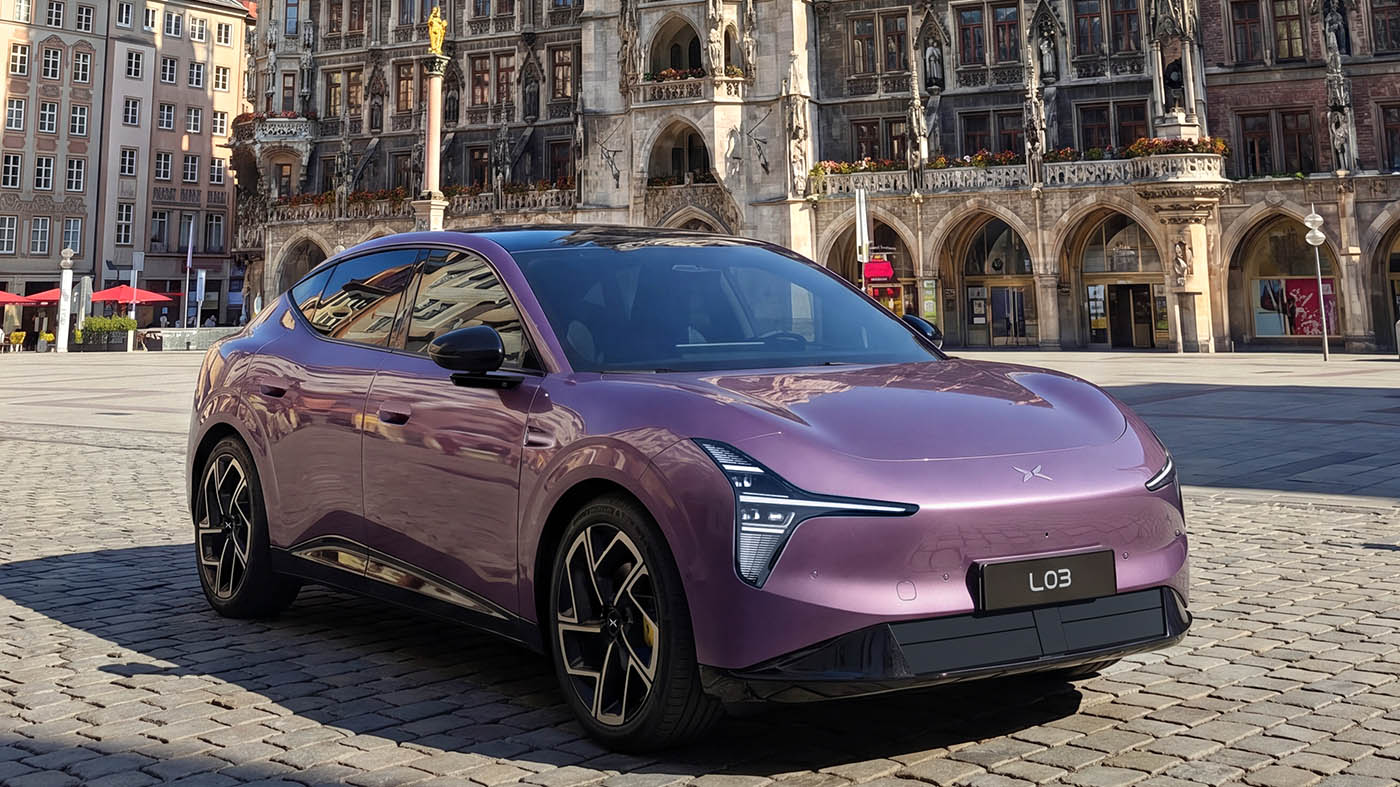
XPeng has received approval to run Level 4 robotaxi demonstration operations across all of Guangzhou, moving its XPENG YOYO service from technical testing toward public operation in its home city.
The company said on Monday that it had obtained a qualification for demonstration operations of intelligent connected vehicle applications in Guangzhou, allowing it to carry out “L4-level Robotaxi demonstration operations throughout Guangzhou.”
The approval means XPeng’s robotaxi “now has the qualification for public demonstration operations,” taking the business “from technical validation further toward operations and business model validation,” the company said.
Access will stay limited for now. “In the early stage of demonstration operations, XPeng Robotaxi will continue to open the experience gradually through invitation codes, steadily expanding the service scope on the premise of ensuring safety,” XPeng said.
XPeng did not say how many vehicles it will deploy or what riders will pay, or say whether a safety officer will be on board during demonstration rides.
The approval comes 18 days after XPeng named its robotaxi business XPENG YOYO and opened registration to the public on October 8.
On that day, it launched a robotaxi page on its website and a WeChat mini-program called “XPeng YOYO Autonomous Driving” for ride-hailing. It said invitation codes would be issued to members of the public.
Robotaxi Timeline
XPeng’s robotaxi program has moved quickly this year after years of shifting timelines.
Founder and CEO He Xiaopeng pledged in July 2024 to launch a robotaxi in 2026, then declined in April 2025 to give a timeline, citing “huge challenges.”
XPeng began road testing in Guangzhou in January 2025 and set up a dedicated robotaxi division in March 2026, led by Yuan Tingting, who joined from Alibaba’s DAMO Academy in 2024.
Its first mass-produced robotaxi rolled off the line in Guangzhou in May. In July, XPeng connected online booking, automated pickup and drop-off, and began employee testing.
In August, it received a Guangzhou remote testing qualification allowing road tests with no safety officer in the driver’s seat on designated Class I, II and III test roads. XPeng also ran paid internal tests at 1 yuan ($0.15) a ride to check payments and service flows.
By the time it reported second-quarter results on August 24, its robotaxis had completed more than 2,000 internal test orders. XPeng said in May that it planned to start passenger demonstration operations in Guangzhou in the third quarter.
A GX with four Turing chips
The robotaxi is based on the GX, XPeng’s six-seat flagship SUV. XPeng calls it China’s first robotaxi developed fully in-house and fitted for autonomy at the factory.
Each vehicle carries four of XPeng’s Turing AI chips with 3,000 TOPS of effective computing power, which the company says is the highest of any vehicle worldwide. It runs XPeng’s second-generation VLA, or vision-language-action, model.
The system uses cameras and does not rely on LiDAR or high-definition maps. XPeng says this lets it deploy quickly in different cities, and that the same model bridges Level 2 driver assistance and Level 4 autonomous driving. The brand said in August that its driving model can now predict six seconds ahead.
Inside, riders can preset the air conditioning and switch on a fragrance system from the mini-program. The cabin has zero-gravity seats, massage functions and a large rear entertainment screen.
Platform, not operator
XPeng does not plan to run the fleet itself. He has said the company will act as a “technology provider and ecosystem enabler,” earning money from hardware sales, services and commission sharing, while partners handle on-the-ground operations.
“We only make the product and take a commission, and do not directly participate in operations,” management said on the first-quarter earnings call in May.
The company said on Monday that the Guangzhou operations will help it refine “a replicable service system” ahead of offering complete solutions to partners worldwide. It named Alibaba’s Amap as its first global ecosystem partner in November 2025.
XPeng has also been pitching its technology to other carmakers beyond Volkswagen.
The 2027 target
The next milestone is removing the safety officer. XPeng has said it aims to carry passengers without safety officers in 2027.
He has said the Guangzhou robotaxi business could break even on a per-vehicle basis as early as the second half of 2027. XPeng also plans a cheaper model designed for robotaxi service that year.
XPeng had said in May that it aimed to complete trial operations and small- to medium-scale regular demonstration operations in 2026, with Guangzhou as the model city.
Rivals in Guangzhou
XPeng is a late entrant in its own city. Pony.ai received a permit in April 2023 to offer public-facing, fully driverless robotaxi rides in Guangzhou’s Nansha district, the first in the city.
XPeng builds the robotaxi on a production car with its own chips and a camera-only system, where most Chinese robotaxi operators use LiDAR-equipped vehicles.
The carmaker is also taking its autonomy work abroad.
It was elected this month as secretary of a new task force on automated driving scenarios at the UN Economic Commission for Europe, representing global carmakers’ association OICA.
XPeng said it was the first Chinese company to hold such a role in the UN’s core autonomous driving framework.
At the Paris Motor Show this month, XPeng and Tesla were the only carmakers offering self-driving rides to visitors.