Volkswagen is dropping planned extra shifts at its Wolfsburg headquarters plant, which builds only combustion-engine cars, and ramping up production at electric-car plants such as Emden, the German news agency dpa reported.
Wolfsburg is now expected to build about 580,000 vehicles this year instead of the more than 600,000 originally planned, according to German trade publication Automobilwoche.
That would leave output roughly flat. The plant built 577,444 vehicles in 2025, according to Volkswagen.
Electric cars are in particular demand in Germany and Europe because of high fuel prices, better charging infrastructure and cheaper entry models, while demand for combustion cars is falling, Martin Sander, Board Member for Sales, Marketing and After Sales at the Volkswagen brand, told dpa. He called it an important turning point.
“We are responding flexibly to this changed market situation and adjusting our production programmes in the plants accordingly,” Sander said.
“Demand for battery-electric vehicles is rising noticeably in Germany and other European countries,” he told Automobilwoche, describing it as a “turning point in the transformation of the automotive market.”
Extra EV Shifts
At least two extra shifts are now planned at Emden to build the ID.7, Automobilwoche reported.
Zwickau is benefiting from stronger orders for the ID.3 Neo. “That helps improve the current underutilisation,” the magazine wrote, citing sources inside the group.
Wolfsburg builds the Golf, Tiguan, Touran and Tayron. Volkswagen ran extra shifts there on eight weekends between May and July 2025 to meet demand for the Golf and Tiguan.
Most New Orders Go to Spain
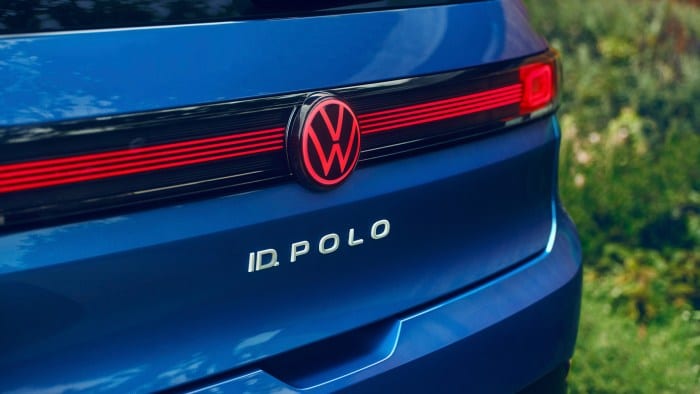
Most of the new orders are for four small electric cars built at two plants in Spain: the VW ID. Polo, Cupra Raval, Škoda Epiq and VW ID. Cross, according to Automobilwoche.
The four models share the MEB+ platform and have more than 100,000 pre-orders between them, including more than 40,000 for the ID. Polo, the magazine reported. The ID. Cross entered production at Navarra, near Pamplona, this month.
In Germany, Volkswagen’s orders for battery-electric cars now exceed those for combustion models.
But Volkswagen earns less on each electric car than on a comparable combustion model, it added.
That leaves the German plants with a smaller share of the gain. The shifts cut in Wolfsburg build some of the group’s most profitable cars. The shifts added in Emden and Zwickau build older, larger electric models. The small cars driving the order boom are assembled in Spain.
The Profit Warning
The production changes come three days after Volkswagen Group cut its profit forecast on September 18.
The group now expects an operating return on sales of at most 1% this year, down from 4% to 5.5%. It expects about €10 billion ($11.5 billion) in special charges, including a non-cash goodwill impairment of about €6 billion ($6.9 billion) on Porsche.
Volkswagen named “an accelerated shift in demand in favour of battery-electric vehicles” as one reason Audi and the Volkswagen brand would fall short of earlier expectations, alongside a weaker market in China.
Volkswagen made an operating profit of €5.9 billion ($6.8 billion) in the first half, a margin of 3.8%. On expected revenue of about €315 billion, a 1% margin would cap full-year operating profit at roughly €3.2 billion ($3.7 billion). That points to an operating loss in the second half, Automobilwoche calculated.
Excluding special items, Volkswagen still expects a margin of about 4% and has kept its forecasts for automotive net cash flow and net liquidity.
Germany’s Market Flips
Germany’s electric-car share hit a record in August.
Battery-electric cars made up 32.4% of new registrations, with 68,930 units, up 75.1% from a year earlier, according to the Federal Motor Transport Authority (KBA). Petrol-car registrations fell 37.9% and diesel 17.3%.
A new government purchase incentive for electric cars started in May. The federal office handling it had approved about 52,500 applications by early September, according to electrive.
Volkswagen’s own registrations have yet to follow its orders. The VW brand’s German registrations fell 14% in August, though it remained the market leader with a 15.2% share, KBA data showed.
Cost Cuts Deepen
Brand Chief Executive Officer Thomas Schäfer told a works meeting in Wolfsburg on Monday that Volkswagen would step up its cost-cutting programme.
“We have absolutely no time to lose, and will therefore significantly step up our performance programme once again,” Schäfer said, according to dpa.
He said he would have wished the measures agreed in 2024 were already enough, but that looking away would not solve any problems.
He said the measures would now be negotiated with worker representatives. “We will now discuss the how with codetermination,” he said.
Under the agreement reached with workers at the end of 2024, the Volkswagen brand plans 35,000 fewer jobs in Germany by 2030. About 16,300 people have already left, and about 28,800 departures are agreed, Schäfer said.
That agreement also moves Golf production from Wolfsburg to Puebla, Mexico, from 2027, and cuts the plant from four assembly lines to two. The ID.3 and Cupra Born are due to move there from Zwickau.
Volkswagen’s supervisory board approved a further 50,000 job cuts worldwide on September 3. The plan puts European overcapacity at 500,000 vehicles and says it can’t currently assure competitive follow-on production for Emden, Zwickau, Hanover and Neckarsulm from 2031 to 2034.
Daniela Cavallo, Head of the Works Council, told the meeting she expects the cuts to intensify. “At plant level, the company’s savings frenzy will confront us at every turn in the coming weeks. Even more than it already does, I fear,” she said, according to participants cited by dpa.
“Most of our previous earning power is gone. That is the naked truth,” Cavallo said.
She also questioned whether the new cuts, about half of which would fall in Germany, could be achieved without layoffs. “Is the board planning compulsory redundancies? And even if so, how does it intend to enforce them?” she said.
Job guarantees at Volkswagen run until the end of 2030.
Volkswagen reports third-quarter results on October 29.