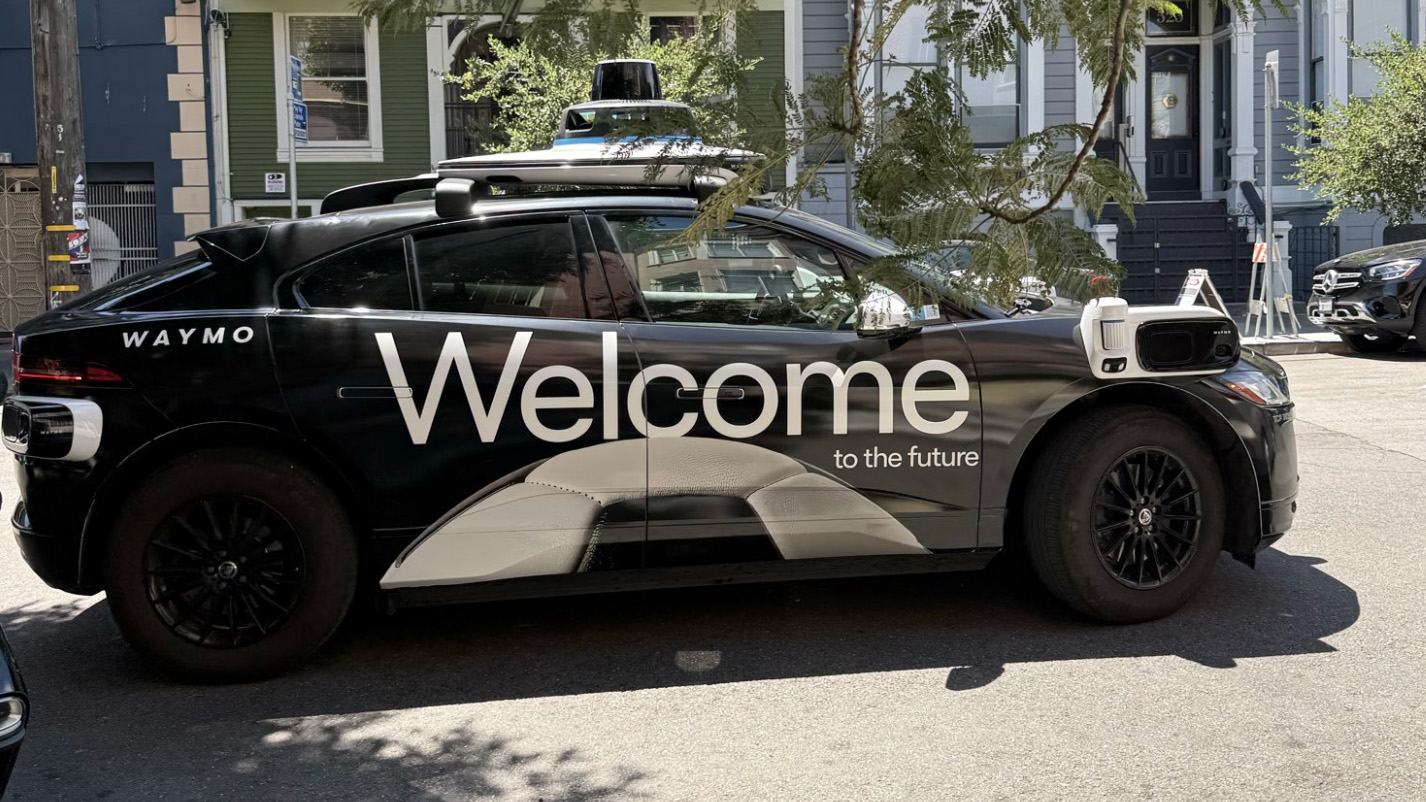
Waymo will use a Toyota bZ4X built in Japan as a robotaxi, with testing of an autonomous fleet starting in Japan in 2027 and deployment to the United Kingdom and other Waymo markets planned for later years, the companies said on Friday.
Toyota will build the vehicles at its Takaoka plant in Toyota City, Aichi Prefecture, handling everything “under one roof,” from assembling the base vehicle to installing Waymo’s self-driving hardware, according to statements from Toyota and Waymo.
The deal turns a preliminary agreement from April 2025, which set no timeline and named no vehicle, into a production plan. The companies called it “a major milestone in the expansion of Japan’s first fully autonomous ride-hailing service using high-volume, domestically manufactured vehicles.”
They did not disclose financial terms, how many vehicles Toyota will build, or when commercial rides in the bZ4X will begin. Woven by Toyota said the 2027 operations in Japan would use “a purpose-built Toyota bZ4X vehicle,” with “commercial service to follow.”
Initial operations will involve “a small number of vehicles,” Hiroki Nakajima, a member of Toyota’s board and Executive Vice President, told reporters, according to Reuters.
It also extends a strategy in which Toyota supplies vehicles to robotaxi operators instead of developing its own driverless software for ride-hailing. With Waymo, it now has partners in Japan and the UK, in China through Pony.ai and in the US through May Mobility.
What Changed
The April 2025 agreement committed the two companies only to “explore” working together. Woven by Toyota, the group’s software arm, was named as a strategic enabler, and the partners said they would look at a new autonomous vehicle platform and at Waymo’s technology for privately owned Toyota cars.
Friday’s announcement adds a vehicle, a factory, a first market and a start date. It also names the UK, where Waymo has been testing for months.
The two companies said they will “continue to explore” autonomous driving for personally owned Toyota vehicles. Along with Woven by Toyota, they will look at how Waymo’s operating data and technology could improve safety for other road users. They gave no timeline for either.
The companies said the robotaxi version of the bZ4X will have generous rear legroom, automatic doors, a power liftgate and ambient lighting to make getting in and out easier.
A RHD Vehicle for Waymo
Japan and the UK both drive on the left, and the bZ4X is built in right-hand-drive form at Takaoka.
“We’ll start with the right-hand drive markets in Japan and the UK,” Dmitri Dolgov, Co-Chief Executive Officer of Waymo, said, according to Reuters. “I think the vision and the strategic partnership is to extend that beyond that, but we don’t have any other countries or timelines or specifics to share.”
Nakajima said Toyota also builds left-hand-drive vehicles, including the bZ4X, and wants to gain experience in Japan first, Reuters reported.
Waymo’s main platform has been the Jaguar I-Pace, which it has also been using to test in London, Tokyo, Munich and, from 2028, Singapore.
Its newer Ojai robotaxi is built on a vehicle from Zeekr, part of China’s Geely Holding Group, and is shipped to the US for Waymo to fit its sensors in Mesa, Arizona. A stalled Senate bill could bar that China-built vehicle from import. Waymo also agreed in 2024 to use Hyundai’s Ioniq 5 in its US fleet.
How It Fits Waymo’s Tokyo Plan
Waymo already has a separate plan for Tokyo. It said on September 14 that it would begin fully driverless rides for the public there in 2027 with taxi operator Nihon Kotsu and ride-hailing app GO, subject to regulatory approval, and grow to about 100 vehicles.
Nihon Kotsu crews have supervised Waymo vehicles during more than a year of testing in the city. Waymo executives said in March that the Tokyo launch “could be ready in a few months,” Japanese outlet MONOist reported at the time.
The Toyota vehicles will start with testing and validation in 2027. Dolgov said Waymo still plans its 2027 pilot in Japan with the Jaguar I-Pace vehicles it is already testing there, Reuters reported, so the bZ4X will arrive alongside the I-Pace rather than replace it at launch.
Toyota’s Other Robotaxi Bets
The Waymo deal is not Toyota’s only robotaxi program built on the bZ4X. Its longest-running partnership is with Pony.aiin China, in which Toyota invested $400 million in February 2020.
In August 2023, Toyota Motor China, its joint venture GAC Toyota and Pony.ai agreed to set up a venture with more than 1 billion yuan (about $150 million) to bring Level 4 robotaxis to mass production. The first mass-produced bZ4X robotaxi, Pony.ai’s seventh-generation vehicle, rolled off the line in February.
Pony.ai said it had “secured 1,000 bZ4X vehicles this year” to form “the backbone of our 2026 expansion,” according to its annual results filing. It is targeting more than 3,000 robotaxis in more than 20 cities by the end of 2026, and is also expanding in Europe, including a London service with Uber that would compete with Waymo’s.
In the US, Toyota’s vehicle is the Sienna Autono-MaaS, a version of its minivan adapted for automated driving. May Mobility, a Michigan startup that Toyota AI Ventures first backed in 2018, uses it for all its deployments. It began robotaxi rides with Lyft in Atlanta in September 2025 and agreed with Uber in May 2025 to launch on its platform in Arlington, Texas.
May Mobility has also deployed in nine Japanese cities, including Tokyo, Nagoya and Toyota City, using the Sienna and Toyota’s e-Palette shuttle, according to the company. Its Tokyo deployment is progressing toward Level 4 certification. MONET Technologies, a joint venture between Toyota and SoftBank, provides booking software for some of those services.
For shuttles, Toyota took a 1% stake in Tier IV, the Japanese developer of the open-source Autoware software, in June for about 1 billion yen (about $6.4 million), and is targeting Level 4 capability for the e-Palette in fiscal 2027.
Toyota and telecom group NTT also said in October 2024 that they would invest 500 billion yen (about $3.2 billion) through 2030 in an AI platform designed to help prevent traffic accidents.
Toyota moved slowly on driverless services at home after a Level 2 automated bus it operated struck a Paralympic athlete in Tokyo in 2021, The Japan Times reported in 2024. Japan’s carmakers are now preparing their own services. Nissan plans a paid self-driving service in 2027.
What the Executives Said
“We chose Toyota because of our respect for the legendary safety, reliability, and quality of their vehicles,” Dolgov said in the statement. He said Waymo has shown that it is “up to 20x safer than human drivers when it comes to serious crash injuries” in areas where it operates, a figure based on Waymo’s own safety data.
Nakajima said the partnership would bring the technology to customers “in Japan and beyond through Waymo’s ride-hailing service.”
“No single company can achieve the goal of zero traffic accidents alone, but with partners like Waymo, we will get there one step at a time,” he said. Toyota will also continue to explore how linking vehicles to traffic infrastructure can make roads safer, he added.
Waymo has driven more than 300 million fully autonomous miles and operates in 15 major US cities, Alphabet Chief Executive Officer Sundar Pichai said on October 28.
He said Waymo plans to expand into Canada, Germany, Singapore and Spain. It averaged 3.90 million fully driverless miles a week across its markets in the second quarter, based on the company’s published data.
Its London plans remain pending. Waymo has been testing Jaguar I-Pace vehicles there for months and plans to launch a robotaxi service once it receives permits.