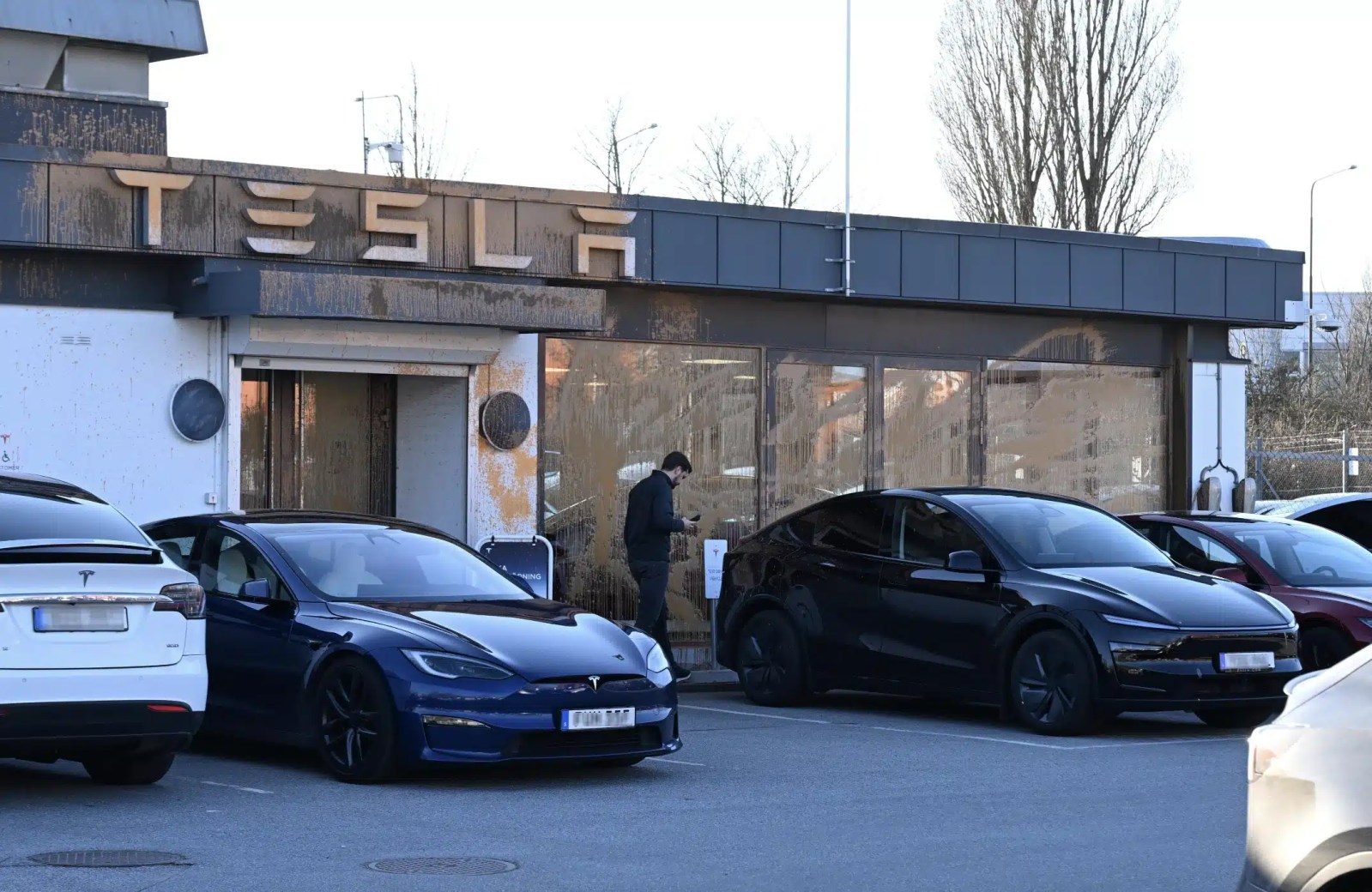

Tesla registrations in Sweden rose 71% year over year in May to 858 vehicles, data from Mobility Sweden showed on Monday.
The figure doubled from April’s 429 units, extending a recovery in one of the markets where the company’s sales fell hardest over the past two years.
More than 670 of the registrations were the Model Y, against 185 for the Model 3, with the small remainder accounted for by the Model S and Model X, which sell in low volumes in the market.
The result lifted Tesla to about 3.3% of all new passenger cars registered in Sweden during the month and roughly 8% of fully electric registrations.
A Recovery From a Low Base
The year-on-year gain is measured against a weak 2025, when a union blockade and brand backlash drove Tesla‘s Swedish sales sharply lower.
The company registered 7,252 vehicles in Sweden in 2025, down about two-thirds from 21,894 the year before.
The decline ran deepest in mid-2025, when July registrations fell 85.8% year-on-year to 163 vehicles.
Sales began recovering at the turn of the year, with 512 units in January and 553 in February, before Tesla registered 1,784 vehicles in March, its strongest month in 15 months and nearly double the year-earlier figure.
April then fell back to 429 units, making May’s doubling a return toward the March pace rather than a new peak.
The pattern fits Tesla‘s usual cadence, in which registrations cluster toward the end of each quarter because of its international shipping schedule.
The Broader Swedish Market
The May registrations landed in a market that Mobility Sweden described as weak but stabilizing.
Sweden registered 25,985 new passenger cars in May, up 1.2% from a year earlier, leaving the market down 1.2% over the first five months of 2026.
EVs accounted for 41.2% of registrations, with 10,718 units, a 13.2% year-on-year increase.
Two of every three new cars were chargeable when plug-in hybrids are included.
Mobility Sweden attributed the EV growth to a wider model range, with more vehicles now launching in the volume segment, and to a recovering private-buyer market, though company buyers still account for more than six in ten registrations.
The trade body also warned that a government proposal to phase out the reduced benefit-value treatment for electric company cars risks slowing the transition, given how heavily the company-car channel drives new-car sales.
The registration period for May covered May 1 to 29, one fewer registration day than a year earlier, which slightly lowered the month’s totals.
Across the first five months of 2026, electric vehicles held a 40.8% share of the Swedish market, with registrations up nearly 18% year-on-year, while plug-in hybrids fell about 7% to a 24.5% share.
Mobility Sweden said the EV gains were led by a broader lineup of volume-segment models and by private buyers, whose share of electric registrations rose to 38% from 31% a year earlier.
Beyond passenger cars, electric models made up 29% of light-commercial registrations in May and 57% of new buses, the latter reflecting public-transport procurement weighted toward electric fleets.
Chinese Brands and Local Rivals
Tesla‘s nearest rival in the market remained Polestar, the Gothenburg-based brand owned by China’s Geely Holding Group.
Polestar registered 629 vehicles in May, up 10% from April and 3% from a year earlier, leaving it behind Tesla for the month after the two brands traded places earlier in the year.
Polestar had outsold Tesla in Sweden in February, when it registered 570 vehicles to Tesla‘s 553.
BYD continued its rapid expansion from a small base, registering 345 vehicles in May, up 35% from April and 354% from a year earlier.
The Shenzhen-based manufacturer, which sells both plug-in hybrids and fully electric models, has grown its Swedish volumes faster than any other Chinese brand tracked in the market.
Among other Chinese names, Geely‘s premium Zeekr brand registered 114 vehicles, down 39% from April, while XPengregistered 108, roughly flat.
Nio registered just two vehicles, unchanged from April.
The figures underscore how unevenly Chinese brands have penetrated Sweden, with BYD and Polestar established while newer entrants remain marginal.
Model Mix and Outlook
The Model Y again carried Tesla‘s Swedish volume, accounting for more than three-quarters of the month’s registrations.
The SUV was the top-selling model across all powertrains in Sweden in March, when it recorded 1,382 units, and has anchored Tesla‘s lineup across European markets.
The Model 3 sedan made up most of the remainder, with the company’s Swedish range otherwise limited to small volumes of the Model S and Model X.
Tesla‘s Swedish performance forms part of a wider European recovery that gathered pace in the first quarter, when the company registered 79,539 vehicles across the region, with March alone accounting for 53,545 units.
That rebound has been supported by shifting purchase incentives across European markets and by quarter-end discounting.
In the Nordic region specifically, Tesla was the best-selling automaker in Norway in the first quarter, with 7,443 vehicles, in a market where more than 98% of new registrations are fully electric.
Mobility Sweden noted that its statistics reflect registered vehicles rather than orders or sales, which typically occur three to six months earlier.
The release also showed Sweden’s public charging network expanded by 359 points during the month, to 68,117 across 9,676 stations.
The May data leaves Tesla running ahead of its 2025 pace in Sweden, though still below the volumes it recorded before the labor dispute and the broader decline in its European registrations.
The company has been battling a union blockade in Sweden for about two years, a dispute that weighed on its 2025 results and that remains unresolved.
The standoff began in October 2023, when about 130 mechanics walked off the job after Tesla declined to sign a collective agreement, before solidarity actions from postal, dock and other workers disrupted vehicle registrations and port deliveries.
Tesla adapted by routing imports through Germany to a port deal at Trelleborg, and the commercial damage has eased as registrations recovered.
Last week the dispute shifted again as the IF Metall union ordered some striking mechanics back to work at workshops in Malmö, Uppsala and Umeå, a rotating “partial strike” tactic the union said did not signal the end of the conflict.
On their return, the mechanics were sent home on full pay by Tesla, and the union reiterated it remained willing to negotiate a collective agreement.
The Swedish market has also been a focal point in the European regulatory debate over Tesla‘s Full Self-Driving software, with the country’s transport agency suggesting the approval process may cover only newly built vehicles rather than updates to existing ones.