
Tesla reportedly presented inflated safety statistics for its Full Self-Driving (FSD) system to regulators in Sweden and the Netherlands, according to correspondence obtained by Reuters through public records requests.
The data was part of a broader lobbying push to secure European approval of the driver-assistance software.
Independent traffic-safety researchers who reviewed the figures told Reuters they amount to misleading marketing.
The report is the third in a series of Reuters investigations into Tesla‘s European FSD campaign.
An earlier piece published in May revealed that regulators in Sweden, Finland, Denmark and Norway had raised concerns about FSD’s tendency to exceed speed limits, its performance on icy roads, and whether the product name overstates the technology’s capabilities.
A separate examination in late last month found Tesla‘s headline claim — that FSD is up to 10 times safer than human drivers — rested on invalid data comparisons, with researchers stating that those comparisons inflated the technology’s safety record by a factor of three.
Monday’s report shows Tesla fed that same disputed data directly to regulators as it sought approval.
What Tesla Told Authorities
Tesla approached the Dutch road authority RDW in late 2024 to begin the FSD approval process.
In a November 2024 letter, the company provided a link to its safety report and claimed increased use of FSD leads to safer roads.
The engagement marked the start of a testing and review period that lasted more than a year before RDW granted approval on April 10.
RDW told Reuters it does not rely on marketing claims or external statistics when making decisions.
The agency said it performs its own tests, analyses and verifications on public roads and test tracks.
RDW added that Tesla collected extensive data during testing and that the authority validated, tested and audited all of it.
The regulator did not disclose what the data measured or whether it assessed Tesla‘s US safety statistics.
Shortly after the Dutch approval was announced, Tesla‘s EU policy manager Ivan Komusanac emailed Swedish regulators requesting similar clearance, Reuters reported.
The email included a slide presentation, with the deck claiming Teslas running FSD can travel more than seven times farther between crashes than the average US human driver.
The same presentation asserted FSD could have potentially saved 32,000 lives and prevented 1.9 million injuries.
Highly Misleading Figures
Traffic-safety researchers told Reuters those life-saving projections rest on an unrealistic premise.
The figures assume every vehicle on US roads — including freight trucks and crash-prone motorcycles — would be replaced by an FSD-equipped Tesla sedan.
They also assume every one of those Teslas would be at least seven times safer than the vehicle it replaces.
Earlier Reuters examination detailed the methodological problems behind Tesla‘s safety numbers.
Tesla compares a crash rate for FSD-equipped vehicles based only on incidents that triggered airbag deployments.
The company then measures that against a federal crash rate for all US vehicles that includes far less-severe accidents. The mismatch inflates the apparent safety gap.
It also benchmarks against the average US vehicle, which is significantly older than the average Tesla.
Newer cars crash less often regardless of driver-assistance features, because automakers have gradually introduced safety technologies that reduce collision rates.
Ten of the 11 traffic-safety researchers who reviewed Tesla‘s methodology described the statistics as misleading marketing.
Anders Eriksson, an investigator at the Swedish Transport Agency, declined to comment on the data Tesla provided.
He told Reuters that Swedish regulators assess such systems based on the overall body of evidence presented, not solely on aggregated safety claims.
The regulator did not disclose what other evidence Tesla submitted.
Dudley Curtis, a spokesperson for the European Transport Safety Council (ETSC), told Reuters his organization is concerned that Tesla presented unreliable US safety data to Swedish regulators.
Curtis added that safety claims should be independently verified by qualified researchers at a university before being taken seriously.
Last week, the ETSC has separately written to transport ministers across the EU urging them not to recognize the Dutch FSD approval.
The letter calls on all member states to take a precautionary approach until a series of safety questions are resolved.
The ETSC sent nine detailed questions to Dutch type-approval authority RDW on April 16 — including about the evidence behind its decision, the driver-monitoring system, and how US federal investigations into FSD were considered during the review.
They have also written to European Commission Executive Vice-President Stéphane Séjourné, calling for the TCMV approval process to be paused until broader safety concerns are addressed publicly.
Lobbying Pressure
The Reuters report describes a pattern of Tesla owners writing to regulators across Europe, citing the company’s self-published safety statistics and urging fast approval.
Several drivers contacted Norwegian road authorities last autumn. One argued the technology could reduce traffic accidents by up to 90%.
Stein-Helge Mundal of the Norwegian Public Roads Administration responded to multiple enthusiasts.
He noted Tesla figures “are self-produced,” making it difficult to correlate them with official accident data.
Stakes for EU-Wide Approval
The revelations add a new layer to an already complicated approval process.
FSD (Supervised) is now live in approved European countries — the Netherlands, Lithuania, Estonia, Belgium, and Denmark — through national recognitions of the Dutch decision.
Greece, Spain, Germany, France, Italy, and Ireland are at various stages of review or testing.
EU-wide authorization requires a different path.
Representatives of at least 55% of member states, accounting for 65% of the bloc’s population, must vote in favor at the Technical Committee on Motor Vehicles.
The committee’s June 30 agenda lists further discussion rather than a formal vote. Tesla had targeted EU-wide availability by the summer of 2026.
Tesla has framed European FSD approval as central to regaining market share in the region.
Sales fell sharply in 2025 amid consumer backlash over CEO Elon Musk’s political activities, including his public alignment with far-right European political movements.
Failure to secure approval could leave Tesla at a disadvantage as Chinese EV makers continue expanding across the continent.
Reuters report in early May on regulatory skepticism prompted mixed reactions.
Denmark’s Road Traffic Authority pushed back on the characterization that it had raised concerns, stating it had not expressed either positive or negative views about FSD.
The country then approved the software on June 9, becoming the fourth European market to clear it.
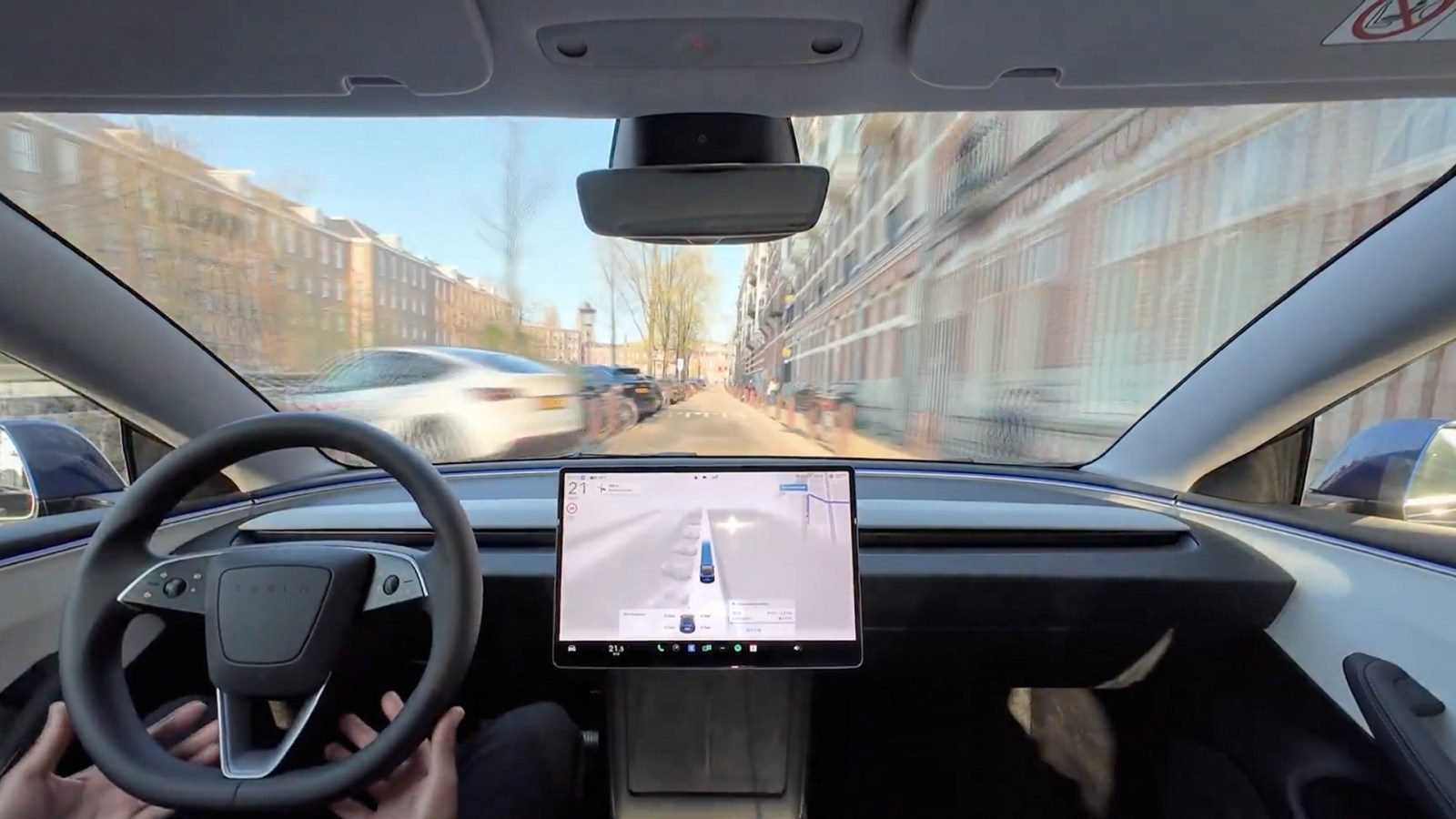
Early Dutch reviews were positive, with owners praising FSD’s performance on Amsterdam’s narrow streets after the April launch.
RDW has consistently emphasized that the system is a driver-assistance feature, not autonomous driving, as the software requires constant driver attention.