

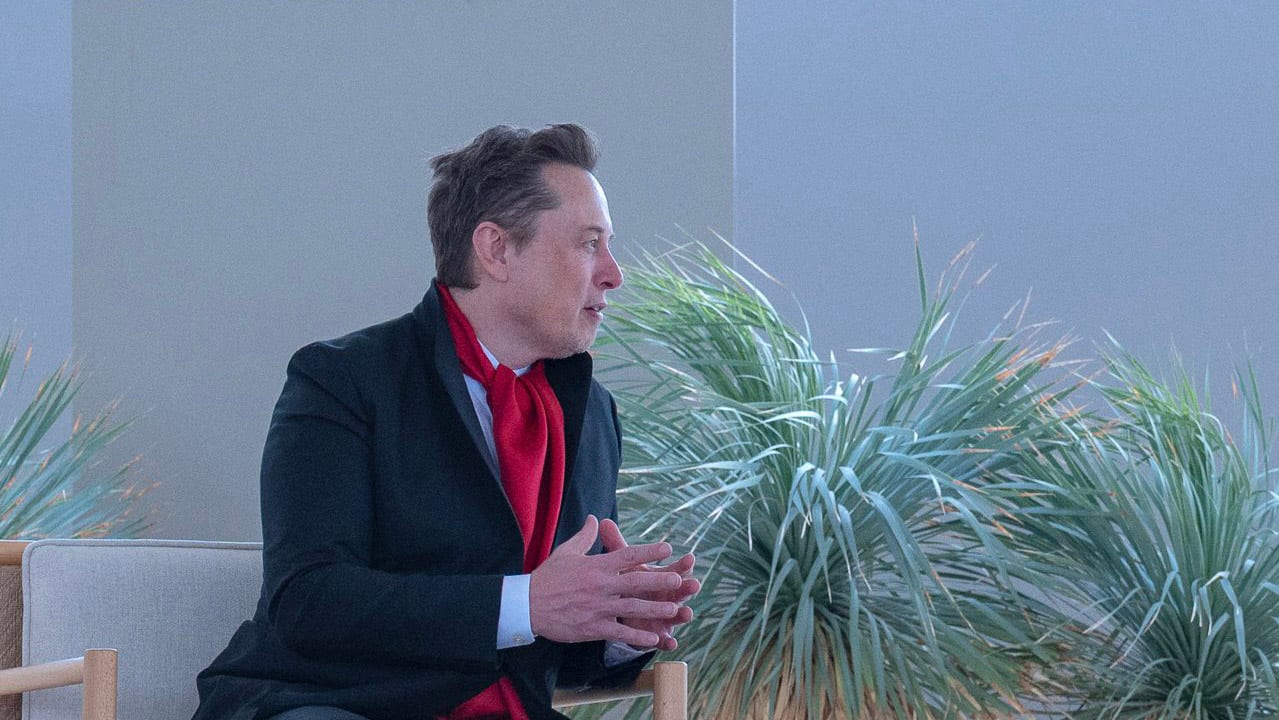

Tesla‘s CEO Elon Musk commented on Moody’s credit assessment of the company on Thursday, calling its Baa3 rating “ridiculously low.”
Musk’s reaction came a day after SpaceX received its first-ever Baa1 long-term issuer rating with a stable outlook, placing the AI and aerospace company above Tesla in Moody’s credit rankings.
SpaceX went public last week in what marked the largest initial public offering (IPO) in history.
The stock was priced at $135 and closed the first trading day at $160.95.
The 19% gain valued the company at roughly $2.1 trillion — and made Musk the world’s first ever trillionaire.
S&P Global Ratings has separately maintained a BBB credit rating on Tesla — equivalent to Baa2 on Moody’s scale, one notch above the Baa3 assigned by Moody’s.
In its most recent review, S&P cited Tesla‘s “strong market share, profitability, and liquidity” as factors supporting the rating.
Musk’s Response on X
Tesla shareholder and influencer Sawyer Merritt — who has over 1 million followers on X — highlighted the gap between the two ratings on Thursday, to which Musk responded directly.
The chief executive wrote in a post that “Tesla‘s credit rating is ridiculously low tbh [to be honest].”
In a separate reply to another user, who questioned why the rating was so low for the “leading EV manufacturer on the planet,” Musk added: “Yeah, makes no sense. Tesla has over $40B in cash, no debt and is consistently profitable!”
In late April, Tesla disclosed that it held a record of over $44 billion in cash, cash equivalents and short-term investments as of March 31.
Tesla’s Balance Sheet
Musk’s characterization of Tesla‘s financial position aligned with some of the company’s headline figures but diverged from its full balance sheet picture.
The claim of “no debt,” however, does not match Tesla‘s most recent filings.
The company reported total debt of $9.2 billion for the quarter ending March 31, 2026, according to balance sheet data. Long-term debt stood at $7.78 billion.
Tesla issued $4.3 billion in new debt during the first quarter alone — more than triple the $1.4 billion issued in the fourth quarter of 2025.
After $3.5 billion in repayments, the net effect was roughly $800 million in new borrowing during the period.
Tesla‘s debt level reached a five-year peak in the first quarter.
On profitability, Tesla has remained consistently in the black on an operating basis.
The company posted GAAP operating income of $941 million in the first quarter of 2026, a 136% increase year over year, on total revenues of $22.4 billion.
GAAP net income came in at $477 million.
Gross margins reached 21.1%, the highest in five quarters and a 478 basis-point improvement year over year.
However, Tesla‘s chief financial officer Vaibhav Taneja warned during the April earnings call that the company expects to record negative free cash flow for the rest of 2026 as capital expenditures more than double to over $25 billion for the year.
What the Ratings Mean
A credit rating measures a company’s ability to repay its debt obligations.
Moody’s uses a letter-based scale that spans from Aaa at the top — representing the lowest credit risk — down to C, which indicates default.
Within the investment-grade tier, Baa1 sits at the upper end of the lowest investment-grade band, equivalent to BBB+ on the Standard & Poor’s and Fitch scales.
Tesla first received its Baa3 investment-grade rating from Moody’s in March 2023, an upgrade from the speculative-grade Ba1 the company previously held.
The agency has since affirmed that rating with a stable outlook in periodic reviews.
In its most recent affirmation in August 2025, Moody’s acknowledged Tesla‘s leadership in the electric vehicle market and its technology strengths — but cited challenges in the automotive segment and expectations of declining EBITA margins.
Why Moody’s Rates Tesla at Baa3
Moody’s has pointed to several factors constraining Tesla‘s credit rating.
In its August assessment, the agency flagged expectations of declining EBITA margins — projecting a drop to below 8% in 2026 from 10.1% in the prior twelve months.
The diminishing value of United States regulatory credits as other automakers no longer face penalties for failing to comply with fuel-economy standards also weighed on the assessment.
Increasing costs from tariffs on imported materials and components were cited as additional headwinds.
The agency noted that Tesla‘s energy generation and storage segment would contribute significantly to profitability, along with interest earned on its cash reserves.
Moody’s said the rating could be upgraded if Tesla maintained a strong competitive global presence while successfully broadening its product offering to reduce reliance on its core automotive business.
Tesla is expected to report its second-quarter earnings results in late July.
Moody on SpaceX
Moody’s Ratings credited what it described as SpaceX’s “exceptional franchise strength” as the world’s leading orbital launch provider and operator of Starlink, the largest low Earth orbit satellite broadband network.
Starlink has become SpaceX’s primary cash flow generator, according to Moody’s, underpinning improving scale, margin expansion, and diversification away from more cyclical launch revenues.
The agency also pointed to SpaceX’s vertical integration across manufacturing, launch, satellite deployment, and end-customer delivery as drivers of cost efficiency.
Strategic relevance to the United States government through contracts with NASA and the Department of Defense added demand visibility and long-cycle contract support, Moody’s said.


