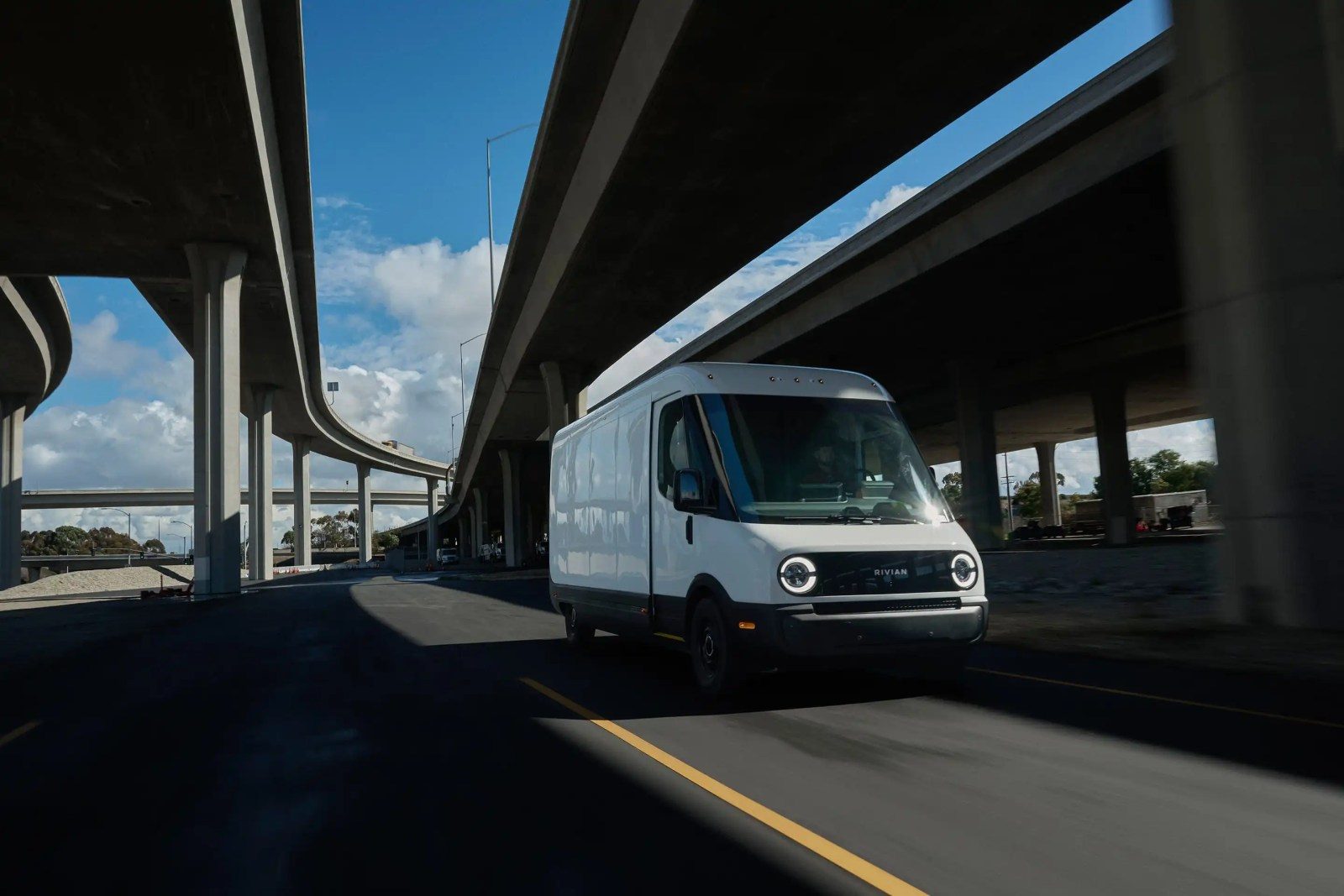

The US auto safety regulator said on Wednesday it has opened a preliminary evaluation into about 17,200 Rivian electric delivery vans (EDVs) after receiving reports of potential failures in the driver’s seat belt anchorage system.
As of the end of June, Amazon had more than 30,000 electric delivery vans from Rivian operating in the United States, up from 20,000 at the end of last year.
The National Highway Traffic Safety Administration (NHTSA) said this Wednesday its Office of Defects Investigation (ODI) has received six complaints.
The cases allege that the steel-braided cable supporting the driver’s front outboard seat belt can fray, break or unravel. The defect could leave the driver unrestrained during a collision or sudden stop, according to the probe report.
The affected vehicle population includes Rivian EDVs produced between 2022 and 2023.
The vans are primarily used by Amazon, which is Rivian’s backer and its main commercial customer.
The retail giant backed the company in 2019, with the EV maker committing to deploy 100,000 commercial vans by 2030.
Rivian announced in February that it was opening orders of its fully electric delivery vans — co-developed with Amazon since 2019— to other commercial customers.
No crashes, injuries or fatalities have been linked to the issue, according to the agency.
ODI said its investigation will assess the integrity of the seat belt assembly, installation methods, and potential design or manufacturing deficiencies .
Rivian has only publicly announced a partnership with HelloFresh, its “first major fleet customer,” to which it delivered 70 vehicles in April.
The global logistics giant DHL was seen piloting Rivian’s vans last year. However, a purchase deal was never announced.
“I think the natural big buyers of commercial vehicles have been slower to adopt,” Rivian’s founder and CEO RJ Scaringe recently said.
Scaringe added that “there’s lots of compounding factors for that, one of which is some of the businesses that would be buying these are capital constrained.”
According to Rivian‘s chief, the “big shift that’s happened geopolitically” when it comes to electric vehicles has led these companies to “be careful on how quickly they electrify.”
“But I think over the course of the next 5 years, we’re going to start to see a number of folks jump in,” Scaringe stated.
Questioned if the 100,000 units were still on track, Scaringe reaffirmed the target and said that Rivian is already “thinking about what comes beyond that initial 100,000 unit contract.”
“As I think all of you know, Amazon‘s fleet is considerably larger than that. And so there’s real opportunities for us to continue to penetrate across the fleet,” he said.