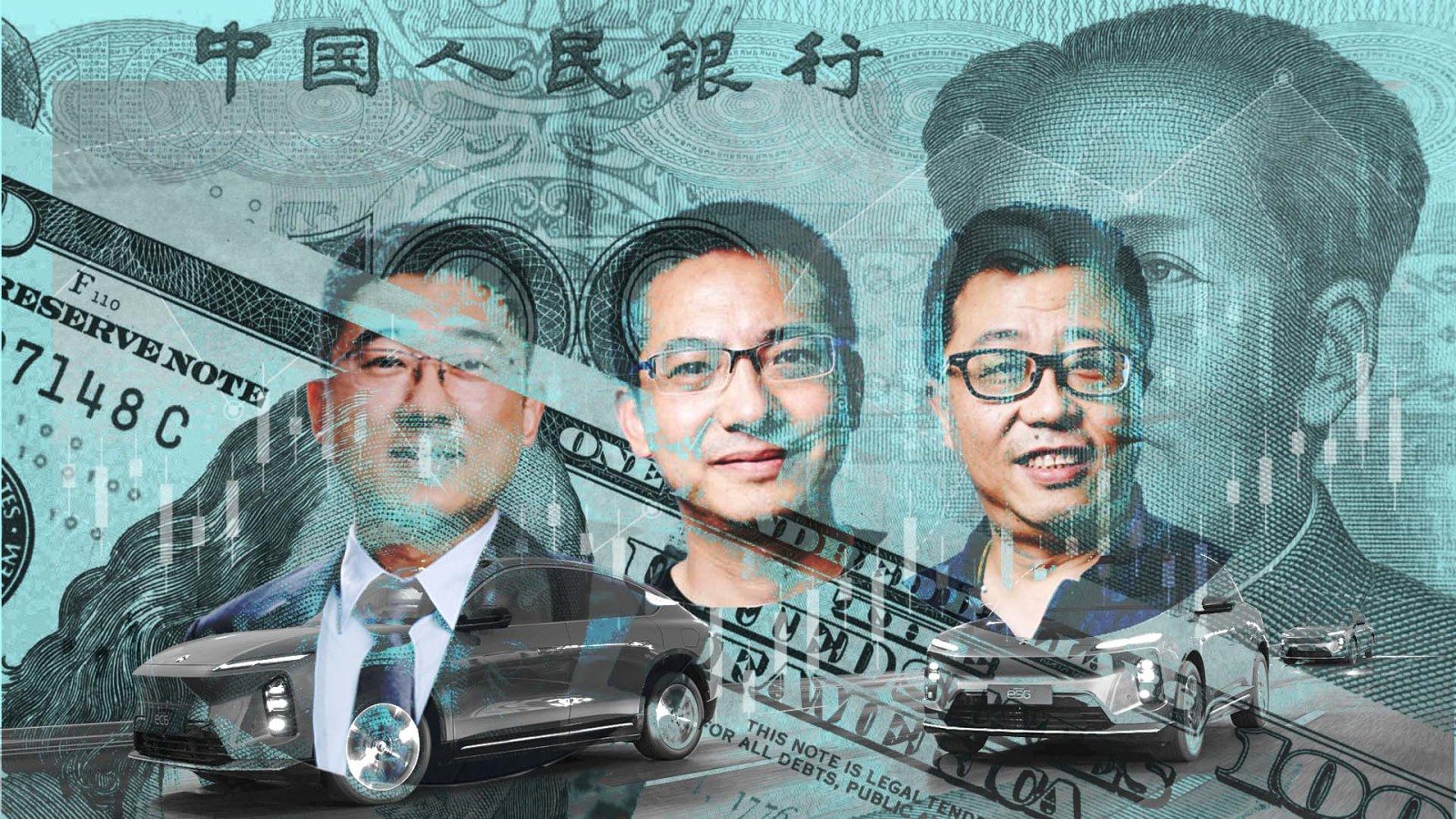

Nio‘s co-founder and two other top executives had a combined 700,000 restricted share units vest on June 1, selling roughly half to cover taxes, according to filings with the US Securities and Exchange Commission.
The disclosures, filed late Monday, cover Chief Financial Officer Stanley Yu Qu, Co-founder, Director and President Lihong Qin and Executive VP and Chairman of Product Committee Mark Zhou.
Each filing describes a routine vesting event, with a portion of the shares withheld and sold to pay the income tax due on the vesting, rather than a discretionary decision to reduce their holdings.
The vesting follows a far larger equity move earlier this year, when Nio‘s board granted founder, chairman, and CEO William Li 248,454,460 restricted share units under a 2026 Share Incentive Plan.
The Filings
The company’s CFO Stanley Qu had 200,000 restricted share units vest, with 100,000 American depositary shares withheld to cover taxes, leaving him with 315,088 ADSs held directly.
Lihong Qin, the co-founder, had 300,000 units vest, with 150,000 ADSs withheld, leaving 319,662 held directly, alongside 10,499,899 shares held indirectly through the firm DX Mix Limited.
Zhou, the Executive VP, had 200,000 units vest, with 100,000 ADSs withheld, leaving 316,167 held directly and 1,000,000 held indirectly through Prime Hubs Limited.
In each case, exactly half of the vested units were withheld to meet the tax liability.
The shares were withheld at a reference price of $5.60, the closing price of Nio‘s ADSs on the last trading day before the withholding.
Separate Form 144 notices covering the three sales put them at 100,000 ADSs each for Qu and Zhou and 150,000 for Qin, a combined 350,000 ADSs.
At the values stated in the filings, the sales total about $1.96 million, with Qu’s and Zhou’s put at $560,000 each and Qin’s at $840,000, all to be sold through the same Hong Kong broker on the New York Stock Exchange.
The implied price across all three is $5.60, matching the reference price used for the tax withholding.
Each notice reported no other sales by the executive in the prior three months, and each carried the standard sell-to-cover language.
Not Discretionary Selling
The filings are explicit that the sales serve only to satisfy tax, a distinction that separates them from executives choosing to cash out a position.
Each Form 144 states the shares are being sold under a sell-to-cover arrangement “for the purpose of satisfying income tax liabilities incurred upon vesting of restricted share units only.”
Sell-to-cover transactions are mechanical and are typically arranged in advance, with the number of shares sold determined by the tax owed rather than by any view on the share price.
The three filings were signed by the same attorney-in-fact on the executives’ behalf and reported the same June 1 transaction date, consistent with a single scheduled vesting event rather than separate individual decisions.
The restricted share units vested on June 1 and do not carry expiration dates, the filings show.
Stock Performance
The vesting took place with Nio‘s shares trading near multi-year lows.
The $5.60 reference price used for the tax withholding sits well below the levels at which the stock traded for much of the past two years.
Nio‘s US-listed shares jumped 6.8% on Monday to $5.98, hours after the company reported its best sales month of the year in May, even without including significant volumes from the newly launched ES9 SUV.
The stock rose a further 3.7% to $6.20 in Tuesday’s pre-market session.
The Broader Compensation Picture
The vesting follows a far larger equity move earlier this year, when Nio‘s board granted founder, chairman and chief executive William Li 248,454,460 restricted share units under a 2026 Share Incentive Plan.
That grant, approved March 6, is divided into ten equal tranches whose vesting depends on the company hitting specific market-capitalization and net-profit targets, alongside Li’s continued service.
The targets attached to the chief executive’s package were not disclosed, and none of those tranches is tied to the routine June 1 vesting reported in Monday’s filings.
At the reference price used in that grant’s registration, the chief executive’s full package would be worth more than $1 billion if every tranche vests, though the units carry no value unless the performance conditions are met.
The executives’ awards reported this week appear to follow a conventional time-based vesting schedule rather than the performance ladder attached to the chief executive’s grant.
All three executives retain substantial holdings after the tax-related sales, both directly and, in two cases, through personal investment vehicles.
Lihong Qin’s indirect stake of more than 10.4 million shares, held through DX Mix Limited, dwarfs his direct holding and makes him the largest individual holder among the three.
Zhou holds a further 1 million shares through Prime Hubs Limited, while Qu’s reported holding is entirely direct.
Context
The filings land as Nio works to convert rising delivery volumes into improved financial results.
The company reported a first-quarter net loss of 332.1 million yuan, narrowed from a year earlier, with revenue up 112.2% to 25.53 billion yuan and a vehicle margin of 18.8%.
The stock’s recent gains followed the May delivery figures, which marked the company’s strongest month of the year.
Nio delivered 37,705 vehicles in May across its main brand, Onvo and Firefly, and recently launched its ES9 flagship SUV, with deliveries beginning May 28.
Buyers of the ES9 in China face sharply different delivery waits depending on trim, with the two most expensive versions carrying queues four times longer than the entry model, according to the company’s configurator.
Qin, as co-founder and president, oversees the commercial and sales organization, while Qu has served as chief financial officer through the company’s recent capital raises and cost-reduction efforts.
Zhou, as Executive VP, is among the longest-serving members of the company’s senior management.