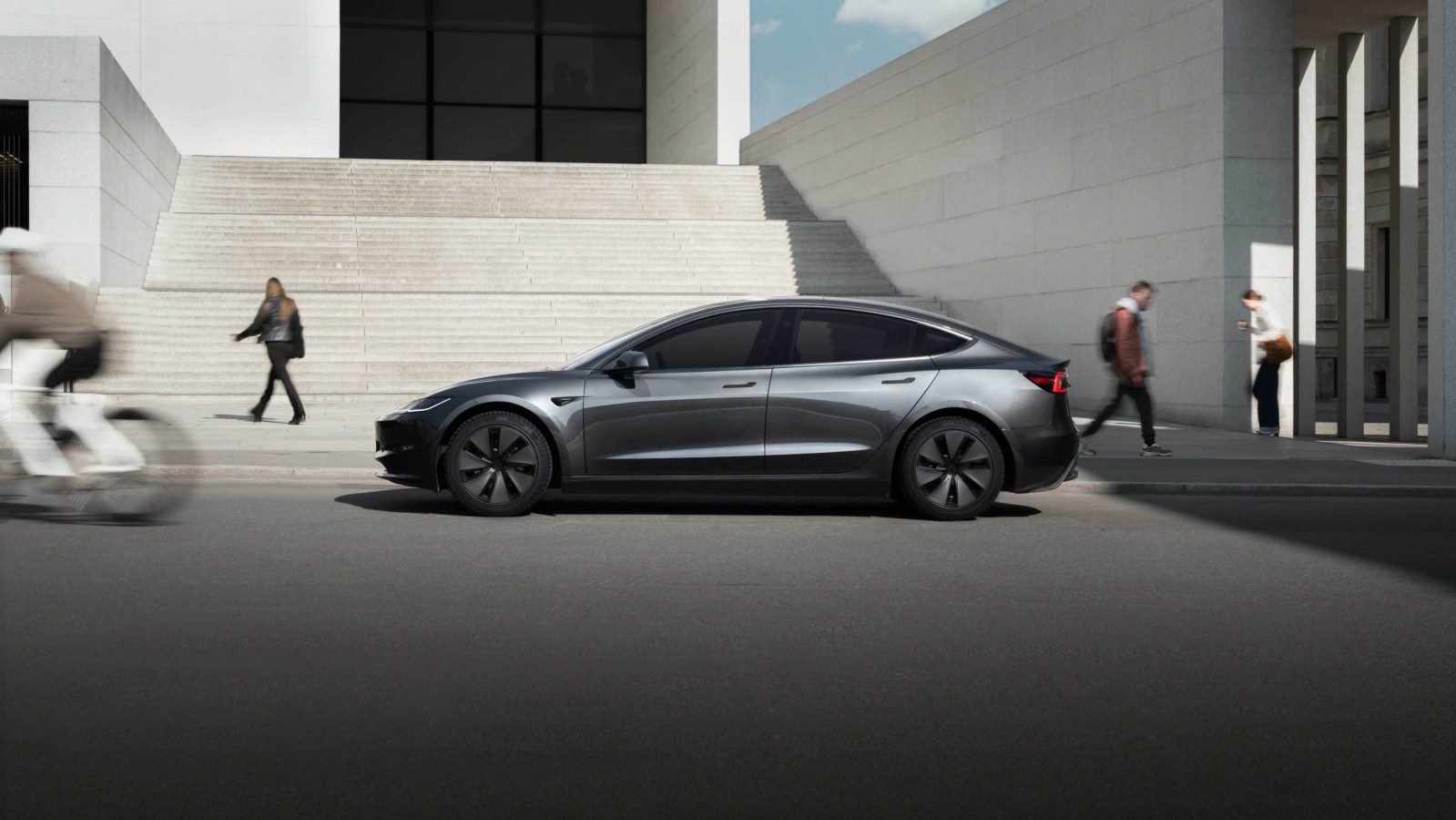

Tesla has raised lease pricing rates on every Model 3 variant sold in the United States, with monthly payments climbing between 5.0% and 15.2% depending on the trim.
The change was first flagged on Monday by Tesla shareholder and content creator Sawyer Merritt on X.
Monthly payments increased by $30 to $50 across the sedan’s four-trim lineup.
The updated rates reset the entry point for a leased Model 3 to $379 per month and push the Performance trim to $629 per month.
All lease terms are based on a 36-month contract with $3,000 due at signing and a 10,000-mile annual limit, according to Tesla‘s US configurator.
Lease Price Changes
The entry-level Model 3 Rear-Wheel Drive now starts at $379 per month, up $50 (15.2%) from the $329 rate that had been available since early June.
At the other end of the range, the Model 3 Performance now leases for $629 per month, an increase of $30 (5.0%) from $599.
The Model 3 Premium RWD also sees a $50 increase, rising from $349 to $399 per month — a 14.3% jump.
Meanwhile, the higher trims received more modest adjustments.
The Model 3 Premium All-Wheel Drive now leases for $479 per month, up $30 (6.7%) from $449, while the Performance model climbs by the same amount to $629 per month.
Customers can purchase the Model 3 for a starting price of $36,990 for the Rear-Wheel Drive model, $42,490 for the Premium RWD, $47,490 for the Premium AWD, and $54,990 for the Performance.
Third Price Move
Monday’s increase marks the third directional shift on Model 3 lease rates since April.
Tesla cut Model 3 lease pricing by $100 per month in April, dropping the base RWD trim to $299 per month — one of the lowest rates ever offered on the sedan, according to CarsDirect.
In early June, the company nudged the same trim back up to $329 per month, a 10% increase.
Monday’s adjustment pushes the rate another $50 higher.
Stacked together, the base Model 3 lease has climbed $80 per month — roughly 27% — in three months.
Over a standard 36-month term, the difference between April’s $299 rate and the current $379 rate amounts to $2,880 in additional payments.
Premium RWD followed a similar trajectory: $349 in April, unchanged through June, and now $399.
AWD and Performance trims show a less pronounced pattern.
Neither trim was discounted as aggressively in the spring, and both saw $30 increases rather than $50 on Monday.
Model Y Lease Rates
Model 3 is not the only Tesla model to see higher lease rates in recent weeks.
In June, Tesla raised monthly payments on the Model Y Premium RWD and Premium AWD trims by $30 each, according to Autoblog.
The base Model Y RWD lease remained unchanged at $459 per month.
As of Monday, Model Y lease rates stood at $459 per month for the RWD, $499 for the AWD, $599 for the Premium RWD, and $799 for the Performance — all based on the same $3,000 down, 36-month, 10,000-mile structure.
Model Y L Premium, a long-wheelbase six-seat variant Tesla launched in the United States on July 2, carries a starting price of $61,990 as part of a Launch Series debut.
Lease terms for the new variant were not immediately available on the configurator.
A Year of Volatile Lease Pricing
Tesla has adjusted Model 3 and Model Y lease rates frequently since the expiration of the federal $7,500 EV consumer tax credit on September 30, 2025.
Hours after the credit lapsed, Tesla hiked lease prices sharply — the Model 3 rose by up to $80 per month and the Model Y climbed between $50 and $70 per month.
In late October, the company temporarily cut rates before a pre-announced November 4 increase returned prices to post-credit levels.
A second round of increases in late December pushed the Model 3 Premium to $499 per month — a 67% jump from the $299 rate available weeks earlier, according to CarsDirect.
Tesla then reversed course earlier this year, bringing Model 3 rates back down to a $299–$599 range by April before beginning the current upward climb.
Q2 Delivery Strength
Strong second-quarter delivery figures provide a backdrop for the pricing adjustment.
Tesla delivered 480,126 vehicles globally in the second quarter, a 25% increase year over year and roughly 74,000 units above the analyst consensus of 406,024.
Additionally, the company produced 451,758 vehicles in the quarter, suggesting deliveries exceeded production by roughly 28,000 units — an indicator that the company drew down inventory rather than building stock.
In the domestic market, however, June sales painted a weaker picture.
The company sold 36,642 vehicles in the United States in June, a 19.7% decline from 45,628 units in the same month a year earlier, according to Motor Intelligence estimates.
Tesla reports full second-quarter financial results after market close on Wednesday, July 22.
Management will host a live earnings call and Q&A webcast at 5:30 p.m. Eastern Time.