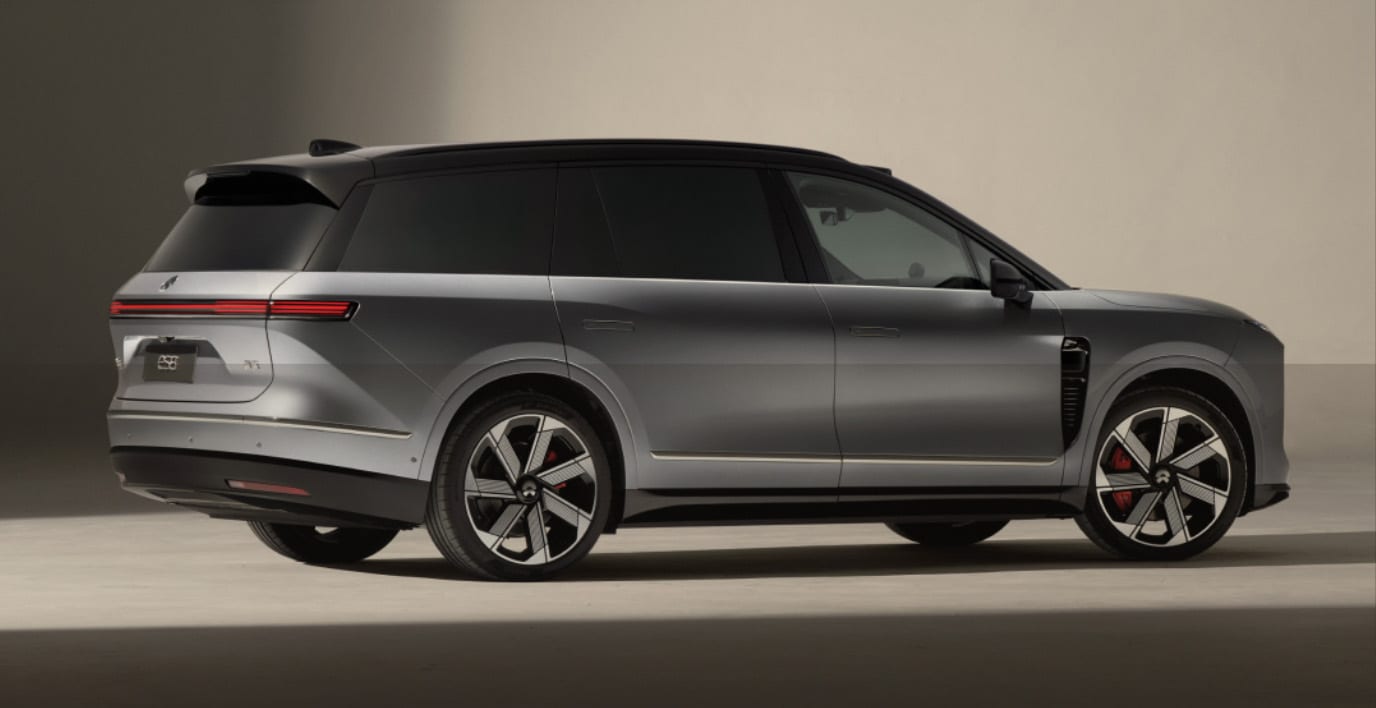

Ma Lin, assistant VP for brand at Nio Inc., said that the company’s forthcoming five-seat ES8 will not be heavily discounted, in remarks that circulated on Weibo less than two weeks before Nio reveals the variant’s price at a July 9 launch.
Ma Lin cast the new version on WeChat as the same model with two fewer seats rather than a cheaper, separately positioned product, and pushed back on the idea that it would undercut the existing car.
According to a screenshot shared by the automotive blogger Brother Electric (兄弟电动), Nio’s AVP said the six-seat version “is already priced very low.”
“The car is called the ES8, nothing else,” Ma Lin wrote. “The difference is simply two fewer seats. The pricing is out in the open.”
“The six-seat version is already priced very low, so the large five-seat version has neither the rationale nor the room for erratic pricing,” he added before commenting on how steep discounts can affect the image of premium brand.
Ma Lin argues that deeper discounting would erode Nio‘s standing without improving its commercial results.
“Pushing the price down too far does nothing for business performance and only damages the brand. Once a brand falls there is no recovery, and the examples are plain to see,” Ma Lin wrote.
The price signal
Describing the six-seat ES8 as already cheap, he contended that the five-seat car has no basis to undercut it sharply, since a large markdown would compress margins and dilute the brand.
Warning that a brand which slips cannot recover, the message ties pricing discipline to long-term equity, a theme Nio executives have returned to throughout China’s prolonged EV price war.
What owners were asking
Pre-orders for the five-seat ES8 opened on Sunday under a limited-time benefit in which a 5,000 yuan ($700) deposit offsets 10,000 yuan ($1,400) off the final price, with full pricing held until July 9.
Nio had flagged the June 28 pre-order date on June 22, pairing the reservation window with a milestone delivery, yet left the price unstated at every step.
Positioning against the lineup
Management has been emphatic that the five-seat ES8 is meant to widen Nio‘s reach rather than cannibalise it.
Pressed at the Beijing Auto Show in April on whether the five-seat ES8 and the Onvo L80 would compete, president Qin Lihong denied an overlap risk, pointing to a price gap of more than 100,000 yuan ($16,100) between the two and arguing that a saturating six-seat segment made the five-seat car a necessary move.
Product VP Ted Li, marking the model’s 120,000th third-generation delivery on June 22, framed the variant as a push beyond the large three-row segment into the premium five-seat market.
Margins under pressure
A defence of price reflects how much Nio leans on the ES8 for profit.
The third-generation model carries a gross margin of about 20%, making it the company’s earnings anchor and the line it can least afford to dilute.
Strain has been building elsewhere in the group, with Nio flagging tight margins on the Onvo L60 at its mass-market brand amid rising costs.
Investor caution has tracked that pressure, with Nio shares falling 29% over 60 days to a three-month low in mid-June even as deliveries held up.
One bright spot has come on the customer side, where Nio topped JD Power’s inaugural China purchase-experience ranking this month, a result the company can cite in defending premium pricing.
Profitability has been a repeated target for Nio, leaving little room to discount its highest-margin model.
A premium-brand stance
Resistance to a cheaper five-seat ES8 fits how Nio has positioned itself since its founding as a premium marque competing in China’s 400,000-yuan-plus segment.
Rather than match the steepest cuts of mass-market rivals, the company has leaned on battery swapping and its battery-as-a-service subscription to lower the upfront cost of its cars while holding sticker prices firm.
Under that subscription, customers can lease the battery separately and subtract its cost from the purchase price, a lever that lets Nio advertise a lower entry point without marking down the vehicle itself.
Chief executive William Li has framed 2026 as the start of a “third growth cycle,” targeting 40% to 50% annual sales growth led by large SUVs including the five-seat ES8, the Onvo L80 and the ES9.
Read against that plan, Ma Lin’s remarks extend an existing strategy rather than break from it.