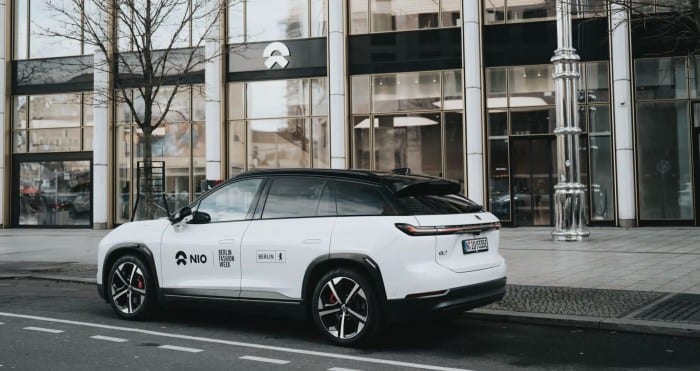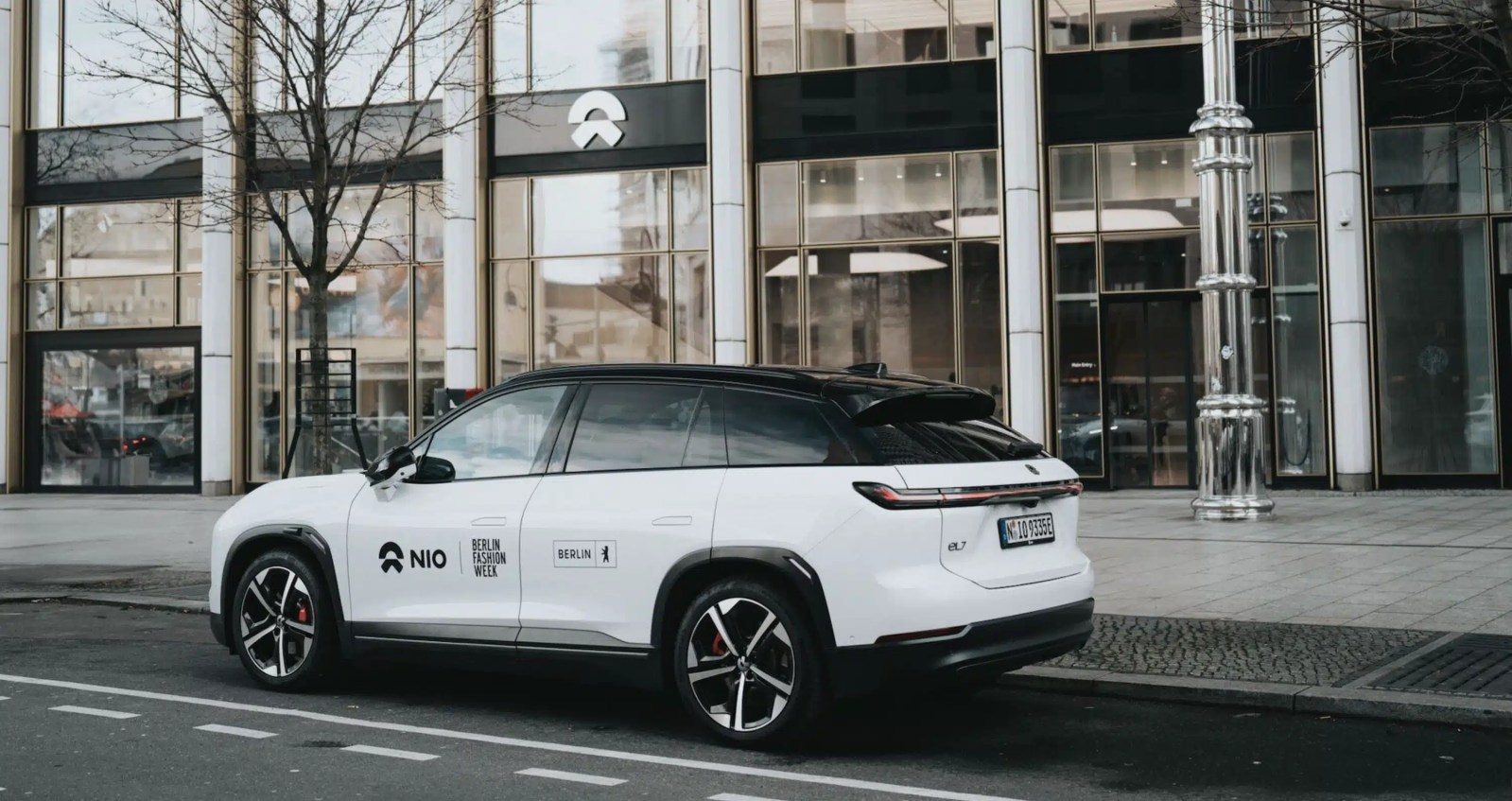

Nio registered one car in Germany in September, a 95% drop from a year earlier, matching the Chinese EV maker’s lowest monthly total in the country since January 2023.
The vehicles Nio sells in Germany are from the 2023 and 2024 model years. Last May, the company told European owners that no updated models will reach Europe until late 2027, as one of the customers who attended the event shared with EV.
The single registration in Germany compares with 20 in September 2025, according to data published on Monday by the Federal Motor Transport Authority.
Nio has now registered 20 vehicles in Germany in the first nine months of the year, down 90.5% from 211 in the same period of 2025.
Its nine-month total equals what it registered in September of last year alone.
Four Months at One
September was the fourth month this year in which Nio recorded a single registration, after January, April and August.
The company registered five vehicles in February, two in March and three in each of May, June and July.
That is an average of about two a month, against 23 a month in the first nine months of 2025.
The third quarter brought five registrations, down 94% from 90 a year earlier.
Nio registered 325 vehicles in Germany in 2025, down from 398 in 2024 and 1,263 in 2023.
Its figures fell as the market it competes in expanded.
Fully electric vehicles accounted for 88,599 of Germany’s 256,774 new registrations in September, a new record share of 34.5%.
Other Chinese brands grew sharply.
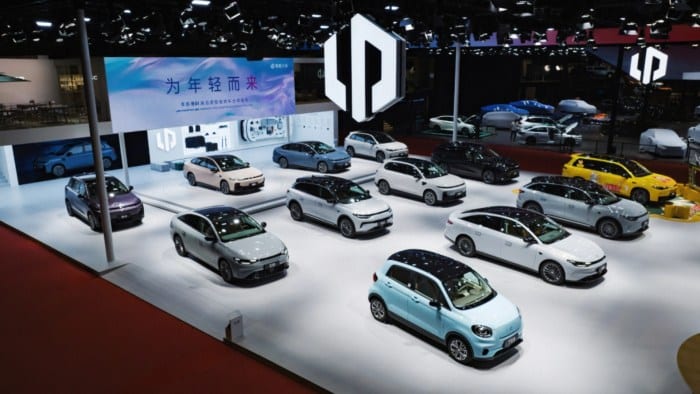
BYD registered 6,040 vehicles, up 85.6%, Leapmotor 2,652, up 191.4%, and XPeng 1,250, up 418.7%. Geely, which the KBA has listed only since this year, registered 1,011.
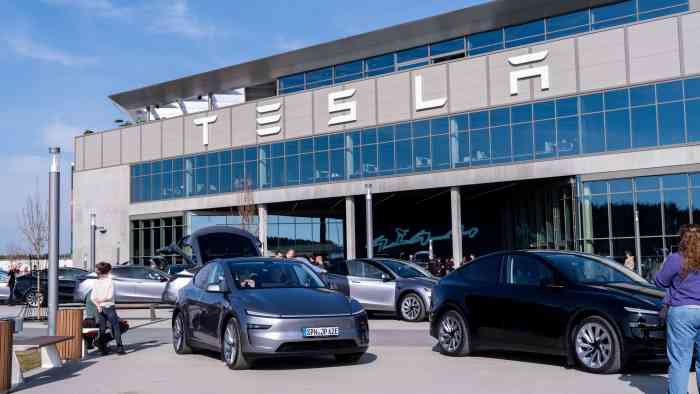
Tesla registered 12,552 vehicles, marking its strongest monthly result since 2022 and up 268.7%.
A Shrinking Network
The September figure covers the month in which Nio was due to close two of its three German service hubs.
The company told users it would shut its sites in Cologne and in Weiterstadt, near Frankfurt, by the end of September, leaving Munich as its only combined sales and service hub in the country.
Owners elsewhere are being directed through the Nio app to independent workshops.
“It is not a retreat,” Nio said at the time. “NIO is leaving neither Europe nor Germany.”
The closures followed that of the Hamburg Nio House in July, the first of the company’s flagship European showrooms to shut.
Nio had been seeking subtenants since April for its four German showrooms, in Berlin, Frankfurt, Düsseldorf and Hamburg.
No Country Chief
Nio’s German unit has had no General Manager since February, when the company dismissed David Sultzer after registrations fell to one in January.
His deputy, Christian Wiegand, left at the end of July and joined XPeng as its Marketing Head in Germany.
Neither position was filled, and Germany is now managed by Nio’s European team in Amsterdam.
Sultzer wrote on LinkedIn in March that new brands underestimate the German market.
“In Germany, service, residual value and processes are part of the product and must be seen as a complete package,” he wrote.
“If any one of them is missing, trust collapses faster than it can be rebuilt,” he added.
The dismissal came as Nio reorganised its European business in February, replacing direct sales with a model built on distributors and dealers in every market except Norway.
Incentives
Nio cut prices by up to 37% in March to clear that inventory, offering the ET5 sedan at 30,850 euros ($34,600).
Those prices were still on Nio’s German offers page on Monday.
The page lists the ET5 at 30,850 euros, the ET5 Touring at 37,600 euros ($42,100) and the EL6 at 51,000 euros ($57,200), each with 0% financing over 48 months through Openbank Deutschland.
Monthly payments start at 399 euros ($450) for the ET5, including 169 euros for battery rental.
The EL8, listed at 82,900 euros ($92,900), is financed at 4.12%.
The terms state that the offers are valid until “31.06.2026,” a date that does not exist and that is more than three months past.
The three discounted models are sold as cars with a short-term registration, meaning they have already been registered once.
Their sale to a customer therefore does not count as a new registration in the KBA’s figures, which may understate how many cars Nio is handing over.
Chinese-built Nio cars face a combined 30.7% tariff in the European Union, made up of the standard 10% duty and a 20.7% countervailing duty.
The Firefly small car, which the group sells in other European markets, is not offered in Germany.
Nio has also said it plans no new battery swap stations in Europe, where it built about 20 in Germany.
The German subsidiary, Nio Deutschland GmbH, reported a net loss of more than 58 million euros ($65 million) for 2023 on revenue of 9.4 million euros ($10.5 million), according to its most recent annual report, filed in January.
A Contrast With China
The German figures stand apart from the group’s performance at home.
Nio Inc. delivered 37,408 vehicles in September, up 7.7%, of which 21,318 were from the Nio brand, up 55.3%.
Its third-quarter deliveries rose 25.4% to 109,178**, a figure the company does not break down by country**.
Europe has returned to the company’s public comments through its battery swap business.
Geely, which agreed last month to take a stake in Nio’s swap unit, has pressed for a European swap network plan next year, Nio Chief Executive Officer William Li said after the deal.
The deal’s filings make no reference to Europe.