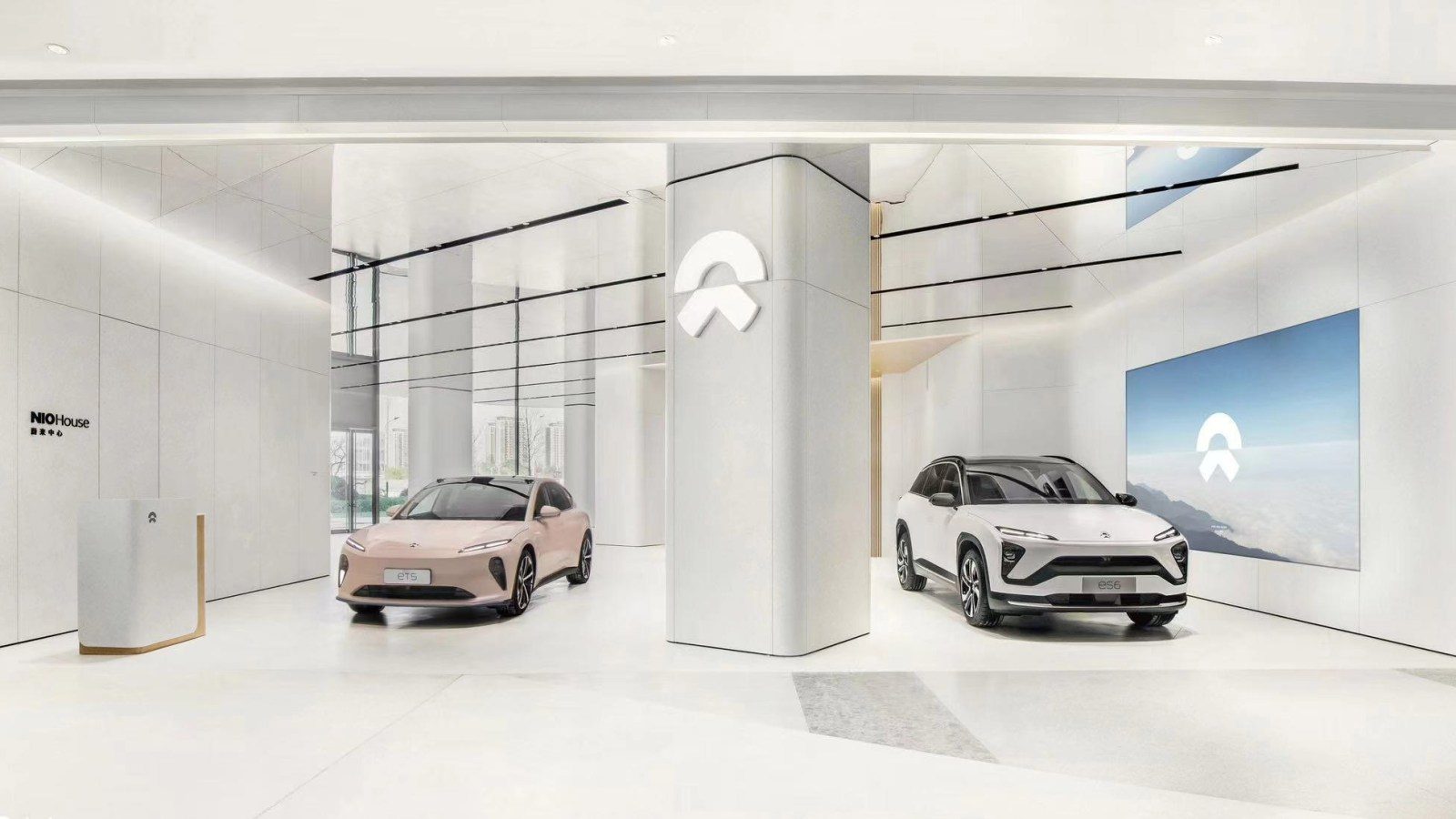

Chinese EV maker Nio is scheduled to open its first Nio House in Macau on Wednesday, marking the first flagship showroom in the region just two days after closing one of its oldest locations in Shanghai.
The Nio House will be located next to the Crowne Plaza hotel in the Areia Preta district on the Macau Peninsula, according to an opening invitation circulated on Chinese social media and reported by CNMO Technology on Tuesday.
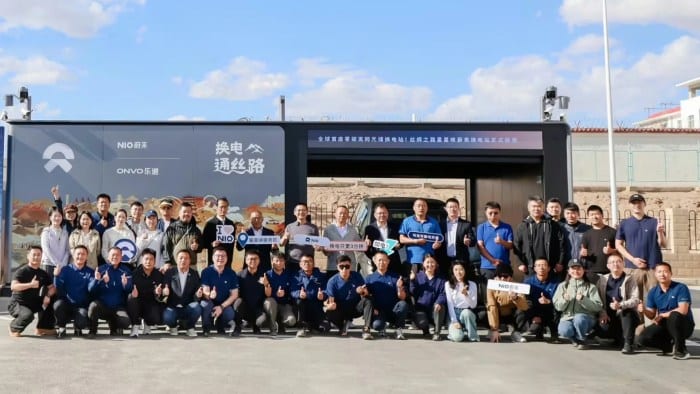
An opening ceremony is planned for 10 a.m. local time on September 2, with guest speeches, vehicle handovers and an owners’ meet-up on the program.
The new flagship showroom will open less than 24 hours after founder and CEO William Li told analysts that the company will continue to open more multi-brand stores in China reducing infrastructure costs.
“The second action we’re taking is to keep rolling out our Sky Stores, where we can host Nio, Onvo, and Firefly brands under the same roof,” Li stated. “With that, we are able to further expand our sales network and also to really introduce our brand to more users in the lower-tier cities.”
What a Nio House Does
A Nio House is the larger of Nio’s two retail formats.
Beyond vehicle display, test drives and deliveries, the facilities typically include a café, co-working space, meeting rooms, a library, a children’s play area and an events lounge.
Nio positions the format as a user-community hub, hosting talks, interest groups and owners’ gatherings alongside standard sales functions.
A Nio Space, by contrast, is a smaller showroom focused primarily on vehicle display and sales.
Macau has had a Nio Space at the Lisboeta Macau/H853 Fun Factory complex in Cotai since 2022.
Nio also operates two battery-swap stations in the special administrative region.
Macau’s Dealer-Led Model
Nio does not operate directly in Macau.
The company announced in June 2025 that it was adopting a general-agent partnership model for the market, and later appointed Guangdong Hongyue Automobile Sales Group as its sole distributor, effective July 1, 2025.
Hongyue handles sales, service and network development across all three of Nio’s brands — Nio, Onvo and Firefly.
Macau became the first market to open orders for the right-hand-drive Firefly in November 2025, with an early dealer poster showing the compact model from HK$169,000, equivalent to about $21,700.
Nio is expected to enter neighboring Hong Kong later this year under the same asset-light distributor structure.
Areia Preta is one of the more densely populated parts of the Macau Peninsula and sits close to the Macau port of the Hong Kong-Zhuhai-Macau Bridge, giving the location access to traffic moving between the region and mainland Guangdong.
A Shrinking Network Gets a New Node
The Macau opening arrives against a backdrop of sustained contraction in Nio’s flagship showroom network.
Founder and CEO William Li said on Tuesday’s second-quarter earnings call that the company operates 165 Nio Houses globally, down from 168 at the end of the first quarter.
By the end of 2025, the company operated 171 flagship locations, down from a peak of 187 in June 2025, the last month Nio published a monthly store update.
Every quarterly disclosure since mid-2025 has produced a lower figure.
The decline amounts to a 11.8% reduction from the peak in just over a year.
Nio Space count has tracked a similar trajectory, falling to 376 from 389 at the first-quarter call.
Shanghai’s HKRI Taikoo Hui Nio House — the company’s first in its home city, which took 495 days to build after Li ordered the interior demolished and rebuilt to his satisfaction — closed on August 31.
In Europe, Nio confirmed the closure of its Hamburg flagship in July, the first such shutdown on the continent, citing market conditions and a broader restructuring of its European operations.
The Macau location could bring the global total back to 166 if no other location has closed since the end of the second quarter.
Whether Macau counts in Nio’s reported figure depends on whether the company classes distributor-operated houses alongside its company-owned network; Nio has not clarified the distinction.
Sky Stores
Li framed the network shift on the earnings call not as contraction but as optimization, describing a “highly coordinated three-brand Sky store model” that puts Nio, Onvo and Firefly under one roof to expand market coverage while increasing channel density.
Co-founder Qin Lihong said last month that more than 40 Sky stores were open, with about 120 planned for the full year — a pace that would require roughly 80 more in the second half.
The shared format lets Nio enter smaller cities that could not support three separate store networks and addresses what Qin described as insufficient display area at existing locations in major cities.
Li pointed to brand awareness, not product competitiveness, as Onvo’s primary challenge on Tuesday’s call.
“Right now, for the Onvo brand, the challenge is more about its overall brand awareness, where its current brand awareness is maybe comparable with Nio’s awareness around 5 to 6 years ago,” he said.
Nio plans to address the gap through collaborations, offline activities and engagement with targeted communities, alongside the continued rollout of Sky Stores.
The Cost Pressure
Estimates circulating in Chinese industry coverage put the annual cost of a first-tier-city Nio House above 20 million yuan (nearly $3 million), about three times a traditional dealership.
However, Nio has never confirmed a figure.
Nio’s Guangzhou regional general manager Wang Tai told Chinese outlet Blue Whale News this month that some automakers are withdrawing from shopping malls primarily due to financial considerations, adding that mall costs are usually higher than alternatives.
Nio posted its first quarterly profit in the fourth quarter of 2025 and has targeted a full year of profitability in 2026.
Second-quarter revenue reached 32.1 billion yuan ($4.76 billion), up 69.1% year on year, with vehicle margin holding at 18.5%.
Li said on the call that rising input costs — chips, plastics, aluminium, copper and lithium carbonate — have added nearly 20,000 yuan ($3,000) to the cost of building an ES8, a figure that would require a 30,000-yuan ($4,500) price increase to hold gross profit steady.
Nio has so far absorbed the cost rather than pass it through to the customer.