
Deutsche Bank estimated on Thursday that Nio delivered about 8,900 units of its ES8 model in June, falling below 10,000 monthly deliveries for the first time since the production ramp in October 2025.
In a new research note, first reported by CNEVPost, Deutsche Bank analyst Wang Bin attributed the shortfall to two factors: Nio phasing out a 10,000 yuan ($1,400) vehicle purchase tax subsidy that had been in place since March, and customers holding off orders ahead of a five-seat ES8 variant.
The new variant arrived at showrooms and opened pre-orders on June 28 before its July 9 launch.
The bank also said the weaker-than-expected ES8 performance was the main reason Nio Inc. missed its second-quarter delivery guidance, finishing the period at 107,658 vehicles against a range of 110,000 to 115,000.
ES8 Monthly Figures
If confirmed by China’s Passenger Car Association (CPCA) data — expected to be released next week — the June estimate would mark the lowest monthly figure for the third-generation ES8 since it cleared 10,000 units for the first time in November 2025.
From that point the SUV had strung together seven consecutive months above the threshold — November through May — a run that now appears to have ended.
The trajectory since launch tells the story of a product that surged through an enormous order backlog and then steadily cooled.
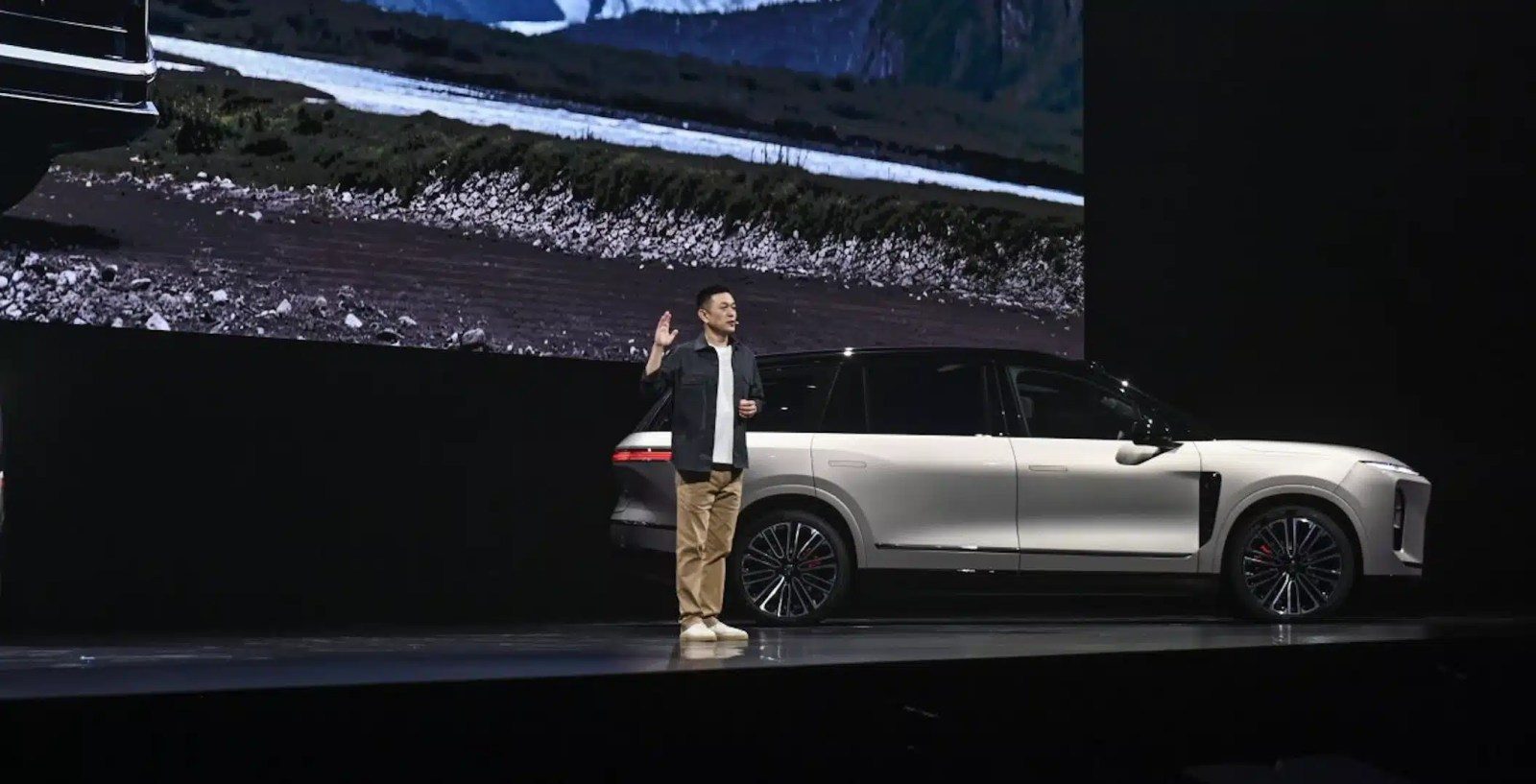
Nio unveiled the third-generation ES8 at its annual event in Hangzhou on September 20, 2025, pricing the six-seat Executive Luxury Edition at 406,800 yuan ($59,800) — 100,000 yuan below its predecessor.
The reduction pulled in over 100,000 firm orders within roughly 48 hours, and delivery wait times climbed to 24 to 26 weeks.
Deliveries began the following day and reached 10,000 units in 41 days.
The model accelerated through the fourth quarter, hitting 6,703 units in October, 10,689 in November, and a peak of 22,258 in December — making the ES8 China’s best-selling SUV in the 400,000 yuan segment by single-month volume.
Nio’s third factory manufactured 43,668 ES8 units in 2025, exceeding the company’s production guidance for the model by nearly 3,700 vehicles.
January 2026 brought the first sequential decline, with ES8 deliveries falling 21% from December to 17,645 units.
February dropped a further 36% to 11,260 as the longest Chinese New Year holiday on record and an audio signal processing chip shortage constrained output.
March recovered to 16,255 units — a 44% month-on-month rebound — but the figure still sat 27% below the December peak.
April slipped again to 13,020, May fell 12% to 11,475, and Deutsche Bank now places June at roughly 8,900.
Across the first half of 2026, the monthly trend describes a model whose initial backlog has been largely fulfilled and whose run rate has not stabilized at a steady level.
Waiting Times
The ES8’s configurator wait time has served as a real-time demand gauge since launch, and its compression over nine months underscores the shift.
At debut, buyers faced a 24-to-26-week wait — nearly half a year.
By mid-January that had fallen to 13 to 14 weeks, then to 8 to 9 weeks by early February, and onward to 6 to 7 weeks, 4 to 5 weeks, and 3 to 4 weeks through March.
As of early May, founder and chief executive William Li said the wait time had begun lengthening again after months of compression, attributing the rebound to ES9 showroom traffic spilling over into ES8 orders.
Li said ES8 order intake in the first 20 days of May had reached its highest level since the model’s October ramp.
The current configurator now shows a wait of two to three weeks, according to Nio‘s website.
The figure suggests the brief May order rebound did not hold, and that production has once again caught up with incoming demand.
Delivery Milestones
The ES8’s cumulative delivery milestones trace the arc of deceleration.
Nio reached 100,000 third-generation ES8 deliveries in 215 days, a record for any model priced above 400,000 yuan in China’s passenger-car market.
The 10,000-unit milestones came faster and faster through the ramp — 41 days for the first, then intervals of 29, 19, and 11 days — before reversing.
After the December production peak, the cadence slowed to 20 days for the next 10,000, then 27 days to 70,000, 21 days to 80,000, 14 days to 90,000, 20 days to 100,000, and 30 days to 110,000.
By the time Nio delivered the 120,000th unit on June 22, the pace had settled at roughly 30 days per 10,000 units — about three times slower than the December peak.
Across all three generations and eight years, more than 210,000 ES8s have been delivered since the original model became Nio‘s first production vehicle in 2018.
The ES9 Factor
Deutsche Bank’s note pushes back on the idea that the ES9, Nio‘s new flagship SUV launched on May 27 from 498,000 yuan ($73,000), is cannibalizing the ES8.
Citing dealer visits, the bank said a significant price gap between the two models limits overlap.
The ES8 is positioned as a family vehicle competing with the Li Auto L8 and the Huawei-backed Aito M8, while the ES9 targets business executives and competes with the Aito M9 and Zeekr 9X.
The bank estimates ES9 deliveries reached about 8,000 units in June, up sharply from 3,108 in May’s partial month.
Nio announced on June 26 that the ES9 had reached 10,000 cumulative deliveries in 30 days, with an estimated backlog of more than 40,000 non-cancellable orders.
Li has maintained that the ES9 is lifting the ES8 rather than displacing it, pointing to a 30% week-over-week rise in ES8 orders after ES9 test drives began on May 11.
Around 70% of the first 10,000 ES9 buyers were new to the brand, suggesting the flagship is pulling in conquest buyers from luxury combustion marques rather than redirecting existing Nio customers away from the ES8.
Five-Seat ES8
A more immediate headwind for June ES8 deliveries was the looming five-seat variant.
Nio opened pre-orders on June 28 with a 5,000 yuan ($700) deposit that offsets 10,000 yuan ($1,400) off the final price, and set July 9 for the market launch.
Pricing has not been disclosed.
Deutsche Bank said some customers were waiting for the five-seat version, which is expected to be priced below the six- and seven-seat models.
The anticipation effect likely suppressed both new orders and deliveries in June.
Nio‘s Vice President of Brand and Communication Ma Lin pushed back on expectations of a steep discount in remarks that circulated on Weibo days before the pre-order opened.
Ma Lin called the existing six-seat ES8 already aggressively priced and argued that deep cuts would erode the brand without improving commercial results.
The third-generation ES8 carries a gross margin of about 20%, making it Nio‘s earnings anchor.
The model drove the company’s first-ever quarterly profit in the fourth quarter of 2025 and accounted for roughly 77% of Nio-brand deliveries in the first quarter of 2026.
Co-founder and President Qin Lihong has denied an overlap risk between the five-seat ES8 and the Onvo L80, pointing to a price gap of more than 100,000 yuan between the two.
Orders Weakening
Deutsche Bank’s note also flagged a broader softening at the Nio Inc. level.
The bank estimated full-month new orders at about 77,000 units, down 8% from May, with the sequential decline driven mainly by ES9 orders normalizing after their post-launch surge.
Despite the June miss, Deutsche Bank still expects Nio to reach non-GAAP break-even in the second quarter, forecasting a non-GAAP net profit of 5 million yuan — effectively break-even.
The bank deems the company’s guided vehicle gross margin of 17% to 18% achievable given the strong contribution from the higher-margin ES9.
Nio did not disclose the ES8’s June delivery figure separately when it reported group results on Wednesday, breaking from practice over the past few months.