
Aston Martin has yet to buy any components under the EV technology deal it signed with Lucid in 2023, and still owed most of the cash it agreed to pay for it at the end of last year, after CEO Adrian Hallmark pushed the British carmaker’s first fully electric car to 2033 at the earliest.
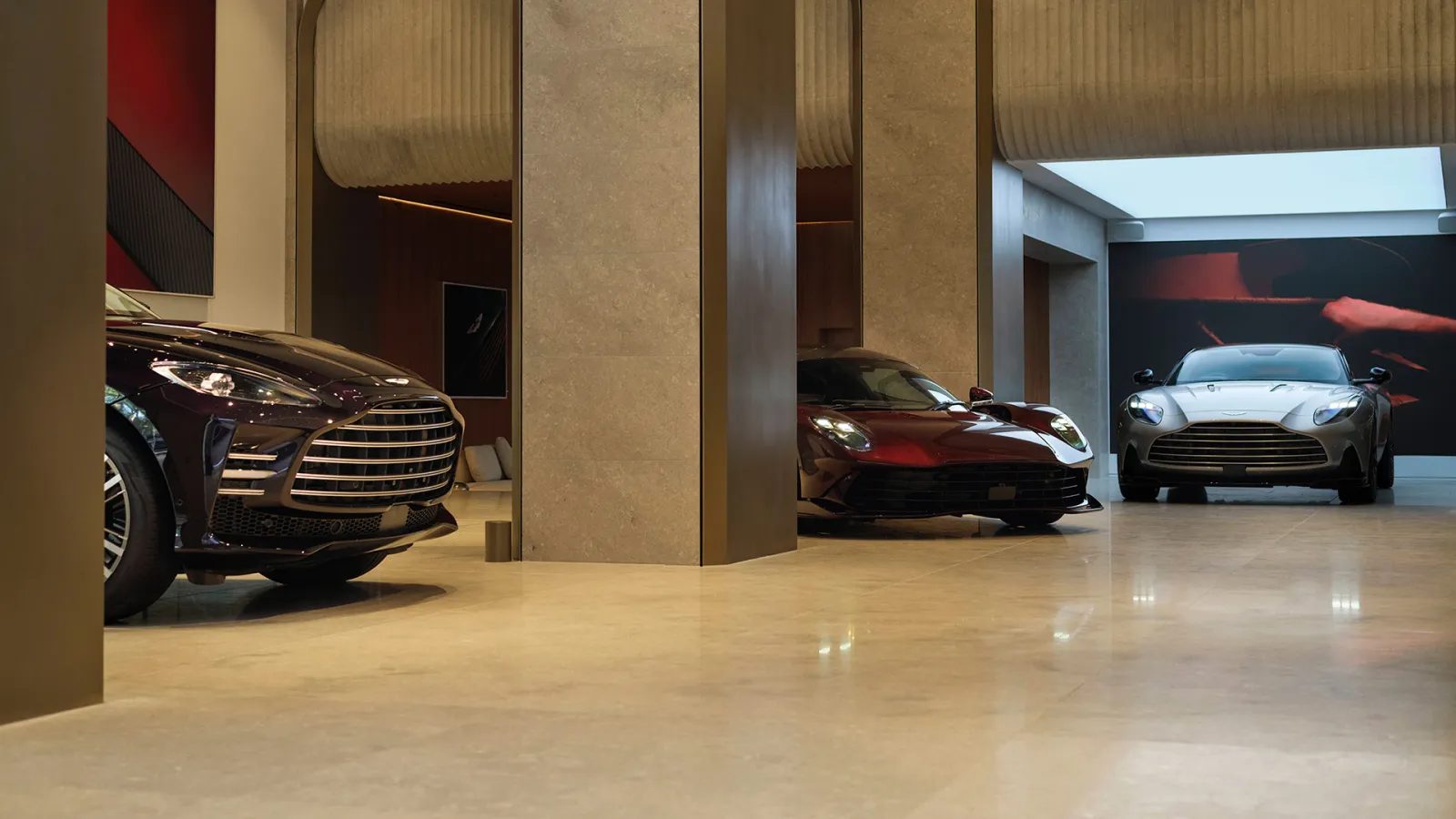
“We have the deal with Lucid, and the interesting thing is, because we delayed, by the time we activate that deal, the technology that we will get is totally different to what we signed up the original contract for,” Hallmark told reporters including Autocar at the opening of a showroom in London.
The agreement was signed to deliver an electric Aston Martin in 2025. Hallmark now puts that car eight to ten years later than planned.
“It could be 2035, it might be 2033, but it’s in that three-year window,” he said, adding: “It’s not 2031.”
What Aston Martin Agreed to Pay
Aston Martin agreed in June 2023 to pay Lucid a technology access fee of $232 million, according to a Lucid regulatory filing.
The fee was made up of $100 million in new Aston Martin shares and $132 million in cash phased over three years.
Lucid received 28,352,273 Aston Martin shares, a stake of about 3.7%, and a first cash instalment of $33 million when the arrangements took effect on November 6, 2023, a later filing shows.
That left $99 million in cash to be paid over the following three years.
Aston Martin also committed to “an effective minimum spend with Lucid on powertrain components of $225 million.”
Lucid described the contracts as worth “in excess of $450 million,” and the two commitments add up to $457 million.
Most of that cash had not been paid by the end of 2025.
“An outstanding cash liability of £73.3m relating to the technology supply arrangement entered in 2023 remains as at 31 December 2025, all of which is due in 2026 or later,” Aston Martin said in its full-year results, an amount equal to about $96.8 million at current rates.
The company put its remaining minimum spend on Lucid components at £177.0 million ($233.8 million).
It has also been charged by Lucid for some work, recording expenses of £3.8 million in 2024 and £1.6 million in 2025 for “implementation work for the technology purchased in 2023.”
Neither company has said what happens to the minimum spend if Aston Martin buys no components for several more years.
What Lucid Was to Supply
Lucid agreed to provide its twin-motor drive unit, its battery technology and its onboard charging unit, which it calls the Wunderbox, along with technical support to integrate them into Aston Martin’s own platform.
It was the first agreement under which Lucid would supply its technology to another carmaker.
“The supply agreement with Lucid is a game changer for the future EV-led growth of Aston Martin,” Executive Chairman Lawrence Stroll said at the time.
Peter Rawlinson, then Lucid’s CEO, called it “a landmark collaboration.”
A Stake That Has Lost Most of Its Value
The shares were valued at $100 million under the contract, and Lucid recorded them at an initial fair value of $73.2 million when it received them, its filings show.
Lucid still held them at the end of March 2025, when it valued them at $25.6 million.
Aston Martin’s shares traded at 34.5 pence in London on Friday, which would value the same holding at about £9.8 million ($12.9 million), 82% below Lucid’s initial valuation and 87% below the contract value.
Lucid had also recorded about $113 million of deferred revenue from the Aston Martin arrangements by early 2025, income it has received or is owed but has not yet recognised.
How the Date Moved
Aston Martin’s 2025 target became 2026 in February 2024, when Stroll said that “consumer demand is not at the pace that analysts and politicians thought.”
Rawlinson was asked about the delay on Lucid’s second-quarter earnings call that August.
“We’re solid as a rock,” he said. “Aston is fully committed.”
The date later moved to 2027 under Aston Martin’s previous management, and Hallmark said in February 2025 that the car would arrive by 2030, according to Autocar.
Lucid still lists the partnership among those whose “anticipated benefits” it may not realise, in the risk language of its filings this year, alongside its agreements with Uber, Nuro and Nvidia.
Almost No Spending Until 2030
Hallmark said Aston Martin’s current investment in electric cars is “research and study, not even single-digit millions.”
Even on a 2033 launch, “we’ve got three years where we can keep looking, keep thinking and keep evaluating different technologies,” he said.
“It’s only then that we would need to kick off investment,” Hallmark added.
He presented the delay as an advantage, because the technology Aston Martin eventually receives will be newer than what it contracted for. Hallmark did not say whether the agreement’s terms would need to be changed for that to happen.
The brand’s chief said Aston Martin’s separate partnership with Mercedes-Benz, which supplies its engines, “will be deepened” on powertrains and electronic systems.
Why Aston Martin Is Waiting
Aston Martin “are not BEV deniers but BEV delayers,” Hallmark said, and will be “predominantly ICE-based” until 2035, when UK and European Union rules require new cars to be zero-emission.
The company plans to keep its V8 and V12 engines “alive and compliant all the way through to the end of that period.”
It is also short of cash.
First-half revenue rose 38% to £628.6 million ($830.4 million), but the adjusted operating loss was £108.9 million ($143.9 million) and net debt reached £1.54 billion ($2.0 billion) at the end of June.
Aston Martin reported an operating loss of £259.2 million for 2025 and said in February it would cut up to 20% of its workforce.