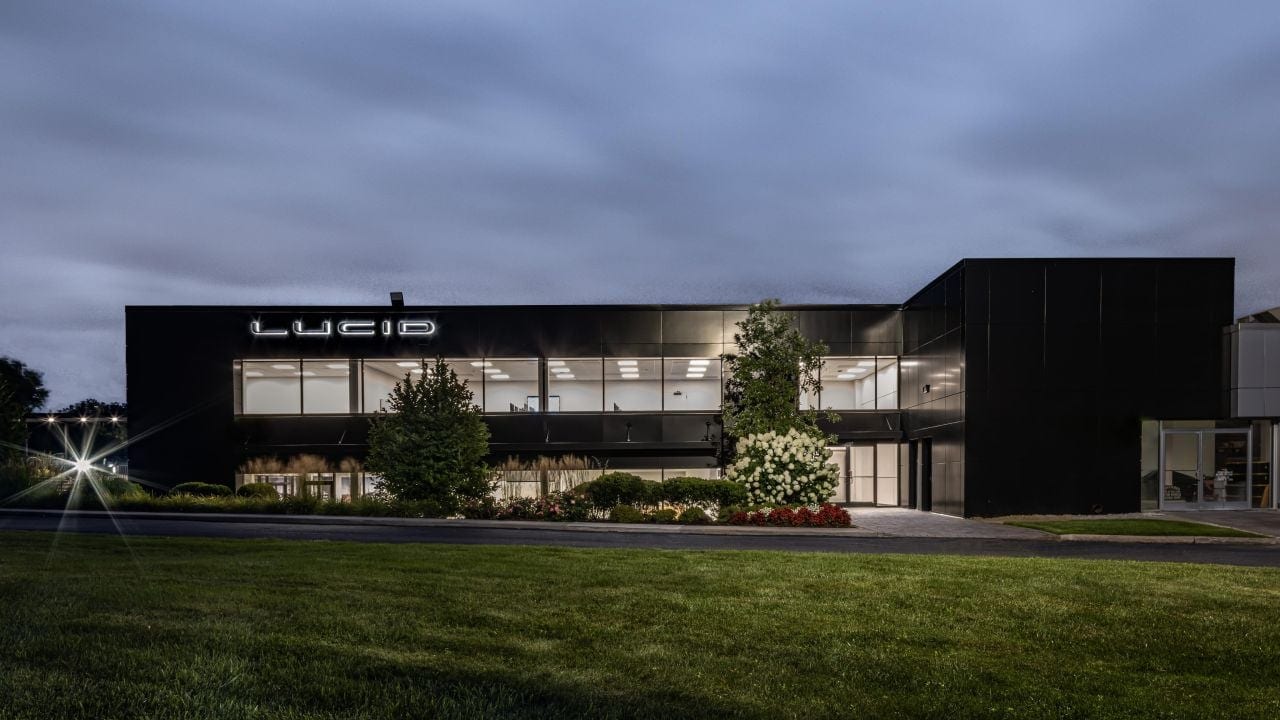

Lucid has asked the full Fifth Circuit Court of Appeals to reconsider a ruling that upheld Texas’s ban on carmakers selling directly to consumers, after two of the three judges who ruled against it wrote that they doubted the decision.
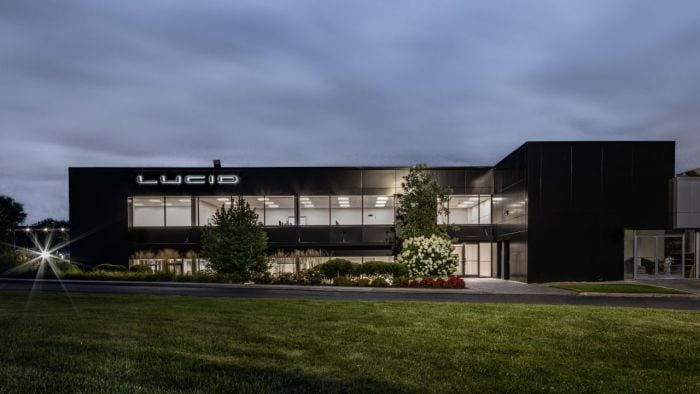
The ruling leaves Lucid unable to sell cars from its Plano studio or any other location it owns in Texas.
Lucid, like Tesla and Rivian, sells to Texans online with the transaction completed out of state.
The company is planning a combined sales, delivery and service site in Dallas, its first service center in North Texas.
Seventeen states have adopted provisions similar to Texas’s, according to the opinion, which cited a 2021 tally by the National Conference of State Legislatures.
Some states exempt EV makers or manufacturers with no franchised dealers, the court noted, citing Colorado.
The Petition
Lucid filed the petition for rehearing en banc on September 18, according to a summary by law firm Nelson Mullins published in The National Law Review.
The filing came 14 days after the panel’s decision, the last day allowed under the federal appellate rules.
The petition invokes a rule that allows full-court review only in limited circumstances, including when a panel decision conflicts with the court’s own rulings or raises a question of “exceptional importance,” according to the summary.
A majority of the court’s active judges would have to vote to grant it. The petition is pending.
The Ruling
A three-judge panel affirmed on September 4 a district court judgment that Texas’s direct-sales prohibition does not violate the Equal Protection and Due Process Clauses of the Fourteenth Amendment.
“Faithful to this court’s precedent evaluating the constitutionality of direct-sales bans on automobile manufacturers, we leave the judgment of the district court undisturbed,” Circuit Judge Patrick Higginbotham wrote for the panel.
The panel included Chief Judge Jennifer Walker Elrod and Circuit Judge James Graves.
The decision was unanimous.
Texas law bars manufacturers and their affiliates from owning, operating or controlling a dealer for the type of vehicle they make, so only independent franchised dealers can sell vehicles to consumers in the state.
In Texas, Lucid owns a studio in Plano and a warranty-and-service center in Houston, and has no independently franchised dealers, according to the opinion.
The Texas Department of Motor Vehicles told Lucid in 2021 that it could not sell vehicles at the Plano studio, which opened in November 2022 with limited operations.
Lucid sued three DMV officials in 2022, including Motor Vehicle Division Director Monique Johnston, in the U.S. District Court for the Western District of Texas.
The Texas Automobile Dealers Association intervened as a defendant.
Lucid argued that earlier Fifth Circuit rulings did not apply because they involved facial challenges, while it challenged the law only as applied to its own business.
The panel disagreed, holding itself bound by three earlier decisions that upheld direct-sales bans.
Two involved Texas’s law, a 2001 case brought by Ford and a 2004 case brought by International Truck.
The third was a 2024 ruling against Tesla over Louisiana’s similar ban.
“Tesla and Lucid manufacture and sell the same product through the same business model,” the panel wrote.
“Given the precedent we are duty-bound to follow and its striking similarity to the legal and factual arguments before us, Lucid’s as-applied equal protection claim fails as a matter of law.”
The panel also rejected Lucid’s due process claim, noting that Lucid conceded the two claims “rise and fall together.”
‘Great Reservation’
Higginbotham also wrote a separate concurrence “dubitante,” a label judges use when they join a decision while doubting it.
“With respect, I write separately to register my discomfort with Tesla’s restraint of an electric-vehicle manufacturer that perpetuates none of the ills that motivated” the Texas law’s enactment, he wrote.
He traced direct-sales bans to the 1930s, when General Motors, Ford and Chrysler imposed what he called “draconian terms” on their own franchised dealers.
The laws were meant to protect dealers from competition with their own manufacturers, not from rival brands that have no dealers, he wrote.
“Absent another valid purpose, preventing inter-brand competition is naked protectionism, which we have long held ‘is not by itself a legitimate state interest,'” Higginbotham wrote.
He rejected the dealers’ association’s argument that franchised dealer competition lowers prices, saying the position “cannot withstand scrutiny under basic economic principles.”
“Rather, Lucid’s vertical integration could lower consumer prices by eliminating double marginalization,” he wrote.
“There is no rational basis for the state to mandate its preferred distribution strategy for non-franchised electric-vehicle manufacturers. All that remains is a consumer with fewer choices.”
“But as applied to Lucid, summarily relying on Tesla to deny relief mystifies and troubles me,” he added.
“I concur in the majority, as I am bound to follow our precedent, but I do so with great reservation.”
Elrod also concurred dubitante, writing that she agreed “as our precedent appears to tie us to this conclusion.”
“Lucid does not simply parrot the legal arguments from Tesla, but points to meaningful differences between Louisiana and Texas’s statutes and between Tesla and Lucid’s businesses,” she wrote.
“In other words, it offers a true as-applied challenge.”
Those differences failed to clear the bar set by the broad language in the Tesla decision, she wrote.
She said she agreed with Higginbotham that “this legal regime does not appear to be based on a legitimate concern for consumers’ welfare.”
Graves did not write separately.
Tesla Precedent
In its 2024 Louisiana ruling, the Fifth Circuit upheld the dismissal of Tesla’s equal protection challenge, but revived its claim that a state commission dominated by dealership owners could not fairly rule on its business.
The Supreme Court declined in June 2025 to hear an appeal of that ruling brought by 18 members of the Louisiana Motor Vehicle Commission, not by Tesla.
Tesla settled the Louisiana lawsuit in July 2025, Reuters reported.