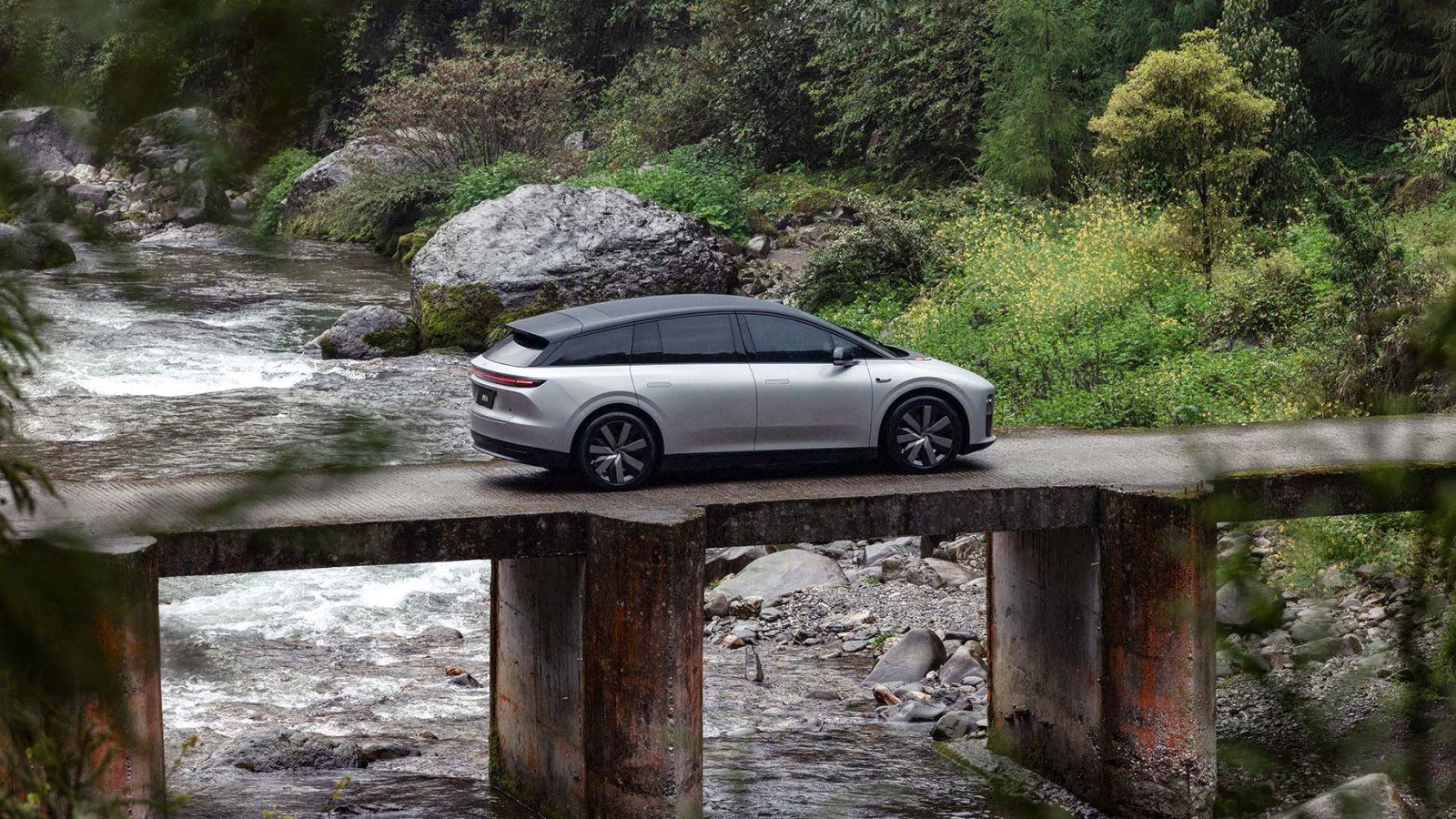

Li Auto will fit batteries it developed in-house across its entire lineup, the company said on Monday, setting out a fourth-quarter timetable that moves its flagship Mega and the forthcoming i9 off CATL cells and launches a refreshed i6 with both an in-house battery and an in-house driver-assistance chip.
The plan, published on the company’s official social media accounts, follows a statement by founder and CEO Li Xiang on the August 26 earnings call that in-house batteries would spread across the range from the second half of the year.
In-house packs are already in the L8, L6 and i8, the company said, and “will be fully deployed across all of our models.”
Li Auto framed the move as a strategy set in 2020, when it decided that both cells and chips must be fully self-developed, and addressed its suppliers directly.
“Self-developing the Mach chip does not change the fact that Nvidia remains the world’s leading chip brand; self-developing batteries does not change the fact that CATL is the leading battery brand,” the company said.
The company said it wanted to hold “the core technology barriers of the future in our own hands, like Apple, Huawei and Tesla.”
The Q4 Timetable
The new-generation Mega, launched on September 2 with first deliveries on September 5, began on CATL 5C ternary lithium packs.
Orders “in the past few days” exceeded expectations and the CATL reserve “is about to be used up,” Li Auto said.
Customers locking orders from 3:00 p.m. Beijing time on September 7 will receive the in-house 5C ternary pack, with deliveries expected from November.
The i9, a six-seat all-electric flagship SUV due to debut in mid-September, will likewise launch on CATL 5C cells and switch entirely to in-house cells once production ramps.
The 2026 i6 will arrive in the fourth quarter with the in-house 5C battery and the Mach chip; pre-orders open in late September and deliveries begin in early November.
The Mach M100 chip is already in the refreshed L9, L8 and L6, which Li Xiang told the August 26 call had “all transitioned to the latest platform, which includes the Mach M100 chip, 5C range extension, and other core technologies,” and in the new Mega; more than 50,000 M100 chips have been delivered, according to the company.
The i6 refresh extends it to the volume electric model, but Li Auto has not announced a move away from Nvidia hardware across the range: its September 1 release said the Mach VLA driving software would roll out this month to vehicles on Nvidia’s Orin-X and Thor platforms.
Designed in House, Built by Sunwoda
Li Auto designs the cell chemistry, cell structure, pack and battery management system and has the cells manufactured by Sunwoda, its battery chief Liu Zhimin said at the launch of the all-new L8 in June.
That L8, launched June 23, was the first production model to carry the in-house pack, a 72.7 kWh 5C unit; the L6 and i8 followed.
The manufacturing runs through a 50:50 joint venture with Sunwoda formed in October 2025, which reached mass production with the L8, and Li Auto is now buying deeper into the supplier.
Sunwoda disclosed on September 4 that Li Auto will inject about $390 million into Sunwoda Electric Vehicle Battery for a direct 8.79% stake, making it the second-largest shareholder.
Li Auto guarantees at least 75% remaining capacity after eight years or 160,000 km and says the pack retains more than 80% health after 2,000 full cycles at 5C charging, which it equates to more than 500,000 km.
The relationship with CATL predates the company’s first models.
The two co-developed high-power packs from the Li ONE onward, CATL has supplied about one million packs, and they signed a five-year strategic agreement in September 2025; the Mega launched in 2024 on CATL’s 5C Qilin pack.
Why Now
Li Auto’s vehicle margin fell to 9.4% in the second quarter from 19.4% a year earlier, and management said on August 26 that it would control costs through integrated design, in-house technology and supply-chain optimisation rather than pass the latest increases to customers.
Supply, not only cost, is the other reason: at the i6’s launch last September, the CATL-battery version carried an 18-to-22-week wait while the Sunwoda-battery version took two to four weeks, a gap Li Auto has since described as a question of who controls battery definition and delivery.
The i6 has had its own supply trouble more recently: product-line head Li Xinyang said on Weibo that production was cut by about 4,000 units against plan in mid-to-late July over headlight supply, in a month when the model had accounted for 69.4% of June deliveries.
Chief financial officer Johnny Tie Li told investors the company expects “further margin expansion for the second half of the year as our product mix optimizes, with a higher sales contribution from the Livis trim and the launch of refreshed BEV models and Li i9,” the two models now being moved onto in-house cells.
Li Auto says it sets no fixed ratio between in-house and purchased packs and will choose on performance, safety, quality, cost and delivery, with the two sources competing internally.
The Model It Rides On
The i6, a five-seat electric SUV launched in September 2025, is now the company’s volume model: 135,863 deliveries in the first seven months of 2026, including 21,024 in April, about 62% of that month’s total of 34,085.
Li Auto delivered 37,679 vehicles in August, up 32.1% year on year and 23.7% from July’s 30,468, taking the first eight months to 261,619 and cumulative deliveries to 1,801,834 since volume production began in late 2019; March’s 41,053 remains the year’s high.
Third-quarter guidance of 95,000 to 100,000 vehicles leaves September needing 26,853 to 31,853, and the 20% growth target set earlier in the year implies about 487,600 for 2026, of which 53.7% had been delivered by the end of August.
Beyond the battery plan, September brings the Mega’s first deliveries, the i9 debut, the Mach VLA rollout and a Dubai launch event opening Middle East sales, with a European debut scheduled for the Paris Motor Show in October.