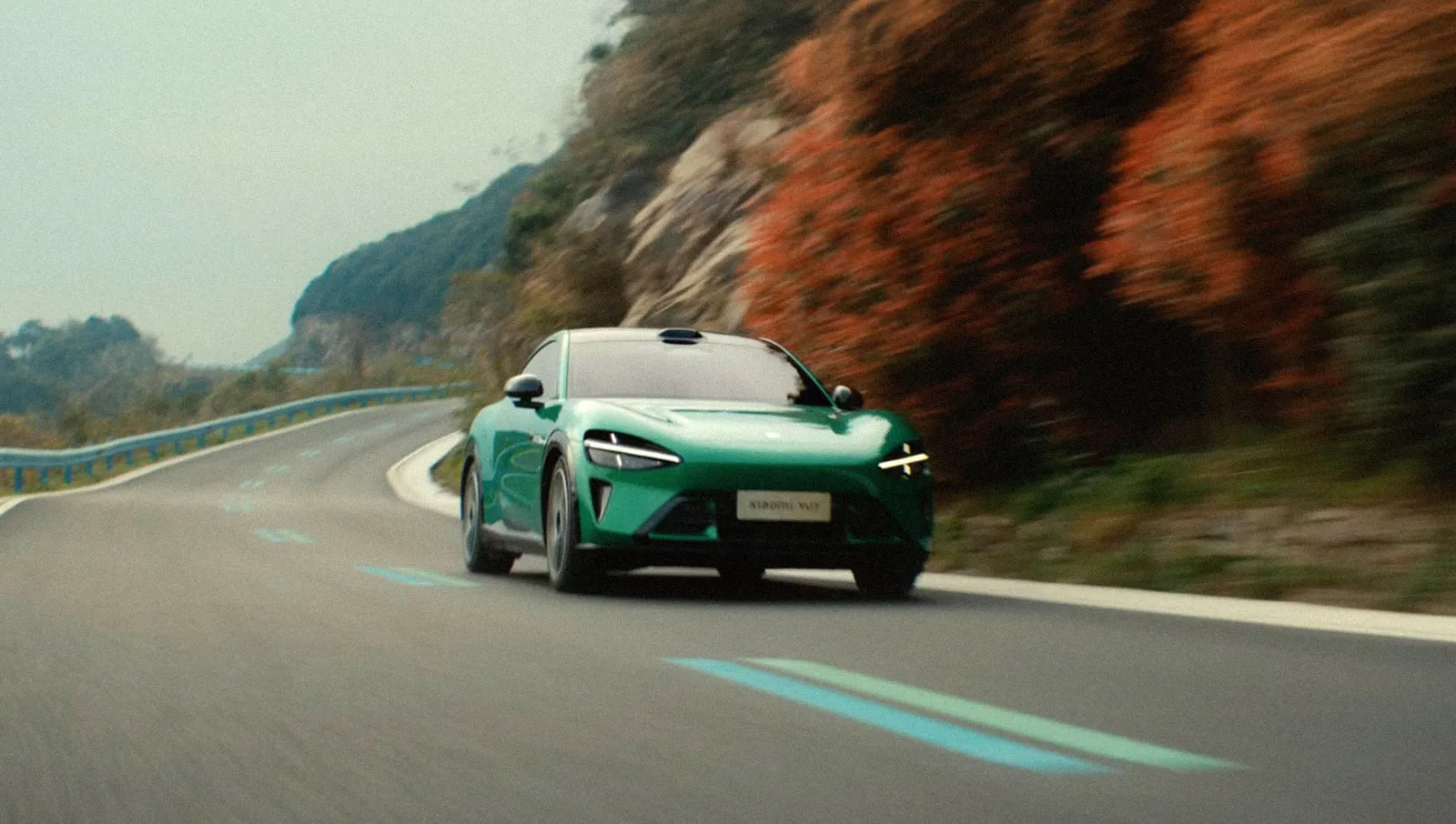
Xiaomi has applied to register trademarks in South Korea for its SU7 sedan, SU7 Ultra and YU7 SUV, records in the Korean Intellectual Property Rights Information Service (KIPRIS) show, as the tech giant prepares to begin sales in the country next year.
The applications were filed last May, six months before Korean media reported them on Thursday. They list Xiaomi Inc. of Beijing as the applicant and Seoul-based KAI Patent Law Firm as its agent, and all three were still pending on Thursday.
The applications also reach beyond cars, to mobile phones, semiconductors and “humanoid robots with artificial intelligence for use in scientific research.”
They are Xiaomi’s first Korean filings for individual car models, the Korea Herald reported on Thursday, citing the Ministry of Intellectual Property.
Xiaomi already holds a registered series mark in South Korea. The “Xiaomi SU” mark, filed through the international Madrid system on April 12, 2024, was registered in South Korea on January 20, 2026, according to KIPRIS.
The tech giant had previously listed vehicles only among the goods covered by its brand trademarks, Asia Economy reported, citing industry sources.
Xiaomi Technology Korea, the company’s local subsidiary, has also added the import, wholesale and retail of cars and auto parts to its business objectives, alongside mobile phones, accessories and tablets, the Korea Herald reported.
The brand has not announced a South Korean launch date. Industry watchers expect the three models to reach Korea around 2028, after a European debut in the second half of 2027, according to both newspapers.
Overseas Sales From 2027
The reports come days after Founder, Chairman and CEOLei Jun said Xiaomi’s cars will be sold outside China from next year.
“Xiaomi cars will officially go overseas next year,” Lei said in an interview with People’s Daily after attending the APEC CEO Summit in Shenzhen on November 17, according to reports of the interview. “Xiaomi will not go it alone overseas,” he added, without elaborating.
Xiaomi first said in July 2025 that it would consider selling cars abroad from 2027.
A first wave in the second half of 2027 is set to cover 14 left-hand-drive countries in Europe, Southeast Asia and the Middle East, followed by right-hand-drive markets including the UK, Australia and Japan in the first half of 2028, Taiwan’s Economic Daily News reported.
Germany will be the core of Xiaomi’s European business, with signed dealers and a research and development center in Munich. It also cited approvals for a semi-knocked-down assembly plant in Poland.
The SU7 and YU7 have been testing on Hungarian plates since February, and Xiaomi is seeking European whole-vehicle type approval.
Xiaomi has said it will start selling cars in Germany and other European markets in 2027. In September, it hired XPeng’s Northern Europe chief Jens Olsen as Head of Nordics, Central and Eastern Europe.
Its representatives have also visited Nio‘s sales and service center in Munich several times as part of talks over the site, a person familiar with the matter told EV in October.
Filings Skip SkyNomad
The Korean filings cover Xiaomi’s two fully electric model lines, whose sales in China have been falling.
Combined deliveries of the SU7 and YU7 fell 16.6% from September to 22,991 in October, a fourth straight monthly decline, according to data from Chinese auto portal Yiche compiled by EV.
They made up 45.9% of the 50,123 vehicles Xiaomi delivered in October. The SkyNomad N70 and N90 extended-range SUVs, which went on sale this year and are not part of the Korean filings, accounted for the other 27,132.
Xiaomi delivered 10,037 YU7s in October, 73.5% below January, when the SUV was China’s best-selling model with 37,869 units. Year to date, the YU7 still leads the SU7, with 150,274 deliveries against 146,763.
Xiaomi is targeting 550,000 deliveries this year. It had delivered 246,475 vehicles through August, or 44.8% of that goal.
Chinese Brands
South Korea has become a major destination for Chinese electric cars.
Chinese exports of electric passenger cars to South Korea, including fuel cell vehicles, rose 99.2% from a year earlier to $3.36 billion in the first nine months of 2026, the Korea Herald reported, citing the Korea International Trade Association.
That made South Korea the largest Asian market and the fourth-largest overall for Chinese EV exports.
BYD, which began deliveries in South Korea in 2025, sold 21,731 cars there from January to October, making it the fourth-largest imported brand after Tesla, BMW and Mercedes-Benz, the newspaper said.
Imported car registrations rose 29.3% from a year earlier to 31,117 in October, with fully electric models making up 46.4%, according to the Korea Automobile Importers and Distributors Association, as reported by The Korea Times.
BYD registered 1,594 cars in October, up 93.4%. Tesla led imports for a ninth straight month with 9,165, more than double a year earlier.
Tesla’s six-seat Model Y L was the best-selling imported model in September. Zeekr and XPeng have also entered the market, challenging Hyundai Motor Group, the country’s market leader.
Local carmakers still lead in electric vehicles. Kia sold 120,360 fully electric vehicles in South Korea through November 9, more than double a year earlier and more than the 98,313 electric cars Tesla registered from January to October.
The SU7 and YU7 are currently sold only in China.