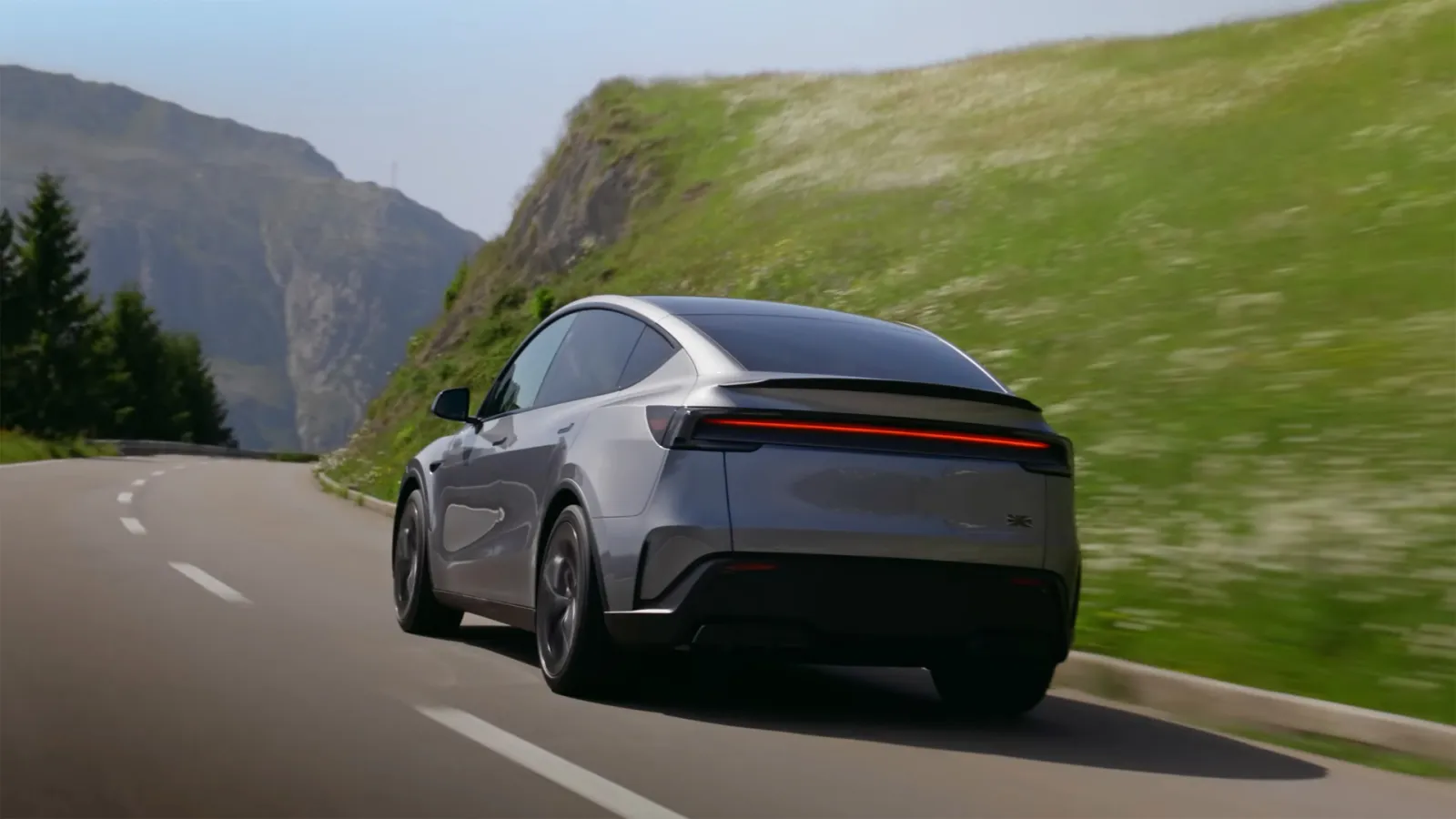
China’s carmakers, squeezed by a shrinking home market and closing doors abroad, have made Russia their biggest export destination in 2026. It supplies a fifth of one big manufacturer’s revenue and is Geely‘s largest market outside China.
But the outlet comes on Moscow’s terms.
Russia is raising import costs and pushing production onto its own soil under Russian brand names, and almost everything China sends there runs on gasoline, at a time when the rest of its export trade is turning electric.
The contrast with Tesla could hardly be sharper. “We have no business in Russia,” CEO Elon Musk told The New York Times’ DealBook Summit on Wednesday, speaking from China, where he had joined President Donald Trump for the Asia-Pacific Economic Cooperation summit in Shenzhen.
Home Market
China’s vehicle sales fell 5.1% to 26.29 million in the first 10 months of 2026, while exports rose 65.1% to 9.27 million, according to the China Association of Automobile Manufacturers.
Strip out exports, and sales at home fell to about 17 million, down roughly 23% from a year earlier, based on the association’s figures.
The domestic market “has not been effectively improved” and the imbalance of “strong supply and weak demand remains prominent,” Chen Shihua, Deputy Secretary General of the association, said last week.
The slowdown followed the end of China’s full purchase-tax exemption for new energy vehicles at the end of 2025. Buyers now pay half the standard 10% rate.
The industry was built for more. Average capacity utilization at Chinese car plants has hovered around 60% since 2018, S&P Global Ratings China said in its 2026 outlook. “We believe the root cause of the intense competition in the passenger vehicle market is structural overcapacity,” the agency wrote.
Exports made up 35% of Chinese carmakers’ passenger vehicle sales in October, up from 19% a year earlier, according to Cui Dongshu, Secretary General of the China Passenger Car Association.
“The strong performance of exports has become the key variable supporting carmakers’ sales,” Cui wrote.
Geely shows the pattern. Its sales in China fell about a quarter in the third quarter, while exports nearly tripled, helping its third-quarter profit rise 28%. BYD‘s overseas sales rose 154% in September and 103% in October.
Most of the growth is electric. New energy vehicles made up about half of China’s 9.27 million vehicle exports in the first 10 months, CAAM data show, and China’s new energy vehicle exports rose 145% in October.
Doors Closing Elsewhere
The export boom is running into trade barriers. The European Union imposed countervailing duties of up to 35.3% on Chinese-built electric cars in October 2024.
Mexico, the biggest buyer of Chinese vehicles in 2025, approved a 50% tariff on cars from China and other countries without a trade agreement, effective January 1, 2026. Brazil’s import tariff on electric cars reached 35% in July, the end of a phased increase.
Shipments to Mexico fell 18.8% in the first nine months and to the United Arab Emirates 35.7%, according to Gasgoo Automotive Research Institute.
Russia Takes the Gasoline Cars
Russia filled much of the gap.
China exported 752,602 vehicles to Russia from January to September, more than to any other country, Cui said in October.
China’s customs agency put passenger car exports to Russia at about 806,300, worth $10.67 billion, roughly double a year earlier, and also ranked Russia first.
It marks a return to the top. In 2025, Mexico took 625,187 Chinese vehicles, narrowly ahead of Russia with 582,738 and the United Arab Emirates with 571,937, according to the China Passenger Car Association.
Chinese exporters had cut inventory in Russia sharply that year, and Cui said this year’s rebound partly reflects that low base.
What Russia buys matters as much as how many.
About 90% of the passenger cars China sent to Russia this year had combustion engines, according to Gasgoo. Russia does not feature among the top 10 destinations for Chinese new energy vehicles, a list led by Brazil, Belgium, the U.K. and Australia.
At home, by contrast, China’s carmakers are steadily replacing gasoline models with plug-in hybrids and electric cars. In effect, Russia has become the main outlet for the combustion-engine cars China’s own industry is moving away from.
Russia became China’s outlet of choice after Western and Japanese carmakers left following the invasion of Ukraine in 2022. Chinese brands held more than half of the Russian market in early 2025, according to the Russian analytics agency Autostat. That windfall is now being redistributed.
Great Wall Motor
No major Chinese carmaker discloses more Russian exposure than Great Wall Motor.
Its Russian vehicle sales subsidiary generated 20.81 billion yuan ($3.12 billion) of revenue in the first half of 2026, about a fifth of the group’s total, according to its interim report.
Its 1.05 billion yuan of net profit was equal to more than 40% of the group’s profit attributable to shareholders, which fell 61%.
Great Wall builds Haval cars at a plant in Russia’s Tula region, which pays no income tax on qualifying activity through 2028 under a special investment contract signed in 2020 with Russia’s industry ministry and the Tula regional government, the report said.
Great Wall attributed its profit decline mainly to a delayed recovery of “overseas tax policy subsidy income” and to currency swings, without naming the country.
Chery’s Retreat in Name
Chery has gone the other way, at least on paper.
Russia, Chery’s second-largest market after China, accounted for 25.5% of its revenue in 2024, according to its 2025 Hong Kong listing prospectus, as reported by Nikkei.
The prospectus said Chery would gradually reduce its existing brands and sales channels in Russia by 2027. Chery’s Russian office said at the time that the brand was not leaving.
Chery’s 2026 interim results do not mention Russia.
Its designs have not left. Tenet, a Russian brand assembled by AGR at a plant in Kaluga that once belonged to Volkswagen, sells models closely based on Chery’s. Launched only last year, it registered 117,148 cars in the first 10 months, third behind Lada and Haval, according to Russian data provider Avtostat Info.
Geely in Between
Geely sits in the middle. It still sells cars in Russia under its own name, imported directly from China, and through Belgee, a brand assembled from Geely designs at a plant in Belarus in which Geely is a shareholder.
Russia remains its largest market abroad.
Geely-brand registrations there reached 58,274 in the first nine months, according to Avtostat Info, more than consulting firm ThinkerCar’s estimate of Geely’s volume in any other overseas country, including Mexico and Australia.
But the business is shrinking while the rest of Geely’s international operations boom. Geely’s Russian registrations fell 14% to 66,166 in the first 10 months, even as its exports worldwide nearly tripled, according to Avtostat Info.
Geely does not publish sales by country, and its recent sales and results releases do not mention Russia. It highlights instead Europe, Latin America and Southeast Asia, where it is selling electric cars and building local production, including with Renault in Brazil.
Its Russian line-up is still dominated by gasoline crossovers such as the Monjaro, alongside the EX5 hybrid. The EX2 electric hatchback, one of Geely’s best-selling models abroad, is due in Russia before the year end.
EVs remain a niche in Russia, where battery-electric models and hybrids together made up 7.2% of new registrations in the first 10 months, Avtostat Info said.
Geely’s Galaxy EX5 led Russia’s hybrid registrations in October, while its premium electric brand, Zeekr, has seen Russian registrations collapse this year.
The segment is growing quickly from a low base, and Chinese manufacturing dominates it.
EV registrations rose 65% to 15,949 in the first 10 months, and October’s leaders were Changan and Toyota, whose best-selling electric model in Russia, the bZ3, is built in China with FAW.
Moscow Sets the Terms
Russia wants the factories, not just the cars.
Its recycling fee, charged on imported and locally built cars alike, has been calculated on engine power since December 1, 2025, with steeper charges above 160 horsepower, raising the cost of imports and rewarding local assembly.
The shift is visible in the registration data. Russian brands, including new ones built on Chinese designs, took 42% of the market in the first 10 months, up from 33% a year earlier, according to Avtostat Info. Registrations of foreign brands, which in today’s Russia mostly means Chinese ones, fell about 11%.
That explains how shipments from China can double while Chinese badges retreat. Neither Chinese data provider says whether its export figures include kits for local assembly, but unassembled vehicles shipped as complete kits are typically classified as finished cars under customs rules.
“The shares of Chinese and Russian brands have practically drawn level,” Sergei Tselikov, Director of Autostat, said in August.
Payments and Sanctions
Selling to Russia also means navigating Western sanctions. Payment problems linked to sanctions have complicated the trade, and by 2025 some Russian companies were swapping wheat for Chinese cars in barter deals to get around payment hurdles, Reuters reported in September 2025.
Russia’s market is also volatile. Registrations rose 3.4% to 1.08 million in the first 10 months of 2026, according to Avtostat Info, after a sharp fall in 2025.
Chinese carmakers with global listings and ambitions in Europe have reasons to keep their names at a distance from Russia, even as their designs and parts keep flowing there.
The Missing American
Western carmakers largely left Russia after its 2022 invasion of Ukraine. Tesla never entered officially, and Musk now cites the absence of his companies there as evidence that he has not helped Moscow.
He made the point in a long answer about Starlink in Ukraine, which he said he had positioned there before the invasion. “If they had not had Starlink, their entire line would have collapsed,” he said.
He said SpaceX had cut Russian space activity by two-thirds “because we took away their Soyuz launches.” “I’m not exactly someone who has aided Russia,” Musk said. “We have no business in Russia.”
He did not name Tesla in that passage, but he has before. “Tesla has no operations there,” Musk wrote on X in July 2024.
Later in the interview, Musk said Starlink’s beams were off in Crimea “because Russia was a sanctioned country and it would have been illegal for us to turn the beams on in a sanctioned country without State Department approval.”
Today, U.S. export rules put passenger cars, including electric ones, on two Russia-specific control lists, so shipments require licenses. Tesla’s annual reports for 2022 through 2024 warned of “potential retaliatory action by the Russian government” against companies. Its report for 2025 no longer mentions Russia.
A trickle of Teslas still arrives through parallel imports. Russia registered 96 new Teslas in the first eight months of 2026, down 60%, Tselikov said, a rounding error next to the tens of thousands of Chinese-designed cars registered there each month.
In the same interview, Musk also discussed Tesla’s plans for a Model Y with no steering wheel or pedals.
Can’t Save China’s Decline
Russia cannot absorb China’s surplus on its own. Its entire new-car market, about 1.08 million registrations in the first 10 months, equals roughly an eighth of the 9.27 million vehicles China exported in the same period.
For China’s carmakers, the lesson of Russia is that the windfall from Western withdrawal was temporary. Moscow wanted Chinese cars in 2022. It now wants Chinese factories, Chinese kits and Russian badges.
Those that built locally, such as Great Wall, are still profiting. Those that relied on imports, such as Geely, are watching their share erode, even as Russia stays their biggest market abroad.
Meanwhile the industry’s growth has moved elsewhere, to electric cars sold in Europe, Latin America and Southeast Asia, markets where Chinese brands compete head-on with Tesla rather than in its absence.