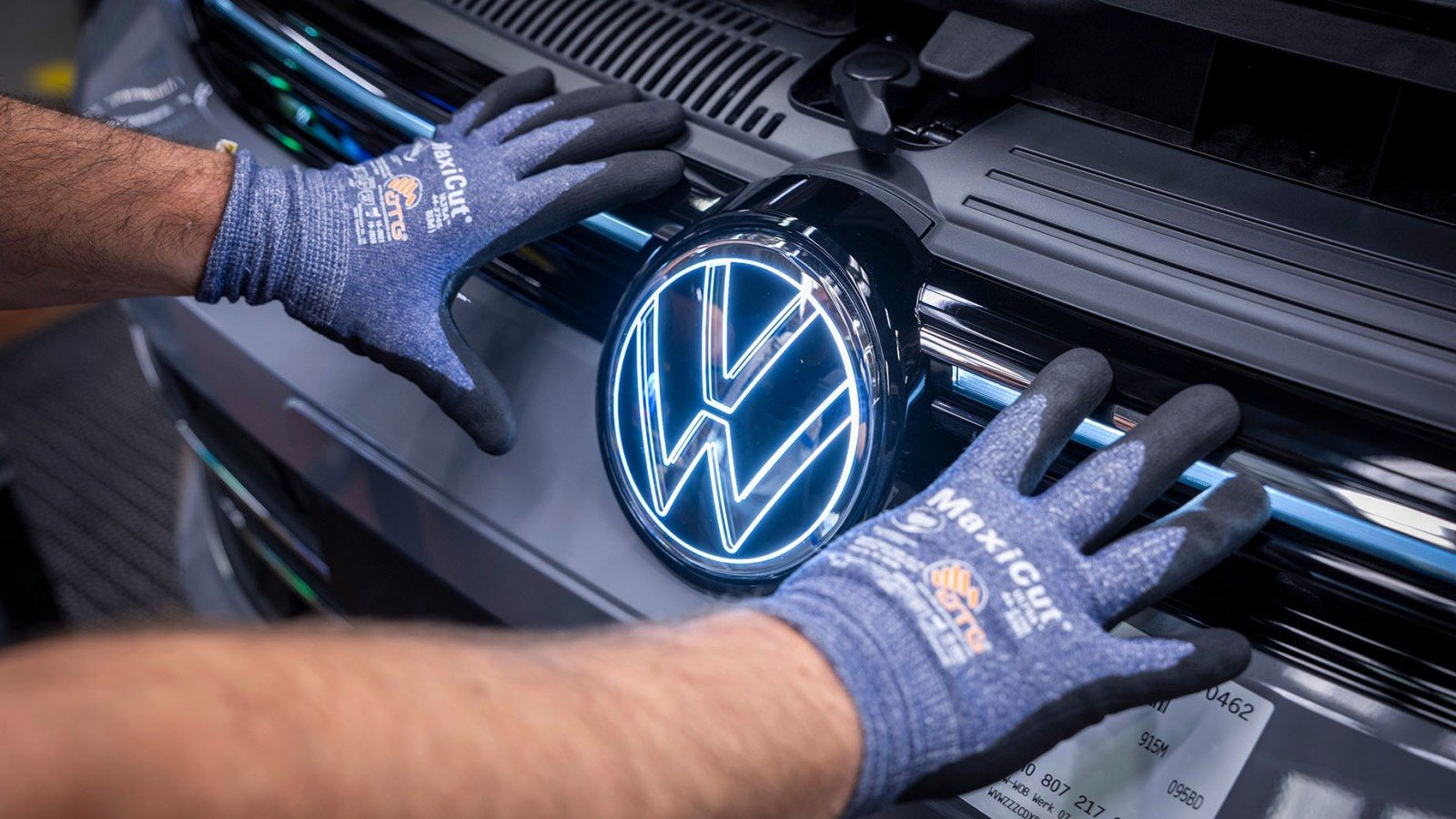

Volkswagen Group and its battery unit PowerCo will form three joint ventures with Gotion High-Tech in Spain, Slovakia and Morocco to produce lithium iron phosphate (LFP) battery cells and cathode material for Europe, the companies said on Monday.
Under the agreement, the partners will set up joint ventures in Valencia, Spain, Šurany, Slovakia, and Kenitra, Morocco. Their deal also covers joint procurement and sales activities in Europe.
Volkswagen Group CEO Oliver Blume, Thomas Schmall, Member of the Board of Management for Technology, and Gotion Chairman Li Zhen agreed on the deal, and supervisory boards in Wolfsburg and Hefei have approved it, Manager Magazin reported, citing sources.
Final signatures were still pending, according to the outlet. Gotion’s filing likewise describes the agreements as still to be signed.
In a separate transaction, Volkswagen agreed to sell a 5.3% equity stake in Gotion.
In a stock exchange filing, Gotion put the total investment across the three projects at about €3.22 billion ($3.66 billion).
Gotion will contribute about €1.598 billion ($1.82 billion) and PowerCo about €1.624 billion ($1.85 billion), funded in stages.
Three Sites, Split Control
Valencia is the largest project. Plans call for an investment of about €2.26 billion ($2.57 billion) to build annual cell capacity of 29.1 GWh, with Gotion acquiring a 49% stake in the existing PowerCo Spain entity through a capital increase and PowerCo keeping 51%.
PowerCo and Gotion will manage the Valencia venture jointly, with a goal of turning the site into a European hub for Unified Cells based on LFP chemistry.
Partners plan to begin joint cell production there in 2027, Manager Magazin reported.
PowerCo had previously cited 40 GWh for the Spanish plant.
Volkswagen said the planned investment and job creation at the site remain as announced.
In Slovakia, Gotion’s Šurany cell factory will move into a joint venture in which Gotion holds 51%.
Partners plan to invest about €480 million ($545.5 million) in the plant, which will have annual capacity of 8.4 GWh, focused on LFP cells for electric vehicles and energy storage systems.
The Šurany project was previously run by Gotion InoBat Batteries, in which Slovakia’s InoBat holds 20%, and the filings do not say what happens to that stake.
In Kenitra, a new joint venture will build a facility for LFP cathode material, with Gotion holding 51% and PowerCo 49%.
A €480 million ($545.5 million) investment will target 100,000 metric tons of annual output to supply both cell plants.
Volkswagen’s release says only that the plant will diversify its sources of cathode material.
Gotion will also handle the supply of rare earths and key raw materials such as lithium, according to Manager Magazin.
Combined, the Spanish and Slovak plants are expected to produce 37.5 GWh of cells a year, primarily for Volkswagen.
Purchase volumes remain subject to separate agreements.
Financial Terms
PowerCo is expected to contribute around €470 million ($534.1 million) by 2030 to acquire its 49% stakes in Šurany and Kenitra, according to Volkswagen.
Manager Magazin reported the sum splits evenly, at €235 million ($267.1 million) per site.
Gotion will invest around €1.1 billion ($1.25 billion) for its 49% stake in Valencia.
A Gotion subsidiary also signed a €1.094 billion ($1.24 billion) engineering, procurement and construction contract with PowerCo Spain on the same day.
The fixed-price contract is split into a €295 million ($335 million) first-phase dry-room package and a €799 million ($908 million) second-phase engineering package, according to Gotion’s filing.
That makes Gotion a contractor at the Valencia site as well as a shareholder.
Regulatory approvals and customary closing conditions still apply, including approval by Gotion’s shareholders’ meeting.
Project Atlas
Talks on the deal, known internally as “Project Atlas,” began around the turn of the year, Manager Magazin reported.
Doubts persisted for a long time within Volkswagen’s executive board over whether an agreement could be reached, given new concerns and additional demands from the Chinese side, according to the German outlet.
Earlier this month, Volkswagen’s supervisory board approved a future agreement calling for a “systematic review” of investments and shareholdings.
Gotion appeared on that list alongside Ducati and SGL Carbon, according to the newspaper.
In July, Spanish trade publication La Tribuna de Automoción reported that Gotion could take a majority stake in the Valencia site, while a PowerCo spokesperson said the company had no plan to cede control.
Under the final terms, PowerCo keeps 51%.
Volkswagen Trims Gotion Stake
Volkswagen will sell the 5.3% stake through its subsidiary Volkswagen (China) Investment Co. (VCIC).
VCIC will transfer 96,180,444 shares at 24.09 yuan each, for 2.317 billion yuan ($345 million), to a buyer identified in Gotion’s filing as 小建投公司.
The sale needs approval from the Hefei city government’s state-owned assets regulator, which indicates a Hefei state-owned buyer, as well as confirmation from the Shenzhen Stock Exchange.
Because Volkswagen had previously agreed not to exercise voting rights for part of its holding, the sale will not reduce the votes it exercises in Gotion**, Volkswagen said.**
Board representation remains unaffected.
VCIC held 24.28% of Gotion as of June, making it the largest shareholder, and the sale would leave it with about 19%.
Volkswagen said it will remain a strategic investor in Gotion.
Europe’s LFP Gap
Citing forecasts, Volkswagen said LFP’s share of the European market could rise from about 10% today to between 40% and 60% by 2030.
Europe currently has no relevant LFP cell production capacity, the company said.
LFP already accounts for more than 50% of the global battery cell market.
According to Manager Magazin, CATL’s gigafactory in Debrecen, Hungary, is far behind schedule, with other European projects also struggling.
Northvolt, in which Volkswagen held a 20% stake, filed for bankruptcy in March 2025. ACC, the venture between Stellantis, Mercedes-Benz and Saft, has dropped plans for factories in Kaiserslautern, Germany, and Termoli, Italy.
ACC, the venture between Stellantis, Mercedes-Benz and Saft, dropped plans in February for factories in Kaiserslautern, Germany, and Termoli, Italy.
Gotion ranks fifth globally with a 4.6% market share.
Volkswagen’s separate cathode venture with Umicore is progressing slowly and covers material for a different cell chemistry, sources in Wolfsburg also told the German outlet.
“This marks a major breakthrough for both companies,” said Thomas Schmall, Member of the Board of Management of Volkswagen Group for Technology and Chairman of the Supervisory Board of PowerCo.
Schmall said Volkswagen “is the first European automotive manufacturer to cover the entire battery value chain, from development and cathode materials through to production,” although two of the three new ventures will be majority-owned by Gotion.
PowerCo Chief Executive Officer Frank Blome said the partnership “strengthens the resilience of our value chain, accelerates industrialization.”
PowerCo’s Salzgitter plant is ramping up slowly.
Volkswagen expects to produce one million cells there in 2026, equal to about 0.5 GWh and enough for around 10,000 vehicles, according to the magazine.
The plant is designed for 20 GWh of annual capacity.