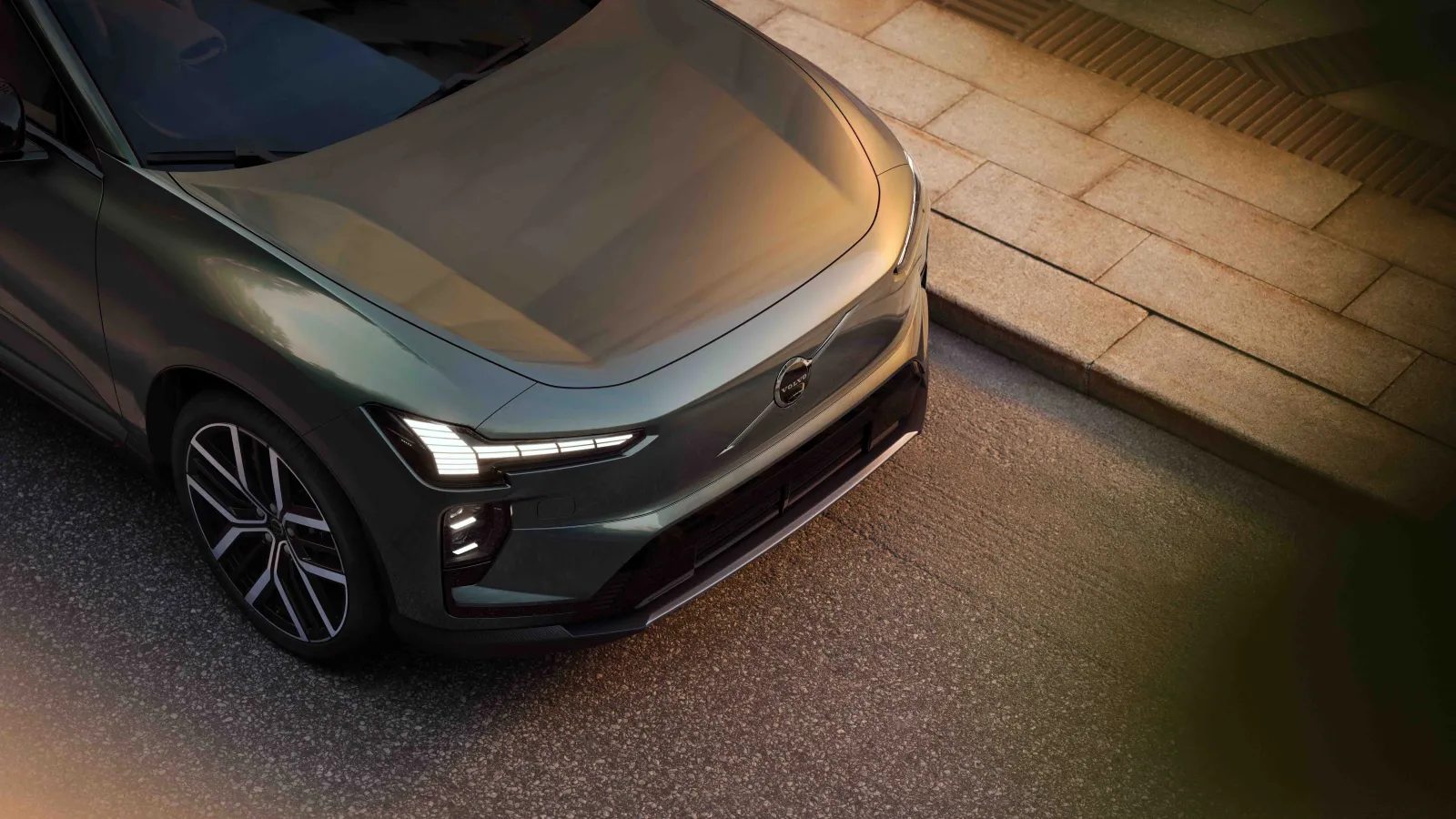

Volvo Cars will launch 13 new electrified vehicles by 2030 in separate lineups for Western markets and China, abandoning the global-car model as trade barriers and diverging consumer preferences split the auto industry along regional lines.
The plan, announced at a strategy update in Stockholm on Thursday, is the largest product offensive in the Swedish automaker’s 99-year history.
Seven new models will go to Europe and the United States, built on Volvo’s proprietary SPA2 and SPA3 vehicle architectures and powered by its HuginCore computing platform.
Six will be developed specifically for China through a deepening collaboration with parent company Geely, using shared Geely platforms, a dedicated Chinese software stack and shared supply chains.
CEO Håkan Samuelsson said the shift represents a permanent change in how automakers must think about production.
“In the past, a single plant producing the same model for global markets could have worked in some cases, but not now,” Samuelsson said during the company’s strategy update on Thursday.
Samuelsson also told the event that a new Chief Executive Officer will be named before the end of the year, saying “various options will be evaluated.”
His two-year term began on April 1, 2025. The 13-car plan is therefore a map he will hand to a successor.
Regional Split
For Western markets, Volvo will lean on technology already in hand.
Because the seven new European and North American models use the SPA2 and SPA3 architectures — the same platforms underpinning the EX60 and other recent launches — the company expects investment per vehicle to fall compared with first-car-on-platform launches like the EX60.
The software-defined vehicles will include both battery-electric models and third-generation plug-in hybrids, reflecting Volvo’s view that full electrification will progress at different speeds across regions.
That is a formal reversal of the pledge Volvo made in March 2021 to sell only fully electric cars by 2030, which it walked back in September 2024. On Thursday it said it sees hybrid demand persisting well into the 2030s.
China follows a different path entirely.
Rather than adapting global products for Chinese buyers, Volvo will create six models tailored to local preferences and digital ecosystems.
Geely’s platforms, supply chain and software stack will anchor the effort, designed to boost competitiveness in a market where domestic brands such as BYD have intensified pressure on foreign automakers through rapid product cycles and aggressive pricing.
Volvo returned to a thin profit in the second quarter but saw China sales drop 35% year-on-year, underscoring the urgency.
The dual-track approach formalises a direction the broader Geely group has been pursuing.
Geely’s new chairman said in August the group would build cars at Volvo’s European plants from 2028.
Volvo signed a deal last week to distribute Lynk & Co in Europe from January 2027, giving its dealers a China-built product line without requiring its own investment.
Margin Target
The product push forms part of a broader roadmap intended to build a company capable of an EBIT margin beyond 8% with strong cash flows, Volvo said.
The target is not new. Volvo set the same long-term goal of over 8% at an investor event in November 2025, has lowered its profitability targets several times in recent years, and withdrew financial guidance entirely in 2025. It gave no date on Thursday either.
The gap to that target is wide.
Volvo’s operating income was SEK 2.4 billion in the first half of 2026, against an 8.0 billion-kronor loss a year earlier that included an SEK 11.4 billion impairment.
Volvo reported a 1.6% EBIT margin in the first half of 2026, with operating income of 2.4 billion Swedish kronor against an 8.0 billion-kronor loss a year earlier.
Free cash flow was negative 5.2 billion kronor in the second quarter alone, weighed down by an inventory build-up tied to the start of EX60 production.
Revenue fell 15% in the half as the company chose to protect transaction prices over volume growth. Rolling three-month sales to the end of August were 148,239 cars, down 7.4% from a year earlier.
August was the weakest single month for sales in years.
A key contributor will be greater use of common components.
By 2030, Volvo expects around 30% of parts across its vehicles to be shared with Geely, up from about 10% today.
The increased commonality should deliver material cost savings of up to 5% by 2030, said Francesca Gamboni, Volvo’s chief procurement and supply chain officer.
“Higher volume for parts shared with Geely could permit double sourcing [of suppliers], something crucial in these very volatile times and something that the volume of Volvo alone did not permit so far,” Gamboni said.
Manufacturing Overhaul
Volvo will also streamline its factory network.
The number of plants building exclusively Volvo models will fall to five from seven, with Ghent in Belgium and Chengdu in China open for contract manufacturing, according to Gamboni.
Gamboni said that once Košice opens, Volvo will be able to build more than double what it sells in Europe. It is the first time the company has described Ghent as spare capacity, having presented the plant for a year as a success after moving EX30 production there from China.
Every plant will move to a single-platform production model, with Ghent as the sole exception running two.
Torslanda in Sweden and Košice in Slovakia will build midsize vehicles, Charleston in the US will handle large vehicles, and Taizhou and Chengdu in China will focus on midsize models while Daqing takes large ones.
Volvo’s Slovak plant is nearing trial builds, with assembly conveyors installed as of early September.
The company also plans to make corporate overheads leaner and strengthen productivity across the value chain, measures it said would combine with the product strategy to create a roadmap toward stronger profitability and cash generation.
Design and New Segments
Thomas Ingenlath, who returned as Chief Design Officer in February, said the company will unveil a concept car in spring 2027 to mark its 100th anniversary.
The concept will herald a new design language for the brand.
Ingenlath did not detail all 13 models but confirmed Volvo will add a vehicle larger than the XC90, aimed primarily at the US market but with potential in Europe. Not all 13 will be SUVs. Volvo used the term “low-body” for saloons and estates during the presentation.
The product plan will also take the brand into new segments, broadening its addressable market in both the battery-electric segment and among buyers not yet ready to go fully electric.
Volvo said it will pair the product offensive with a new commercial model built on transparent pricing, streamlined offers and fast-delivery versions.
Regular over-the-air software updates and an all-inclusive Care subscription are intended to extend the customer relationship beyond the point of sale.
Fully electric deliveries rose 27% in the June-to-August quarter, reaching 29% of all Volvo sales.
Electrified vehicles — including plug-in hybrids — accounted for 53.5% of the total.
Demand for the mid-size SUV EX60, the first model on the SPA3 architecture, has exceeded the company’s forecasts, with more than 3,000 firm orders in Sweden alone in its first month.