
Geely’s EX2 city car and Leapmotor’s A10 compact SUV claimed the top two spots in China’s passenger vehicle sales ranking for August, anchoring a top 10 composed entirely of electric and plug-in hybrid models for the second time this year.
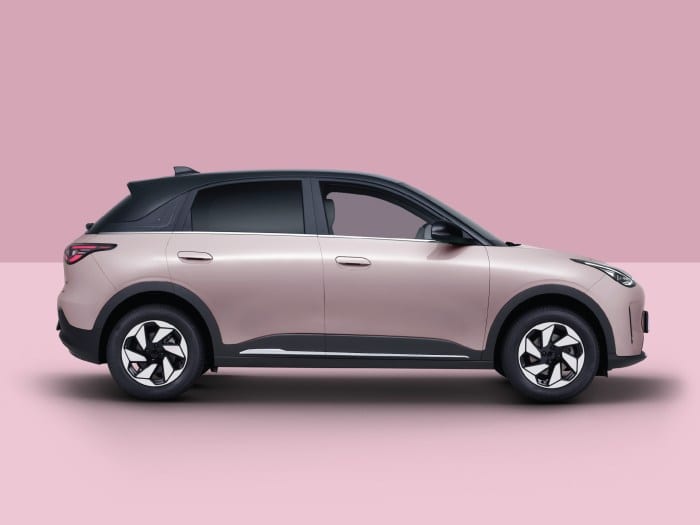
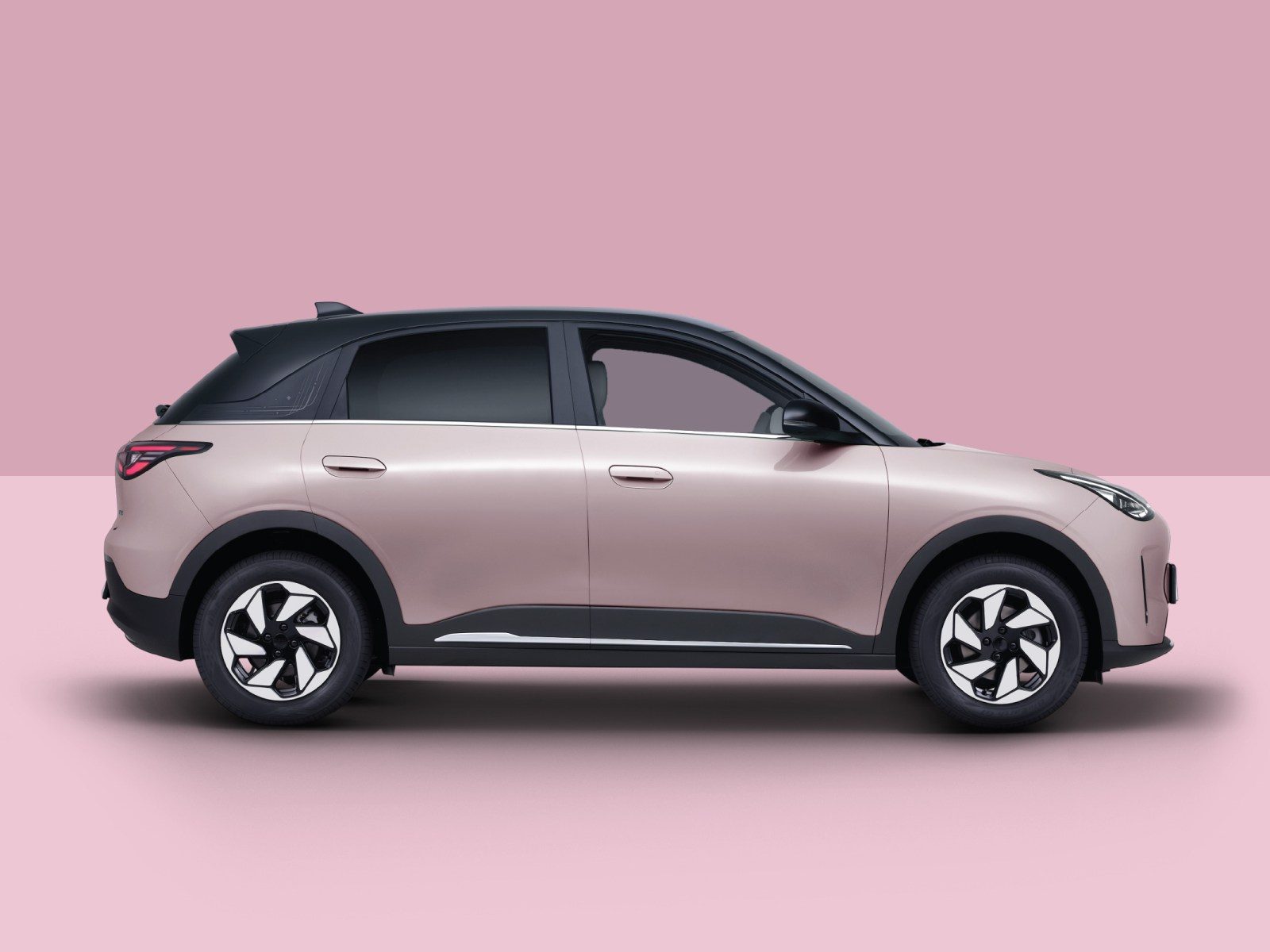
The EX2, sold domestically as the Xingyuan, registered 39,651 units in August, according to insurance registration data published by the China Passenger Car Association (CPCA) through Dongchedi and Autohome on September 8.
Leapmotor’s A10 followed at 30,652 units. Tesla’s Model Y held third place with 29,260 registrations.
Nine of the 10 models are fully electric vehicles.
The lone exception is BYD’s Fangchengbao’s Ti 7 at fourth with 23,471 units, which is available in both BEV and plug-in hybrid configurations. No internal-combustion vehicle made the list.
The list’s biggest move was the Tesla Model 3, up 187 places to sixth at 20,787 from about 2,091 in July, the changeover trough before the revamped sedan Tesla put on pre-sale on September 1, helped by an 8,000-yuan insurance subsidy added on August 28. Xiaomi’s SU7 fell six places to tenth.
BYD, the market’s largest brand at 233,943 registrations, has no Song or Qin in the top ten.
City Car Segment
The EX2 is a sub-compact hatchback priced from 64,800 yuan ($9,600) to 94,800 yuan ($14,100).
Geely positions the car below the EX5 compact SUV in its export lineup and has sold it in China since 2024 under the ‘Xingyuan’ name.
August marked a continuation of the EX2’s dominance of the budget end of the market.
The model was China’s best-selling car of any kind in 2025, and its price sits squarely in the sub-100,000-yuan band where BEV growth has been fastest, according to the CPCA’s August market report.
Geely recorded 110,560 domestic NEV retail units and 69,910 NEV exports in August, placing the Hangzhou-based group second behind BYD in both categories, CPCA data show.
Geely is pushing the model and its stablemates overseas.
A Geely EX5 SUV, wearing Ontario manufacturer plates, was spotted on a Toronto-area road in late August, the first road footage of a Geely-badged car in Canada, three months after the group flew two test vehicles, an EX5 and an EX2, into Toronto’s Pearson airport for certification testing.
BYD’s own Atto 2 and Dolphin placed fifth and ninth, respectively, at 22,958 and 16,829 units — a sign that Geely’s cheapest EV is outselling BYD’s equivalent offerings by a wide margin.
Geely is pushing the model and its stablemates overseas.
An EX5 wearing Ontario manufacturer plates was spotted on a Toronto-area road in late August, the first road footage of a Geely-badged car in Canada, three months after the group flew two test vehicles — an EX5 and an EX2 — into Toronto’s Pearson airport for certification testing.
Geely Holding chief executive Andy An told Bloomberg in March that the group expected Canadian certification for Geely Auto-branded vehicles “soon,” and said the company would look to localize production.
Geely is also contracted to build cars at Ford’s Valencia plant from 2028 and plans production at Volvo‘s European plants from the same year, according to its new chairman.
SUV Segment
Leapmotor’s A10 topped the SUV category with 30,652 registrations, ahead of the Tesla Model Y and Fangchengbao’s Ti 7.
Leapmotor claimed the No. 1 position across all SUV types — including combustion — in a promotional post citing the same CPCA insurance data.
The A10 led sales among Chinese-brand SUVs from May through July, per Gasgoo, so August is its first month at the top of the all-brand SUV list on the poster’s own framing.
The A10 launched on March 26 with four configurations starting at 65,800 yuan ($9,800).
The range tops out at 86,800 yuan ($12,900) for the 505 LiDAR Edition, which adds a LiDAR sensor to a dual-chip intelligent-driving setup built on Qualcomm’s SA8155 and SA8650 processors.
The vehicle measures 4,270 mm in length, uses a 90 kW electric motor and offers 39.8 kWh or 53 kWh battery packs providing 403 km or 505 km (250.4 or 313.8 miles) of CLTC range.
Demand has been steep since launch.
Leapmotor said in early August that the A10 reached 100,000 cumulative production units 135 days after its debut, making the compact SUV its fastest model to hit that mark.
August registrations rose from 26,424 units delivered in July, a 16% month-on-month increase.
Across all models, Leapmotor delivered 103,129 vehicles globally in August, up 80.7% year-on-year and above the 100,000-unit threshold for the second consecutive month.
Year-to-date deliveries through August reached 560,883 vehicles, about 56% of the company’s one-million-unit annual target.
Export Push
Both Geely and Leapmotor are leaning on overseas markets as domestic competition intensifies and fuel-car sales crater.
Leapmotor’s exports in the first seven months of 2026 totaled 113,863 vehicles, per Gasgoo, after 96,294 in the first half, up 372.6% and above all of 2025.
Management said on its August 24 results call that overseas sales could reach about 200,000 in 2026, above its earlier range of 100,000 to 150,000, and set 350,000 to 400,000 for 2027, aiming for the upper end.
Leapmotor and Stellantis plan local production of the B10 in Spain in 2027 and in Brazil in the second half of 2027, management said on the call.
An Indonesian knock-down plant started production on July 31, and a Malaysian facility is set to begin mass production in the third quarter.
Leapmotor also entered Argentina in August with extended-range variants of the B10 and C10.
Geely’s broader group is similarly expanding.
Zeekr International posted six senior hiring roles in Toronto in April under the Geely Auto brand name.
Lotus — another Geely brand — shipped its first Chinese-built cars into Canada in July, while Polestar has reopened orders in Canada for both the Polestar 2 and 4.
Market Context
The August top 10 reflects a broader structural shift in China’s car market.
NEV retail penetration hit a record 65.2% in August, up 9.9 percentage points year-on-year, according to the CPCA.
Conventional fuel vehicle retail collapsed 40% year-on-year to 540,000 units, with pure ICE models dropping 45%.
The CPCA attributed the ICE decline to cumulative domestic gasoline price increases exceeding 1,720 yuan ($255) per tonne this year, driven by ongoing disruption of shipping through the Strait of Hormuz.
Among domestic Chinese brands, 83.9% of August retail sales were NEVs — approaching the point where combustion vehicles become a marginal product line for homegrown automakers.
The 100,000–150,000-yuan bracket expanded rapidly within BEV sales in August, the CPCA noted, a price band where both the Geely EX2 and Leapmotor A10 compete at the lower end.
Margin Pressure
Record volumes are arriving alongside thinning margins for both brands.
Leapmotor cut its full-year net profit guidance by 40% on August 24, to 3 billion yuan from 5 billion yuan, citing rising raw material costs.
First-half gross margin fell to 11.7% from 14.1% a year earlier.
Management set a full-year gross margin target of 13% to 14%, implying a recovery is needed in the second half.
The rest of the August top 10 included Tesla’s Model 3 at sixth with 20,787 units, Changan’s Nevo Q05 at seventh with 17,349, Li Auto’s i6 at eighth with 16,979, BYD’s Dolphin at ninth with 16,829 and Xiaomi’s SU7 at tenth with 16,518.
Overall passenger vehicle retail fell 23.6% year-on-year in August to 1.541 million units, CPCA data show.
Cumulative retail through eight months declined 20.8% to 11.716 million vehicles.