
Leapmotor cut its full-year net profit guidance by 40% on Monday, to 3 billion yuan ($446.3 million) from 5 billion yuan ($743.9 million), citing rising raw material costs, as it reported record first-half revenue.
Interim revenue reached 38.1 billion yuan ($5.7 billion) for the six months ended June 30, an increase of 57.2%, as record deliveries and rapid overseas expansion drove the Stellantis-backed automaker to a new high.
Gross profit rose 29.7% to 4.4 billion yuan ($654.6 million).
Net profit attributable to shareholders reached 208 million yuan ($30.9 million), up from 30 million yuan ($4.5 million) a year earlier.
Basic earnings per share climbed to 0.15 yuan from 0.02 yuan.
Leapmotor swung to an operating profit of 128 million yuan ($19.0 million) after posting an operating loss of 89 million yuan ($13.2 million) in the first half of 2025.
The First Half
Leapmotor reported a net loss of 390 million yuan in the first quarter, on revenue of 10.82 billion yuan and deliveries of 110,155 vehicles.
The half-year profit of 208 million yuan therefore implies second-quarter net profit of roughly 598 million yuan, a swing of nearly a billion yuan between the two quarters.
First-half revenue of 38.1 billion yuan against 10.82 billion in the first quarter implies second-quarter revenue of about 27.3 billion yuan.
Profit Guidance Cut
The company maintained the 5 billion yuan target at its first-quarter earnings call in May, while acknowledging risks from raw material costs and market uncertainty.
Three months later it halved the figure, citing the same risk.
Leapmotor posted its first full-year profit in 2025 with net income of 540 million yuan ($80.3 million).
The revised target still implies a 5.6-fold increase on last year’s result. The abandoned figure would have been 9.3 times.
Margin Squeeze
Revenue growth outpaced gross profit growth by a wide margin, signaling compression at the gross level.
Gross margin fell to 11.7% from 14.1% a year earlier, a decline of 2.4 percentage points.
Management set a full-year gross margin target of 13% to 14%, with vehicle-level margins expected at 10% to 11%, which implies that a recovery is needed in the second half.
Cost of sales rose 61.6% to 33.7 billion yuan ($5.0 billion), outstripping the 57.2% rise in revenue and reflecting the raw material headwinds management flagged.
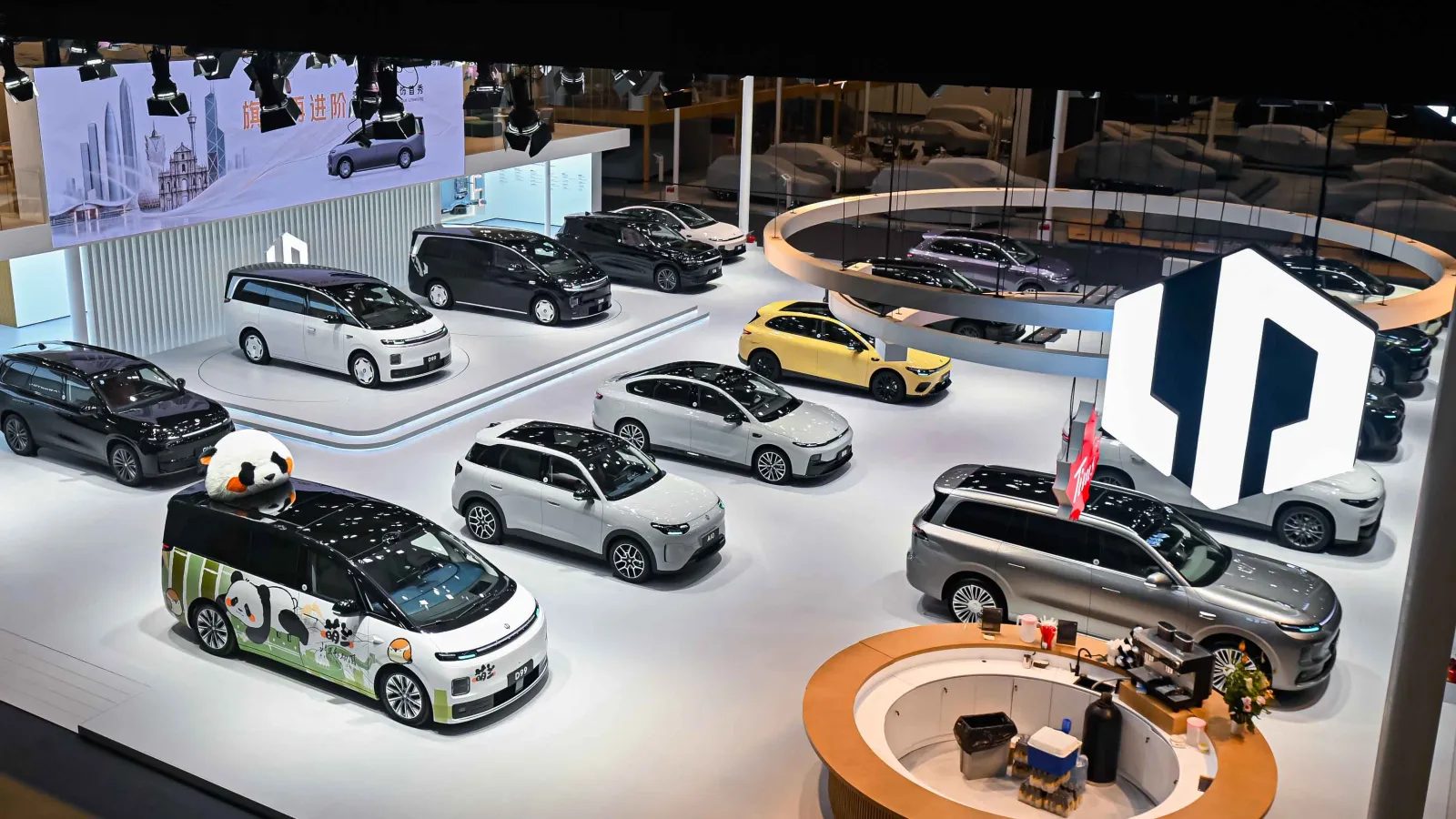
Selling expenses climbed 41.7% to 2.0 billion yuan ($297.6 million) as Leapmotor expanded its retail network across more than 40 countries — including Argentina and Mexico.
Research and development spending rose 22.3% to 2.3 billion yuan ($342.2 million).
Cash generation weakened alongside the margin decline.
Operating cash flow fell 24.1% to 2.2 billion yuan ($327.3 million), and free cash flow dropped 83.7% to 140 million yuan ($20.8 million).
Delivery Momentum
Leapmotor delivered 101,267 vehicles globally in July, up 102% year-on-year, becoming the first of China’s emerging automakers to surpass 100,000 monthly deliveries.
Reaching that target requires 542,246 deliveries across the final five months, an average of 108,449 a month. Leapmotor would need to beat July’s record in every remaining month of the year.
First-seven-month deliveries reached 457,754 units, representing 45.8% of the company’s full-year target of one million vehicles.
Management disclosed a 2027 product pipeline that includes all-new D-series and C-series models alongside refreshes of the C-series and B-series.
Leapmotor currently covers the 60,000-to-300,000-yuan price band across four model series and has confirmed a second brand aimed above 300,000 yuan, with first products expected between late 2026 and early 2027.
Chief financial officer Li Tengfei said in May that the brand would debut as early as late 2026 or early 2027, with launch expected in the middle or second half of 2027.
Overseas Ambitions
Executives disclosed overseas sales targets for the first time at the earnings briefing.
Leapmotor expects to sell between 150,000 and 200,000 vehicles outside China in 2026, with management indicating the upper end of that range is the working assumption.
At the first-quarter call the company had described 150,000 as highly achievable, meaning the overseas target rose in the same meeting that cut the profit target.
For 2027, the target rises to 350,000 to 400,000 units, with roughly 50,000 expected to come from local B10 production at overseas assembly sites.
Exports in the first seven months totaled 113,863 vehicles, up 281.5% year-on-year, or 24.9% of deliveries over the same period.
Leapmotor reported first-quarter overseas sales above 40,000 units, at 37.1% of volume and described at the time as a historic high, which implies a lower overseas share in the second quarter.
Manufacturing Footprint
Leapmotor laid out a timeline for three overseas assembly operations.
Stellantis’ Zaragoza plant in Spain is scheduled to go live in October, giving the brand its first European production base.
Mass production of the B10 at the Malaysian facility in Gurun is set to begin in the third quarter.
Brazil will follow with B10 complete knock-down assembly starting in the second half of 2027.
Stellantis began assembling the C10 at Gurun earlier this year after a five-month delay.
An Indonesian knock-down plant started production on July 31, with locally built B10 and C10 deliveries expected from August.
Local assembly is central to Leapmotor’s plan to insulate overseas growth from trade barriers.
European Union tariffs on China-made fully electric vehicles remain in place, and the bloc is considering extending duties to plug-in hybrids. Zaragoza-built vehicles would avoid those levies entirely.
Shareholders
FAW Group invested 3.74 billion yuan in late December for a 5% stake, reducing Stellantis to about 19% from 21%.
Stellantis remains the largest external shareholder, and its Leapmotor International joint venture handles operations outside China.