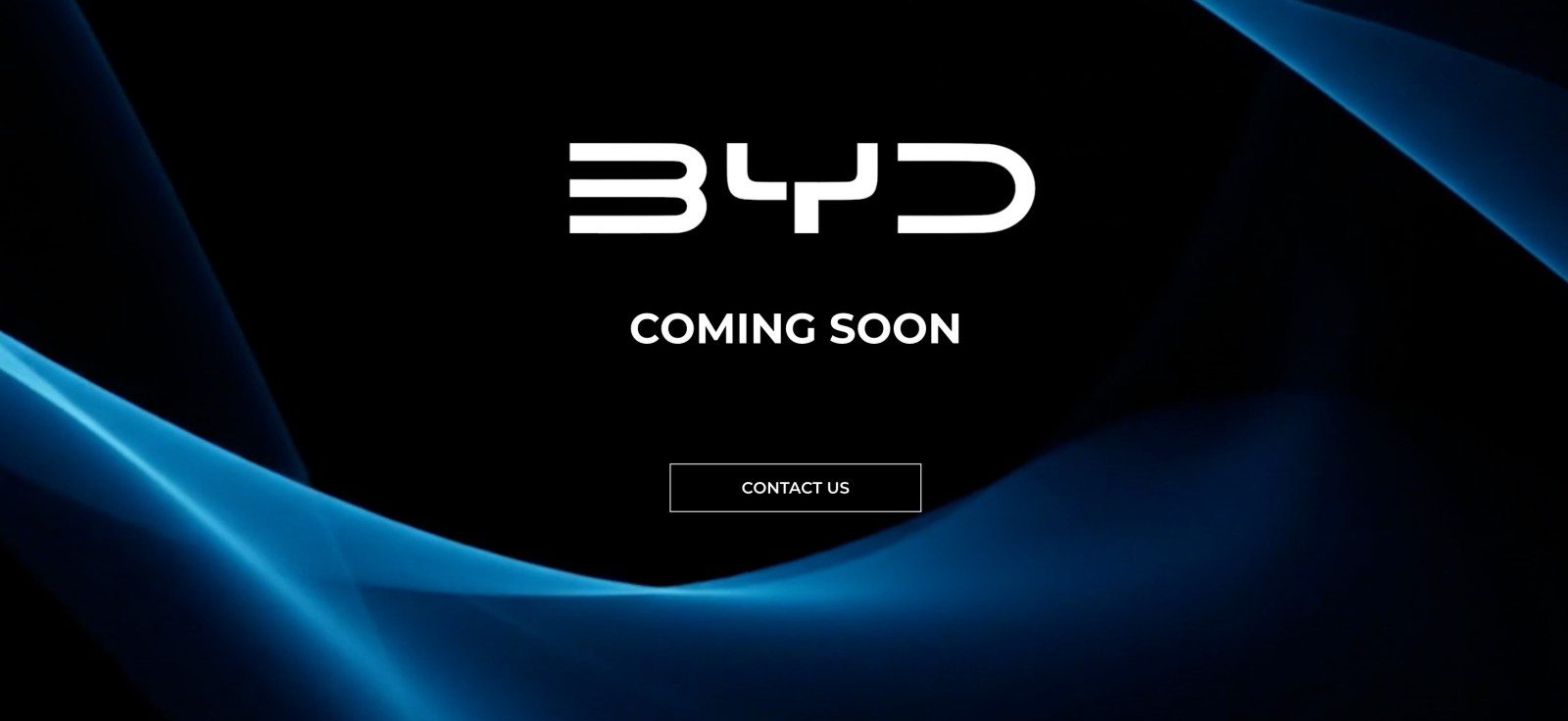

BYD has added a ‘Coming Soon’ message to its Canadian website while advertising eleven management roles in the country, as the world’s largest new energy vehicle (NEV) maker continues assembling a local team ahead of a launch it has still not formally announced.
Canada appears in the American Region alongside Mexico, Brazil and two dozen Caribbean and Latin American markets. BYD is present in more than 120 countries across six continents.
The page carries no models, prices, dealer locations, ordering function or launch date.
Its contact details list BYD Canada Company Limited at 60 Travail Road in Markham, Ontario.
A post on the r/EVCanada forum late on Monday first flagged the addition of the “coming soon” label.
Two Entities, Two Cities
The recruitment tells a more specific story than the website.
Of eleven Canadian vacancies listed on LinkedIn on Tuesday, eight are posted by BYD North America and based on-site in Toronto or the wider Greater Toronto Area.
Listings include head of sales, a sales manager, a marketing manager, a network development manager, an infrastructure business development manager, an operations planning specialist, a legal counsel, and a human resources and administration manager.
Three of those are marked as actively reviewing applicants.
The remaining three carry a different employer name. BYD Canada is advertising a product manager, a regional sales manager and an IT manager, all based in Vancouver and all remote, and all posted within the past three days.
Toronto is being staffed on-site by the North American entity, which suggests a head office.
Vancouver roles are remote and newer, and appear under a separate Canadian entity.
The infrastructure business development role is the one to watch.
BYD has been marketing a flash-charging system it says takes a battery from 10% to 70% in five minutes and to 97% in nine, with 20,000 stations planned in China and abroad by the end of 2026. No such network exists in North America.
LinkedIn data attached to the BYD North America listings puts the entity at 19,729 employees, with headcount up 26% over two years.
What Is Actually Confirmed
Claims widely circulated in late May and repeated since — that executive vice-president Stella Li announced a Canadian launch, more than 20 dealerships across four cities, a C$25,000 starting price and a lineup of the Atto 3, Seal, Dolphin and Seagull — originate from an imposter account on X impersonating Li.
BYD said back then that it had announced no launch plans. Those claims should not be treated as company statements, and EV does not.
BYD engaged Dealer Solutions Mergers & Acquisitions, a Markham, Ontario retail consultancy, to identify dealership sites.
Its chief executive, Farid Ahmad, told the Globe and Mail in March that the company was targeting roughly 20 stores in its first year, beginning in the Greater Toronto Area before moving to Vancouver, Montreal and Calgary, with three sites under discussion.
Reuters cited him in June giving a nearer-term figure of six dealerships this year.
Li’s verified position comes from a Bloomberg interview on March 13, in which she said a joint venture would not work for BYD in Canada, that the company was studying a wholly owned plant, and that it was open to acquiring a legacy automaker’s capacity.
Automotive News reported on June 22 that BYD, Chery and Geely had subsequently told Industry Minister Mélanie Joly they would be willing to explore joint ventures — a softening of that stance.
BYD’s Shenzhen and Xi’an plants are listed in Transport Canada’s Appendix G pre-authorisation registry for passenger cars, with a separate entity covering commercial vehicles.
Reuters reported in June that the company had begun compliance procedures for two passenger cars, one from each plant. Per-model certification is not complete.
No sub-brand has a stated Canadian plan.
The Deal That Opened the Door
Canada shut Chinese-built EVs out of the market in August 2024 with a 100% surtax, matching Washington. BYD had been preparing a Canadian entry and shelved it.
That reversed on January 16, when Prime Minister Mark Carney concluded a state visit to Beijing by agreeing to replace the surtax with the most-favoured-nation rate of 6.1%, applied to a quota of 49,000 vehicles a year rising by 6.5% annually to 70,000 by 2030.
The quota covers battery-electric, hybrid and plug-in hybrid vehicles and is shared across all Chinese manufacturers. It amounts to less than 3% of Canada’s annual new-car market.
In exchange, Beijing cut its tariff on Canadian canola seed from roughly 85% to 15% and lifted restrictions on lobster, crab and peas.
The Timing
The quota runs in two halves. The first window opened on March 1 with 24,500 permits on a first-come, first-served basis and closes on August 31 — six days from now.
It is closing materially undersubscribed.
A Global Affairs Canada utilisation report executed on August 21 showed 15,063 permits used, or 61.5%, with 9,437 remaining.
August was running at roughly 240 vehicles a day, which points to a final figure near 17,400 to 17,800, leaving close to 7,000 permits unused.
Those permits do not expire.
Clause 3.5.2 of the governing notice states that the second half’s allocation is 24,500 vehicles plus any unused volume from the first period. A new notice is due before the window opens.
BYD is therefore staffing a Canadian team in the week before a second quota window opens with roughly 31,000 permits available, against a first window that struggled to use two-thirds of half that.
Entering Without the Rebate
Quota access does not bring subsidy access.
Canada’s federal consumer incentive, worth up to C$5,000, is restricted to vehicles built in Canada or in countries with which it has a free-trade agreement. Chinese-built vehicles are excluded.
Rivals including the Hyundai Ioniq 5 and Chevrolet Equinox EV qualify; anything BYD imports from Shenzhen or Xi’an will not.
Nor is there an affordability obligation in the first year.
The requirement that a share of quota imports carry a free-on-board price at or below C$35,000 is zero for 2026 and rises to 10% in 2027, reaching 50% by 2030.
BYD Will Not Arrive Alone
Chery is working with dealers on branded showrooms and preparing its own Canadian launch.
Geely EX2 and EX5 vehicles have been photographed arriving at Toronto Pearson for testing.
Polestar reintroduced the China-built Polestar 2 in Canada on June 3 at C$69,900, with first imports slated for September on second-window permits.
Dongfeng showed six vehicles at Montreal’s Old Port on July 14 through a distributor targeting a 2027 entry.
XPeng told EV at the Mona L03 launch in Munich that Canada’s door is open and that it is in close contact with Canadian officials, while framing any entry as long-term rather than a token shipment.