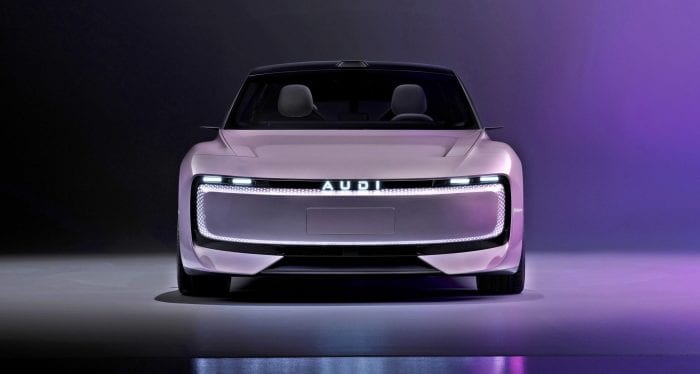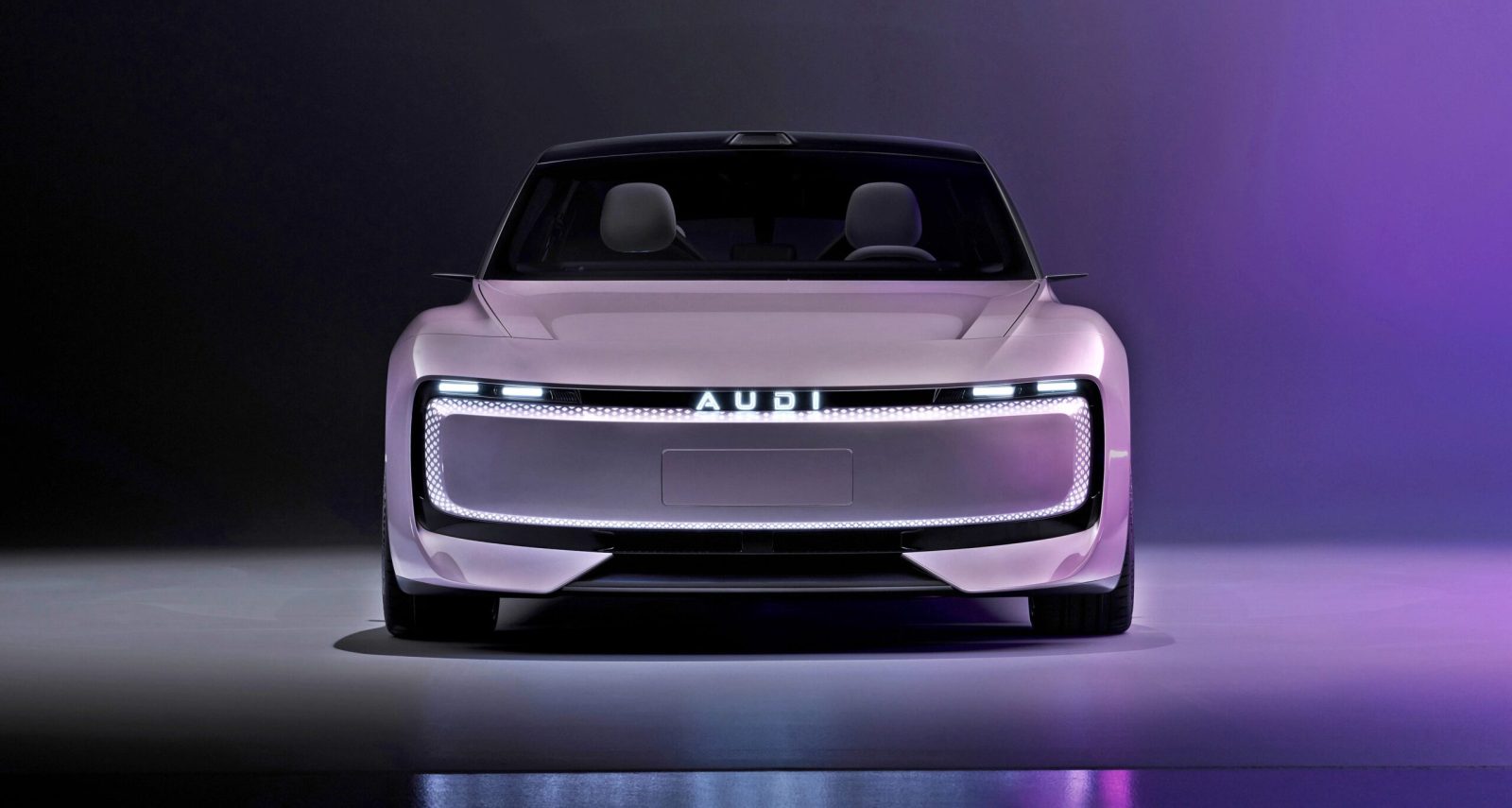

Audi has largely settled a plan to divide its Chinese business along brand lines, with SAIC Audi giving up every four-ring model to FAW Audi and keeping only the China-only AUDI brand that carries a wordmark instead of the rings, Caijing magazine reported on Monday, citing company sources.
The Volkswagen unit delivered 232,227 vehicles in China in the first half of 2026, down 19% from 287,600, and the China business contributed 73 million euros to the group’s financial result, down from 279 million a year earlier.
The core of the plan is agreed but the two joint ventures are still negotiating how production and sales responsibilities are allocated model by model, how FAW Audi would take over SAIC Audi’s four-ring customers, after-sales and dealer entitlements, and on what terms.
Additionally, and according to the report, no contract has been signed and there is no timetable defined.
If completed, the split would leave SAIC Audi with two electric models, the E5 Sportback and E7X, which together sold about 12,600 units in the first seven months of 2026 according to CPCA figures, against about 25,200 for SAIC Audi as a whole.
Who Does What Today
Audi operates in China through five entities, including Audi China, which oversees the business and FAW Audi, the joint venture with China FAW since 1988, which builds and sells the four-ring range locally and handles imports and is by far the largest, and Audi FAW NEV, which builds the A6L e-tron and Q6L e-tron.
The other two include SAIC Audi, which builds and sells the AUDI-brand cars and, until now, four four-ring models, the A5L Sportback, A7L, Q6 and Q5 e-tron, and the Audi–SAIC Cooperation Project, which develops the AUDI-brand products and sets their strategy.
Audi’s SAIC venture grew out of a framework agreement in November 2016 that provoked resistance from FAW Audi’s dealers and was settled only in December 2020, when the three parties agreed that SAIC Audi’s cars would be sold through Audi’s existing dealer network and serviced through its existing after-sales system.
The brand’s chief Gernot Döllner ruled out merging the two ventures in March, telling media that the dual-partner strategy would continue and that the SAIC partnership’s core task was the AUDI brand.
Global sales of the Volkswagen brand have declined in both 2024 and 2025, with first half of 2026 figures falling to 727,245 units from 783,531.
Sales Figures
Third-party production data cited by Caijing show SAIC Audi’s four-ring output at zero across all models in July.
The Q5 e-tron, on the previous-generation MEB platform, has not been built in 2026, while the A7L was produced in fewer than 50 units from March to July.
The Q6 has recorded about 3,000 units this year; and the A5L Sportback, SAIC Audi’s best-selling four-ring car, in about 1,800 in June before stopping.
On September 3, SAIC Audi cut the A7L to 262,800 yuan from a list price of 418,700 and the Q6 to 279,800 yuan from 467,600, reductions of roughly 40% that Caijing describes as stock clearance.
SAIC Audi told Caijing that all models remain in production, without giving figures.
The same day, Audi China president Johannes Roscheck told media that “if car sales increasingly depend on how large a discount dealers can offer, that is not a sustainable way to develop,” adding that sharp price changes shortly after a sale hit residual values and deepen price pressure across the market.
Also on September 3, Audi and SAIC formally opened the Audi Innovation Technology Center in Shanghai, incorporated the day before as Audi (Shanghai) Technology Co. with registered capital of 694 million yuan and shareholdings of 49% for SAIC, 41% for Audi AG and 10% for Volkswagen China, following an antitrust filing published in June.
The centre is dedicated to the AUDI brand alone and will develop four new models on the ADP 2.0 platform, the first due in 2028, with a remit covering vehicle development, AI cockpit and next-generation driver assistance.
AUDI Brand
AUDI, launched in Shanghai on November 8, 2024, is Audi’s answer to the collapse of its four-ring EVs in China.
The vehicles are developed with SAIC on the Advanced Digitized Platform, using SAIC’s IM Motors technology, Huayu motors, CATL batteries and Momenta driver assistance.
Döllner has framed it as a necessity rather than an experiment: “In a world where our customers’ expectations are increasingly diverse from region to region, it is clear the ‘world car’ business model is becoming less and less viable,” he said with the first-quarter results in May.
“The courage to pursue new partnerships and new approaches to development, branding, and markets is not a nice-to-have, but a prerequisite for gaining a competitive edge,” the brand chief added.
The E5 Sportback launched on September 16, 2025 at 235,900 to 319,900 yuan with a claimed 10,153 orders in 30 minutes, then averaged about 1,200 insurance registrations a month.
A 279,900-yuan trim reshuffle in November lifted sales 25% for one month, and a 30,000-yuan discount from February 25 that took the entry price to 205,900 yuan produced a record of roughly 2,600 in March before sales fell every month to 165 in July, per Caijing‘s data.
The discount has since become the effective selling price.
Measured against Audi’s own electric cars the E5 succeeded.
Between September 2025 to March 2026 it out-registered all six four-ring Audi EVs combined, 8,537 to 7,058, and the two PPE cars built by Audi FAW NEV sold about 3,700 together in the first seven months of 2026.
The E7X SUV launched on May 29 at 269,800 yuan, 20,000 below its presale price and, according to 21st Century Business Herald, more than 130,000 yuan below Audi’s original internal plan; it sold 3,770 in June and fewer than 2,000 in July, for about 8,500 since launch including pre-launch shipments, Caijing reported.
A third AUDI model, a large electric sedan, is due in 2027, followed by the four AITC cars from 2028.