
Japan’s three largest automakers all posted double-digit year-over-year sales declines in China in August, extending losing streaks that now span months for each company as the world’s largest car market accelerates its shift away from combustion vehicles.
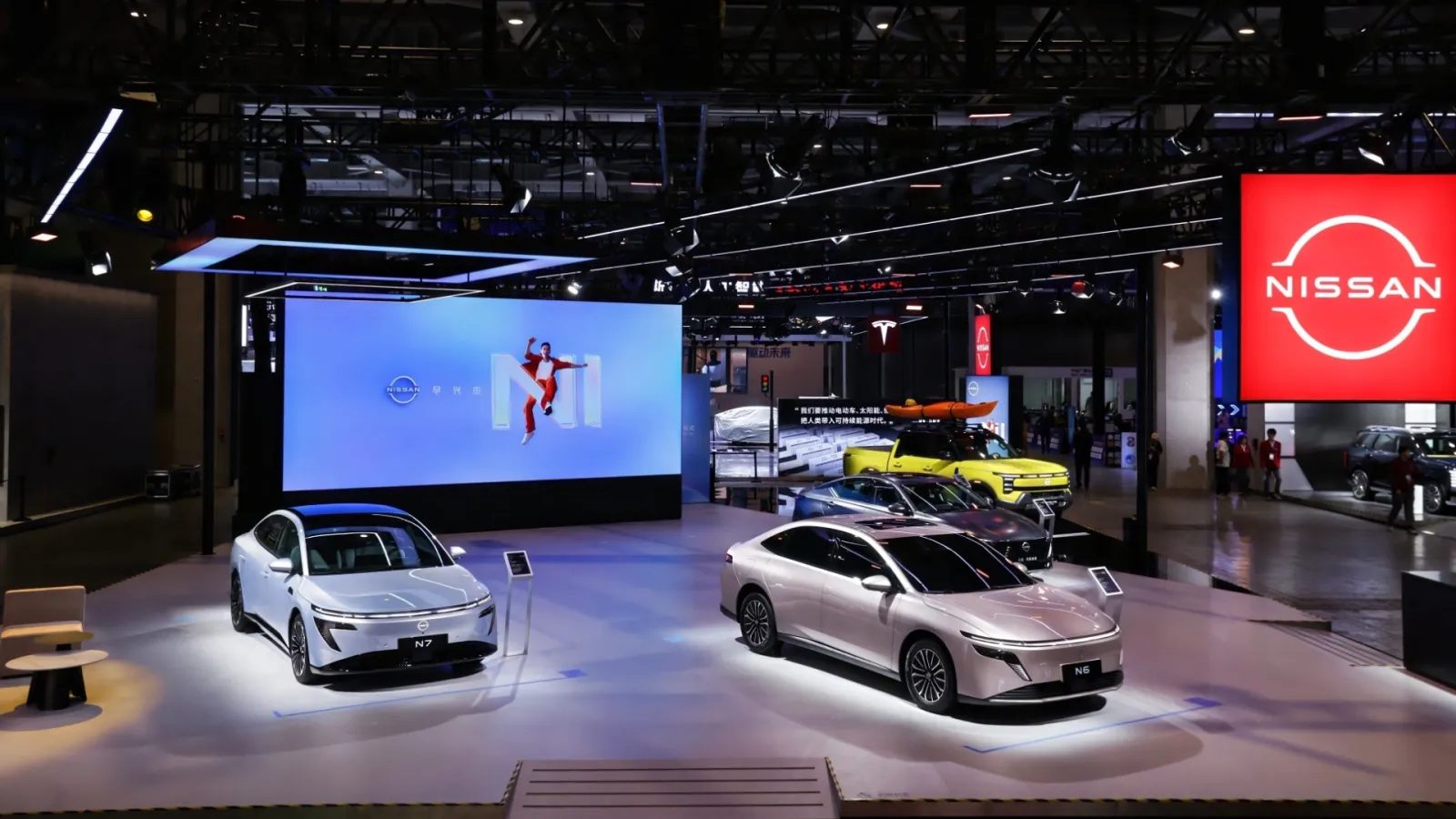
Nissan recorded the steepest fall. Sales dropped 51.9% to 28,275 vehicles, marking a fifth consecutive month of decline, according to figures released on Tuesday.
Honda fared little better, with sales down 49.9% to 26,749 units — a 31st straight monthly decline.
Toyota, the largest of the three by China volume, saw sales fall 22.8% to 118,400 vehicles, extending its run to seven consecutive months of contraction.
The results land against a backdrop of broad-based weakness in China’s passenger-car market.
Retail sales fell 23.6% year-over-year in August to 1.541 million units, the 11th consecutive monthly decline, according to data from the China Passenger Car Association (CPCA).
Mainstream joint-venture brands — the category that includes all three Japanese automakers’ China operations — saw retail fall 35% to 310,000 units. Japanese brands’ share of China’s retail market slipped to 10.9%, down 1.4 percentage points from a year earlier.
ICE Collapse
NEV retail penetration hit a record 65.2% in August, up 9.9 percentage points year-over-year — meaning nearly two out of every three new passenger vehicles sold in China were either fully electric or plug-in hybrids.
Gasoline vehicle retail fell more than 40% year-over-year, with pure ICE down 45%, according to the CPCA. Conventional hybrids were the lone bright spot, rising 10%.
Japanese brands remain disproportionately exposed to combustion and conventional hybrid powertrains, and mainstream joint-venture NEV penetration stood at just 13.4% in August retail — a fraction of the 83.9% rate among domestic Chinese brands.
CPCA secretary-general Cui Dongshu has attributed the accelerating fuel-to-electric shift in part to high oil prices driven by Middle East tensions.
Cumulative domestic gasoline price increases in 2026 have exceeded 1,720 yuan ($255) per tonne, sharply raising fuel-vehicle running costs and driving a sustained, steep contraction in ICE demand.
Cui has singled out Japanese automakers’ over-reliance on regular hybrids, slow rollout of plug-in hybrids and pure electric vehicles, sluggish new-model development, weak local adaptation and outdated smart-cabin and advanced driver-assistance systems as specific factors behind their underperformance.
Chinese buyers — particularly younger consumers — now expect software-defined vehicles with features that most Japanese models do not offer.
Toyota showed some movement on electrification in August. Electrified vehicles — including EVs and hybrids — accounted for 71.7% of its total new-vehicle sales in China, crossing the 70% threshold.
GAC Toyota ranked among the top NEV manufacturers by wholesale volume, registering 12,602 units, while FAW Toyota and GAC Toyota were the two largest contributors to conventional hybrid wholesale at 36,403 and 29,802 units respectively, according to CPCA data.
Nissan and Honda remain more heavily weighted toward internal combustion powertrains, though both have launched China-specific electric and plug-in hybrid models through their Dongfeng and GAC joint ventures.
Domestic Brands Tighten Grip
The decline of foreign brands in China is not new.
In the first half of 2026, only eight of the 20 largest passenger-vehicle brands by wholesale volume posted year-over-year growth, and virtually all were heavily exposed to battery-electric and plug-in hybrid powertrains.
Toyota fell 9.3% to 651,600 units in the first half, while Nissan dropped 20.1% to 195,700.
Chinese domestic brands now command 69.9% of the passenger-car retail market, up 4.1 percentage points year-over-year, and 83.9% of their August retail sales were NEVs — approaching the point where combustion vehicles become a marginal product line.
In the August CPCA NEV retail rankings, BYD led with 233,943 units, followed by Geely at 110,560 and Leapmotor at 84,874.
Newer independent NEV brands raised their share of NEV retail to 26.0%, up 5.5 percentage points year-over-year.
CPCA data showed passenger-car exports surging 77.8% year-over-year to 888,000 units in August, with NEVs accounting for 58.4% of those shipments — up 18 percentage points from a year earlier.
BYD led NEV exports at 184,446 units, followed by Geely at 69,910 and Chery at 68,431.
Exports now account for 38% of manufacturers’ total sales, up from 20% in August 2025, giving domestic brands a cushion unavailable to joint-venture-dependent Japanese companies.
Price War
Intense discounting has further compressed margins.
Auto industry profit margins fell to 3.6% in the first seven months of 2026, according to CPCA data — far below the 6.5% average for downstream industrial enterprises.
Chinese NEV models routinely undercut Japanese ICE and hybrid alternatives on price while offering more equipment.
Most of China’s major automakers trailed their annual sales targets at the half-year mark, but domestic players have leaned on record export volumes to offset weakness at home — a strategy unavailable to joint-venture-dependent Japanese brands.
The broader dynamic, as CPCA analysis has repeatedly noted, is reallocation rather than growth.
Volume is moving from ICE-heavy joint ventures to Chinese NEV makers that iterate faster on price, software and model cycles.
Japanese firms are raising their China NEV mix, however after the inflection point has already passed.
Japan Domestic Market
At home, the picture for Japan’s automakers is more stable but far smaller in scale.
Japan’s total new-vehicle market reached 307,374 units in August, up 2.0% year-over-year and marking a fifth consecutive monthly increase, according to Japan Automobile Dealers Association (JADA).
Toyota sold 99,651 vehicles in Japan in August, up 10.6%, driven by Yaris, Raize, Sienta and Land Cruiser.
Nissan rose 9.7% to 27,822 units on gains from the new Kicks and Elgrand.
Honda was the outlier, falling 5.7% to 38,853 units, weighed down by weaker kei-car performance — despite the N-BOX retaining its position as the top-selling kei model.
Toyota brand figures exclude Lexus, which registered 5,347 vehicles in Japan in August, down 13.5%.
Japan’s domestic market remains dominated by hybrids and conventional powertrains — a structural advantage for Japanese brands at home that offers no remedy for the accelerating loss of share in China.