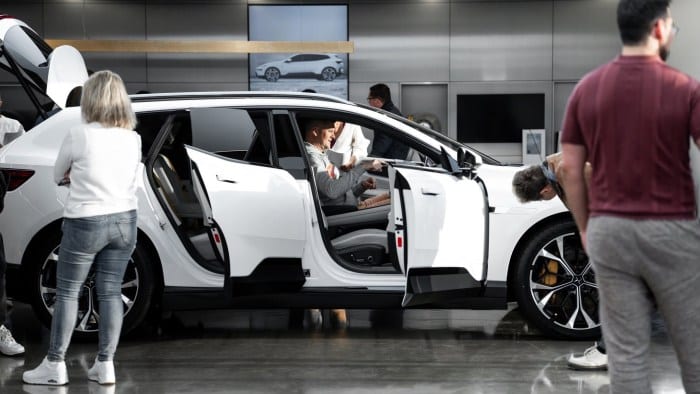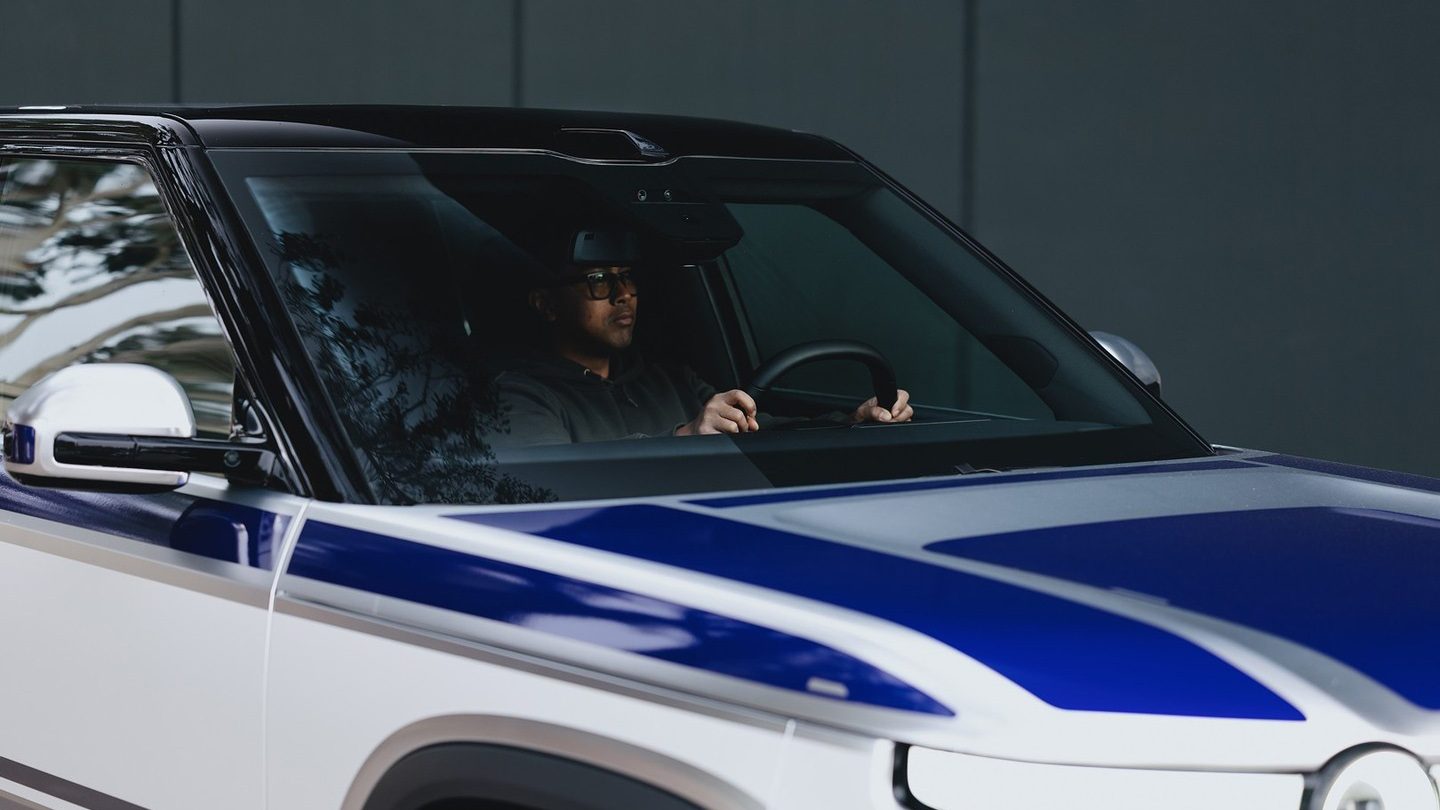

Chinese-made LiDAR is legal in American passenger vehicles and installed at three major US airports, according to the supplier’s own marketing, while every federal restriction written so far stops short of the consumer.
That gap is now the subject of a security review at a US Department of Energy laboratory — one being paid for by the industry that wants to keep buying the sensors.
TechCrunch reported that the Idaho National Laboratory is conducting the assessment, citing two people granted anonymity, and that the lab has said the work is funded by a company or group of companies in the electric and autonomous vehicle industries.
The two people told the outlet the review centres on cybersecurity risk and possibly on clearing Chinese-made LiDAR in that area. Neither the funders nor the scope are public.
Idaho National Laboratory declined to comment to TechCrunch, saying in June and again in July that the project was not one it was at liberty to discuss with reporters.
Nobody Admits to Paying
Seven companies reported to be weighing Chinese LiDAR — Rivian, General Motors, Ford, Kodiak, Lucid Motors, Nuro and Uber — said they were unaware of the review when asked by TechCrunch.
Nvidia, Zoox and Aurora did not respond to TechCrunch, nor did Hesai or RoboSense.
An industry-funded assessment at a national laboratory, aimed at a technology its funders want to buy, occupies different ground from a government-initiated review. No participant has claimed it.
What the Law Permits
The Defense Department has placed both Hesai and RoboSense on its Section 1260H list of companies it says support the People’s Liberation Army, a designation that restricts their ability to work with the US military but does not bar private use.
Section 164 of the fiscal 2025 National Defense Authorization Act bars the Pentagon from operating or procuring Chinese-made LiDAR, naming Hesai directly.
The Commerce Department’s 2025 rule prohibits Chinese-made connectivity hardware in US passenger cars. LiDAR and other autonomous vehicle sensors are not covered.
Two bills would narrow the gap. The Securing Infrastructure from Adversaries Act, from Senators Tammy Baldwin and Ted Budd, would extend restrictions to Department of Transportation contracting.
A separate bill from Representative Raja Krishnamoorthi, co-sponsored by Representative John Moolenaar, targets use directly.
Neither reaches the vehicle a consumer buys.
Baldwin has said she is primarily concerned about Chinese LiDAR being used for military or industrial espionage.
Moolenaar told CNBC last month he was concerned that “back doors” could transmit information back to Chinese interests.
Hesai’s Designation Is Under Appeal
The Defense Department added Hesai to the 1260H list in January 2024. Hesai sued.
A federal judge in Washington upheld the listing in July 2025, finding the government’s conclusion that the company contributes to the Chinese defence industrial base was backed by substantial evidence — while acknowledging that “DoD found no evidence that Hesai’s products have been used for military purposes.”
The court rested the designation on the location of Hesai’s research centres.
Hesai appealed later that month and the case is unresolved. The company says its LiDARs are for civilian use only and calls the designation baseless.
DJI won a comparable challenge in September 2025, when the same court found the Pentagon’s ownership analysis internally inconsistent.
What FDD Reported in January
The Foundation for Defense of Democracies, a Washington policy institute, published a report titled “Embedded Threats” on January 21 setting out where Chinese LiDAR has been installed in the United States.
The report states that Hesai supplies Amazon’s Zoox, Aurora Innovation, General Motors’ Cruise and Nvidia’s Drive Hyperion platform.
The report says Hesai sensors are used at Charlotte Douglas International Airport and Portland International Airport, and installed at intersections in Chattanooga, Tennessee, and on drawbridges in Sarasota, Florida.
Sensors from Livox, which the report describes as DJI’s LiDAR subsidiary, have been deployed at transit hubs including Moynihan Hall at Penn Station and John F. Kennedy International Airport, according to the report.
The report also states that “RoboSense supplies Lucid Motors and Rivian.”
Hesai Advertises the Airports Itself
Hesai’s own website goes further than the FDD account on airports.
The company states that by June 2025 it had delivered more than 100,000 units of its JT series, driving what it calls smart airport transformations at JFK in New York, Charlotte and Portland, alongside Helsinki, Munich, Frankfurt, Paris, Manchester and Singapore.
The page describes the JT128 sensor as slim enough to be integrated discreetly across airport locations including “security checkpoints, gate entrances, and immigration zones.”
Rivian Has Denied the Supplier Claim
FDD’s January report predates Rivian’s denial to EV by roughly two months.
Rivian confirmed at its inaugural Autonomy and AI Day in Palo Alto in December 2025 that it would add a front-facing long-range LiDAR to the R2 from late 2026, within a sensor suite of 11 cameras, five radars and one LiDAR. The supplier was described only as undisclosed.
EV reported in January that RoboSense’s public descriptions of its customers matched Rivian’s profile, including references to “a leading emerging automaker in North America,” a “North American new energy vehicle brand,” and a “global top-tier EV pickup brand vehicle OEM.”
RoboSense’s annual filing, published alongside its fourth-quarter results, described one design-win customer as a leading global manufacturer of SUVs and trucks.
A Rivian spokesperson denied the relationship to EV in late March, saying that while they did not know which company RoboSense meant, “it is not Rivian.”
Rivian has not named an alternative supplier, and the identity remains unresolved.
RoboSense is not on the 1260H list, which would give Rivian near-term cover were it the supplier. Its average ADAS selling price fell to about 1,500 yuan ($223) a unit in the fourth quarter of its 2025 financial year.
Rivian’s Structural Answer
Founder and chief executive RJ Scaringe told Reuters in May that Rivian was considering building LiDAR sensors in the United States using Chinese technology, possibly through a joint venture and possibly alongside other automakers, describing active discussions under way.
Scaringe said the company needed sensors priced in the low hundreds of dollars, a segment dominated by Hesai and RoboSense.
Chief Financial Officer Claire McDonough later called reports of in-house LiDAR development an “erroneous headline” without specifying which coverage she meant or addressing Scaringe’s comments.
The Risk Case
The sensors build continuous three-dimensional maps of their surroundings at high resolution, and the Foundation for Defense of Democracies argues that spatial data of that fidelity — roads, bridges, airports, crowd flows — carries dual-use value.
Hesai’s own filings with the Securities and Exchange Commission (SEC) disclose that the Chinese government “may influence or intervene in our operations at any time.” Hesai says its sensors store no data, lacking the memory to do so, a claim that addresses storage rather than transmission.
Senator Rick Scott and colleagues wrote to the Pentagon in November 2023 urging that Chinese LiDAR firms be added to the 1260H list, noting Hesai’s designation as a “Little Giant” by the Chinese government and its supply relationship with US Army contractors.
Competing suppliers have their own reasons to press the case. Innoviz, Ouster and what remains of the American industry would benefit commercially from restrictions on Hesai and RoboSense.
One Documented Outage
In early 2024, customers using Hesai sensors saw their autonomous vehicles stop working for an entire day after the company failed to account for the extra day of the leap year.
The incident was a software fault rather than an attack. The episode remains the only public demonstration that a vendor-side error can take autonomous vehicles offline across a customer base.
Why the Sensors Are There
LiDAR cost as much as $75,000 a decade ago. Hesai and RoboSense have scaled production and cut prices to a few hundred dollars in some cases.
American manufacturers have consolidated under the pressure. A bankruptcy court confirmed Luminar’s Chapter 11 liquidation plan in April, after the company said reduced orders from Volvo had damaged its projected revenue.
Volvo had ended that partnership in November 2025 following supply disruptions and a contract dispute, and has since discontinued LiDAR permanently on the EX90 and ES90.
Norwegian owners are being compensated 18,000 kroner, about $1,930, for functions that will not arrive, and delivered cars keep the roof hardware with no retrofit to remove it.
Volvo says its cars deliver a high level of safety with or without a LiDAR, and the EX90 retains five radars, eight exterior cameras, two interior cameras and 16 ultrasonic sensors.
Tesla avoided the technology altogether.
Chief executive Elon Musk, who called LiDAR a fool’s errand in 2019, wrote on X in July that he had tried to warn the industry, adding that humans drive using neural nets and optical sensors and the same is true for robot cars.
The Chinese direction runs the other way. RoboSense was named BYD’s exclusive LiDAR partner across all 11 models the carmaker unveiled in March, and BYD’s Seagull, starting at 69,900 yuan ($10,400), became the first A00-class mini EV in China to offer a LiDAR option.