
Retail and institutional shareholders of Tesla have submitted more than 1,000 questions on the Say Technologies platform ahead of the company’s first-quarter 2026 earnings call scheduled for Wednesday.
As of early Tuesday, the Optimus humanoid robot production, Robotaxi expansion and unsupervised Full Self-Driving were dominating the top-voted list.
As of Tuesday morning, 4,650 participants representing 5.9 million Tesla shares had voted on 1,049 questions submitted to the platform.
The questions are ranked on Say Technologies by total Tesla shares represented by the investors who voted them up, giving institutional holders weighted influence over what the company’s management team — led by CEO Elon Musk — is expected to address during the call.
The Top Retail Questions
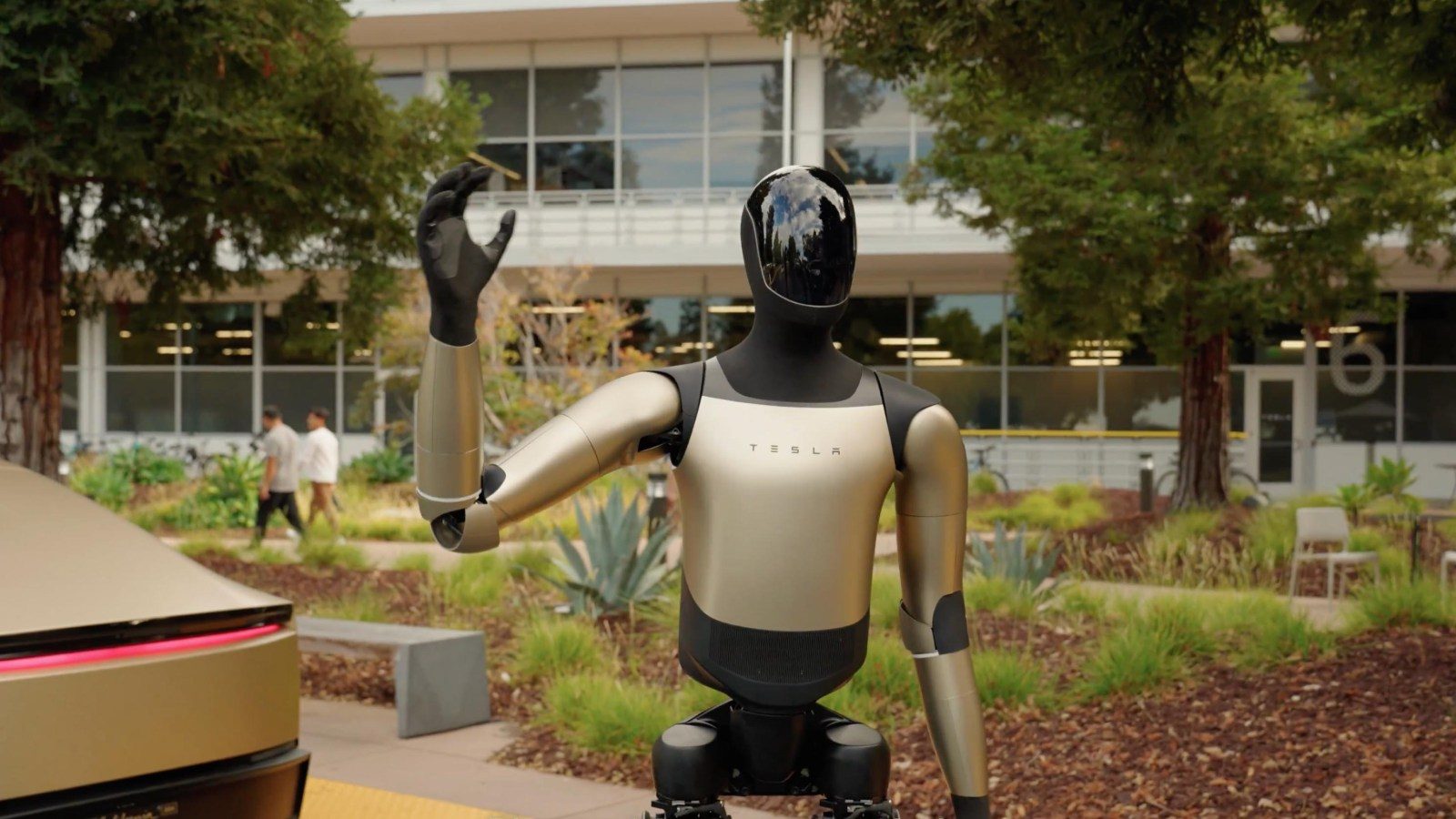
The top voted question on the platform, representing 2.1 million Tesla shares and 2,000 votes from retail investors, focuses on Optimus production timing.
“When will we have the Optimus v3 reveal? When will Optimus production start since we ended the Model X and S production earlier than midyear? What’s the expected Optimus production rate exiting this year? What are the initial targeted skills?” the anonymous retail investor asked.
The Optimus v3 — or Gen 3 — reveal has been teased over the last fwe months, with new international patents published in mid-April detailing a tendon-driven hand with approximately 22 degrees of freedom per hand and actuators moved to the forearm for speed and precision.
However, Musk said this week that the patented hand design is already obsolete, saying the team has moved on to a newer iteration that has not yet been publicly revealed.
Low-volume Optimus production is targeted to begin in the summer at the Fremont factory, with Model S and Model X production ending earlier than originally scheduled to free up floor space for the humanoid line.
Both models are sold out and officially out of production.
The second-ranked question, with 1,700 votes representing 1.9 million shares, shifts to Robotaxi and recurring revenue.
“What milestones are you targeting for unsupervised FSD and Robotaxi expansion beyond Austin this year, and how will that drive recurring revenue?” a retail investor asked.
Tesla said over the weekend that its Robotaxi service has expanded to Dallas and Houston, both operating without safety monitors.
The Dallas geofence covers approximately 30-35 square miles and the Houston zone covers 12-15 square miles in the northwest of the city.
Previously planned additional launches include Phoenix, Miami, Orlando, Tampa and Las Vegas.
Two additional Full Self-Driving questions from retail investors rank among the top five by shares represented.
“How will hardware 3 cars reach unsupervised FSD?” a retail investor asked — backed by 1.6K votes and 1.6 million shares represented.
The question addresses one of the most visible investor concerns since Musk’s walk-back on earlier promises that HW3 vehicles would achieve full self-driving capability.
Tesla has indicated a modified version of FSD — sometimes referred to as “v14 Lite” — is in development for HW3 vehicles, with a summer 2026 target.
“When you do expect FSD Unsupervised to reach customer cars?” a separate retail investor asked, with 1.3K votes and 1.6 million shares represented.
Institutional Questions
Three questions from institutional investors have gathered substantial shareholder support despite lower absolute vote counts than the retail top five.
One institutional investor pressed management on Europe.
“Now that FSD has been approved in the Netherlands and is expected to launch across Europe this summer, can you discuss your robotaxi strategy for the region?” the investor asked, backed by 359 votes representing 1.4 million shares.
Tesla secured its first European Full Self-Driving (Supervised) regulatory approval on April 10, when the Dutch vehicle authority RDW granted type approval for version 2026.3.6 under UN Regulation 171.
The approval followed 18 months of testing, more than 1.6 million kilometres of European road data, 13,000 customer ride-alongs and more than 400 compliance requirements.
Tesla pushed FSD (Supervised) v14 to Dutch customer vehicles via software update 2026.3.6 one day after RDW approval.
The Dutch RDW has notified the European Commission, triggering a process under which individual EU member states can recognise the Dutch approval nationally via mutual recognition ahead of a potential EU-wide vote at the Technical Committee on Motor Vehicles in May or June.
Full EU-wide recognition is targeted for summer 2026, Tesla Europe has said — a timeline that would unlock Germany, France, Italy and other major markets.
Another institutional investor asked about the AI5 chip tapeout — citing apparently contradictory Musk statements on the chip’s intended applications.
“What enabled you to finish the AI5 tapeout early and were there any changes to the original vision? Last week Elon said AI5 will go into Optimus and the supercomputer, but one month ago said it would go into the robotaxi. Has AI5 been dropped from the vehicle roadmap?” the institutional investor asked, with 281 votes representing 1.6 million shares.
Musk announced AI5’s successful tapeout on X earlier this month.
A few hours after the tapeout announcement, Musk clarified that the AI5 chip would not be used in vehicles, but on “Optimus and our supercomputer clusters.”
“AI4 is enough to achieve much better than human safety for FSD,” he added.
The Cybercab — Tesla‘s dedicated robotaxi scheduled to begin production this quarter — will launch on the current AI4 hardware, a decision driven by AI5’s production timeline of mid-to-late 2027.
Small-batch engineering samples are expected in late 2026, potentially for early Optimus testing.
Musk has also outlined an aggressive cadence for future chip generations — targeting AI6 tapeout in December 2026 and a new design reaching volume production roughly every 12 months, with nine-month design cycles as the goal.
A third institutional investor questioned the pace of Robotaxi safety validation given the regulatory backdrop.
“Given the recent NHTSA incident filings, can you update us on the robotaxi safety data? If safety validation remains the primary bottleneck, why not deploy thousands of vehicles to accelerate removal of the safety driver?” the investor asked — backed by 246 votes representing 1.3 million shares.
The question lands in the middle of an active National Highway Traffic Safety Administration review of Tesla‘s autonomous programme.
Tesla disclosed in a February filing that its Austin Robotaxis had been involved in 14 crashes since the June 2025 launch.
Topic Distribution
Say Technologies tagged the 1,049 submitted questions across several main categories, reflecting what shareholders most want management to address.
The largest category is Full Self-Driving, with 172 questions — by far the most-submitted topic on the platform.
Optimus ranks second with 85 questions, followed by Robotaxi with 64 questions and Cybertruck with 52 questions.
The pattern mirrors Tesla‘s own strategic focus as the company has repeatedly positioned AI, autonomy and humanoid robotics as its long-term value creation pillars, often alongside or ahead of the core vehicle business.
The Earnings Call Backdrop
Tesla reports first-quarter 2026 results on Wednesday after the market closes.
The call comes days after Ford CEO Jim Farley publicly argued on the Rapid Response podcast that Chinese competitor BYD — not Tesla — is the real long-term threat to the US auto industry, saying Tesla “really don’t have an updated vehicle.”
Musk rebutted Farley on X, citing the pending approval of FSD (Supervised) in China and the production output of Tesla‘s Shanghai Gigafactory as the company’s limiting factors rather than the age of its product lineup.