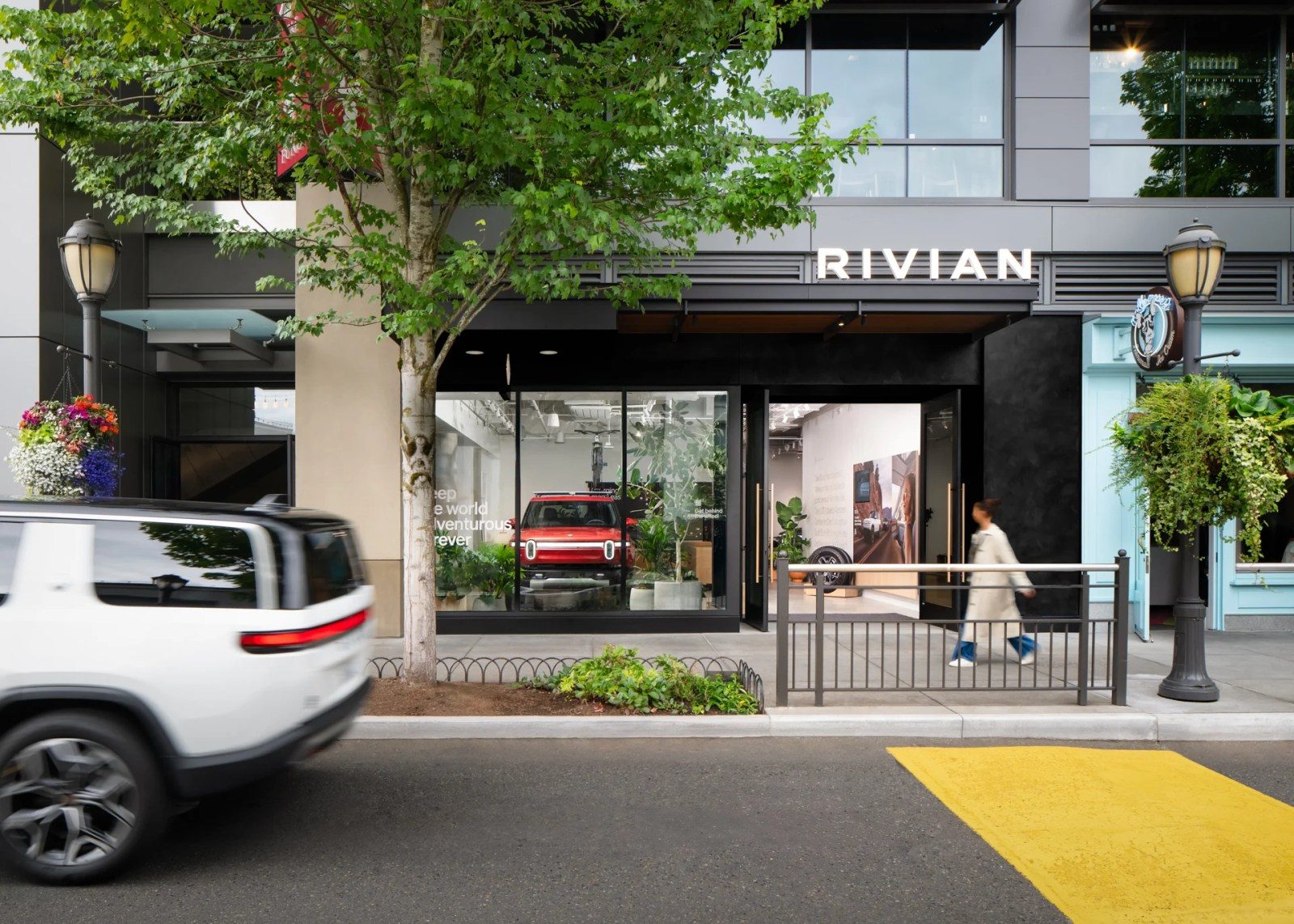

Rivian has secured a motor vehicle dealer license in Washington state, it said on Friday. The license lets it sell cars directly to consumers from its own locations in the state, after bills stalled in 2021, 2024 and 2025 and Rivian threatened a ballot initiative.
Rivian employees gathered in Seattle on September 15 “to celebrate a major milestone: officially securing our motor vehicle dealer license in Washington state,” the company said in a post on its website on Friday.
The post does not say when the license was issued, or when in-state sales, test drives and deliveries will begin.
“Securing this license is a testament to the grit and relentless commitment of our team,” said Gary Gaines, Rivian’s Vice President of Sales.
“Across every department, people poured years of energy into advocating for our direct-to-consumer model in Washington and seeing that effort cross the finish line is a massive moment for all of us,” he said.
Until a new law took effect in June, Tesla was the only brand allowed to sell direct in Washington.
Washington customers could buy Rivians before, but had to do so “online or traveling out of state,” Rivian’s state policy lead, Beau Whiteman, wrote on LinkedIn in March.
Rivian, Lucid and Scout Motors are fighting similar dealer laws in other states, as EV reported in May.
‘Stronger, Direct Relationships’
Rivian will now “expand its local footprint, streamline the purchasing experience for Pacific Northwest residents, and continue building deep roots throughout Washington,” the company said.
“This victory reflects what’s possible when community advocacy and internal perseverance align,” said Abigail Ramsden of Rivian’s state policy team.
“Beyond the legislative work, this milestone allows us to build stronger, direct relationships with our Washington owners and accelerate clean transportation adoption across the region,” she said.
Rivian has leased the 32,034-square-foot former Evergreen Ford dealership in Issaquah, east of Seattle, for a showroom and service center with 13 service bays and 21 chargers, landlord Rowley Properties and the City of Issaquah said in a joint announcement this month.
The lease starts on January 1, and the site is expected to open to customers in early spring 2027 and create 35 jobs, the announcement said.
“This facility will serve as a one-stop hub to deliver, service, and showcase our vehicles,” said Tommy Carrillo, Rivian’s Senior Director of Real Estate.
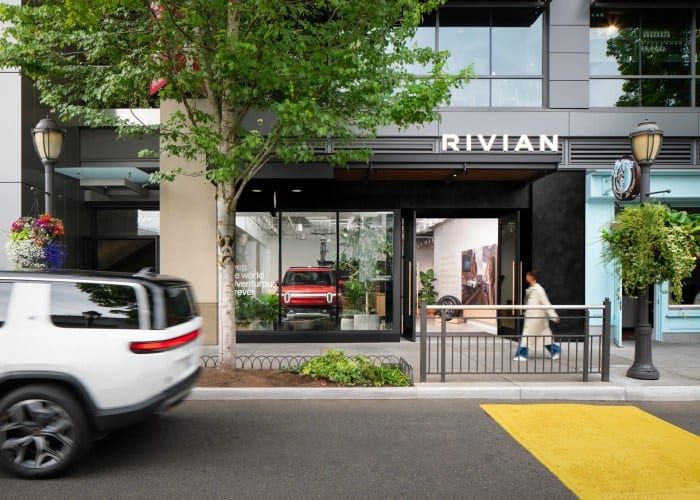
Rivian already has a showroom at Seattle’s University Village and service centers in Bellevue, Bothell, Fife and Seattle, according to its website.
Tesla’s Exception
Washington’s franchise law generally bars carmakers from owning dealerships that sell their own vehicles.
A 2014 law carved out any manufacturer that held a state dealer license on January 1, 2014, according to the session law. It did not name Tesla, but Tesla was the only carmaker it covered.
Rivian could show cars at its Seattle showroom, but staff could not discuss pricing or take orders, InsideEVs reported in 2024.
“We have this horrific state-by-state level of rules that are as close as you can get to corruption,” Chief Executive Officer RJ Scaringe told reporters at the time, speaking about US dealer laws generally.
“I think you essentially have, like, lots of dealers have paid for laws that make it really hard for us to interact directly with the consumer,” he said.
Bills to extend direct sales to other electric-vehicle makers died in 2021, 2024 and 2025, according to the Legislature’s bill records.
“If I have the votes I bring it up. If I don’t have the votes, I don’t bring it up,” the chair of the House committee handling the 2025 bill, Rep. Amy Walen, said at the time, the Washington State Standard reported.
Ballot Threat
Rivian changed tactics after the 2025 session.
It backed a committee, the Washington Coalition for Consumer Choice and Innovation, which registered on December 29, 2025, according to its state filing, to put a direct-sales initiative on the November 2026 ballot, as EV reported in January.
Rivian gave the committee $4.5 million in cash and about $336,200 in in-kind support, for a total of about $4.8 million, and recorded a further $20 million pledge, according to Washington Public Disclosure Commission data.
Rivian, Lucid and the Washington State Auto Dealers Association then negotiated a narrower bill during the 2026 legislative session, the Washington State Standard reported.
“We made no secrets of our desire to solve this like adults, and ultimately, parties came together, and we made it happen,” Whiteman told The Seattle Times in April.
It was the first time Rivian had used a ballot measure in its direct-sales push, and it could do so again in Ohio, Nebraska or Arkansas, the paper reported, citing Whiteman.
The committee refunded $4,005,942.80 to Rivian on March 30, PDC records show. No initiative number was ever assigned.
Narrow Carve-Out
Senate Bill 6354 passed the Senate 47-2 and the House 84-9 in March, and Governor Bob Ferguson signed it on March 24, as EV reported. It took effect on June 11.
The law allows a manufacturer to own dealerships only if it is incorporated in the US, has never had a franchise agreement with a dealer, operated at least one service facility in Washington as of January 1, 2026, and exclusively produces battery-electric vehicles, at least 300 of which were registered in the state before that date, according to the amended statute.
The new conditions replaced the 2014 license test. The law does not name any company.
Lawmakers wrote into the statute’s legislative findings that any such authorization should “be applied narrowly to prevent erosion of the motor vehicle dealer franchise system and the benefits it provides to communities around the state.”
A qualifying manufacturer must file a sworn affidavit that it meets the conditions, and the state must revoke its dealer license within 30 days if it stops meeting them.
Ineligible manufacturers face a $10,000 penalty for each retail sale or lease.
“The legislation honors the role of franchise dealerships while expanding access to electric vehicles for Washingtonians,” Ramsden told a Senate committee in February, the Washington State Standard reported.
The dealers’ association backed the bill as the “result of joint good faith deliberations,” said its Executive Vice President, Vicki Giles Fabré, according to the Washington State Standard.
Honda, Ford, General Motors and national automaker groups opposed it.
The Alliance for Automotive Innovation said all automakers should operate under the same rules, as EV reported in March.
The law also raises the title fee on dealer sales and leases to $40 from $15 from October 1 through 2036, with part of the increase funding electric-vehicle rebates for low-income buyers.
There were 9,800 Rivians registered at Washington addresses, compared with 122,573 Teslas and 915 Lucids, according to the state Department of Licensing’s electric-vehicle data, last updated on September 15.