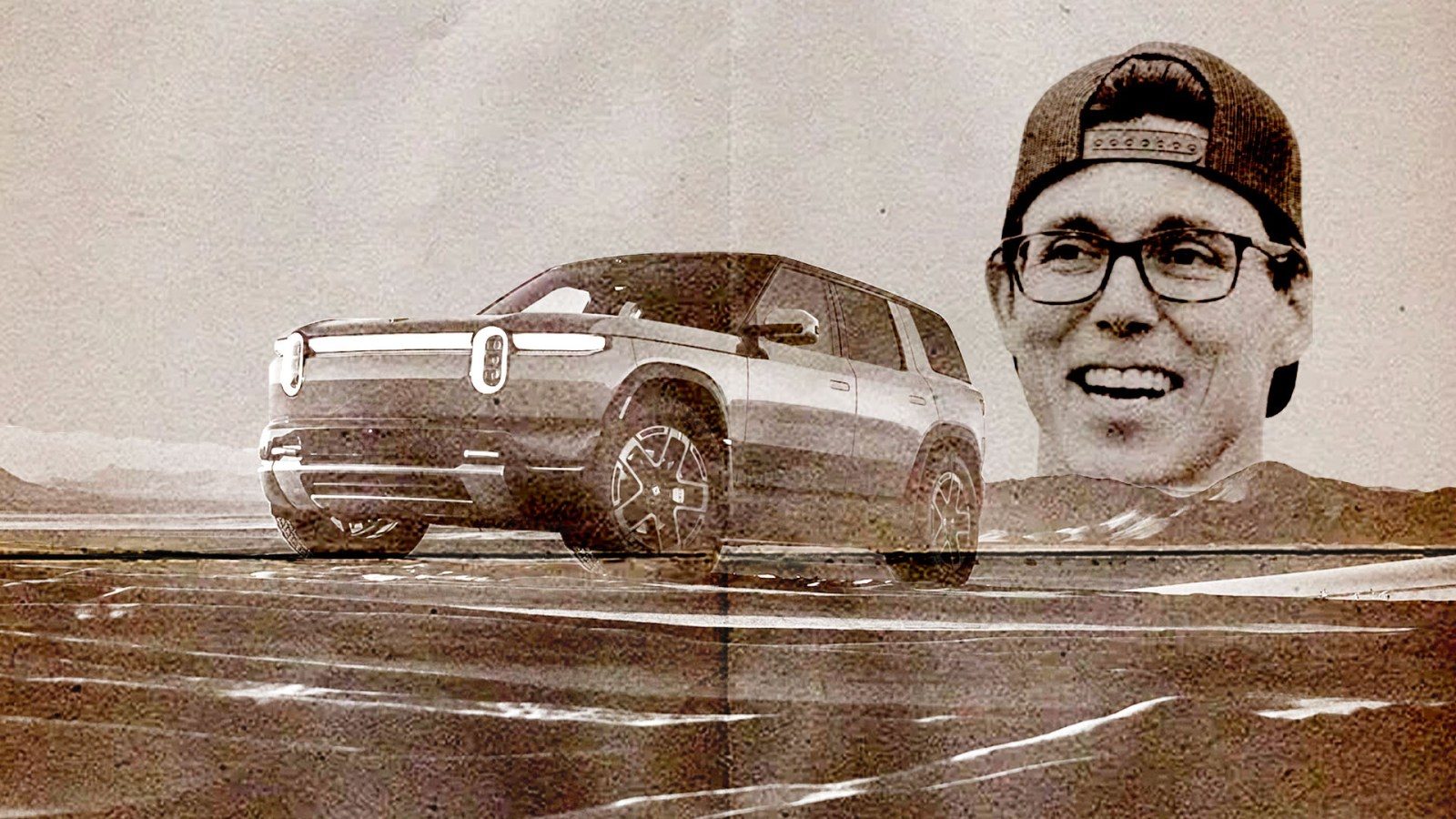

Rivian founder and Chief Executive Officer RJ Scaringe said he hopes the EV maker will one day be compared not to Tesla but to companies such as Nike or Apple.
RJ Scaringe earned his PhD from MIT, where his research focused on the efficiency of internal combustion engines.
Shortly after graduating in 2009, he founded a new car brand named ‘Mainstream Motors.’
The company, which was later renamed Rivian, operated largely in stealth for nearly a decade before unveiling its first two production vehicles at the 2018 Los Angeles Auto Show — the R1S SUV and the R1T pick-up truck.
Patagonia
During the 2018 Los Angeles Auto Show, Scaringe told The Verge that “every single one of [our products] has to have this Patagonia-like feel of enabling adventure.”
In a separate interview with Digital Trends at the same event, the CEO described the EV landscape he encountered when positioning the company — one tilted toward presentation over function.
“If you draw an analogy to clothing, more Armani than Patagonia,” he said.
Rivian, however, chose the functional side: vehicles that could get dirty and take families places.
It was the beginning of a comparison that became a lasting reference point for the EV maker and the outdoor gear brand.
Rose Marcario, former chief executive of Patagonia, served on Rivian’s board from January 2021, where she chaired the Planet & Policy Committee.
Marcario resigned effective January 1 to focus on other commitments, the company said in a SEC filing late last year.
In 2024, Rivian partnered directly with Patagonia and Sol Systems on a renewable energy and STEM education project in North Carolina.
Apple and Nike
Speaking with Fortune‘s Executive Editorial Director Diane Brady at the Aspen Ideas Festival over the weekend, Rivian’s founder said he “hopes the brand means more than the products” and that the “product inspires people to do the things they love,” comparing it to Nike and Apple.
It didn’t mark the first time that Scaringe cited the Steve Jobs-founded company.
In a Top Gear R2 drive published earlier this month, the CEO spoke of “brand tonality” and said he admires Apple for how it built an entire ecosystem around its products.
Scaringe has referred to the iPhone maker as the clearest model for the kind of brand Rivian aspires to build.
Apple launched a secretive EV initiative — known internally as Project Titan — in 2014, with the ambition of developing an Apple-branded car featuring advanced autonomous driving technology.
After a decade of shifting priorities and repeated changes in strategy, however, the company scrapped the project in 2024, reassigning many of its engineers to artificial intelligence initiatives.
Rivian has extended its own ecosystem beyond vehicles, producing branded tents, flashlights and portable kitchens — accessories that embed the adventure positioning into how owners use the products, not just how they drive them.
Athlete partnerships have reinforced the active-lifestyle positioning.
Rivian sponsors Olympic gold medallist Alpine skier Mikaela Shiffrin, has partnered with the Honnold Foundation established by rock climber Alex Honnold, and gifted a vehicle to Olympic hockey medallist Kelly Pannek after her car was totalled.
Rivian vs Tesla
Scaringe’s latest comments to Fortune sharpened a distinction from Tesla that the CEO has been drawing with increasing directness.
According to the maganize, Scaringe said he does not think much about “very vocal” Elon Musk, adding, “we probably couldn’t be more different in terms of the way we show up to the world.”
On the Access podcast in January, Scaringe was more explicit.
“The Tesla brand and the Rivian brand are so different, and manifest so differently across every aspect,” he said, “whether it’s our retail locations, the events we run, the way our products look, design choices we make.”
While positioning Rivian as philosophically distinct from Tesla, Scaringe has simultaneously acknowledged the two companies as the only automakers that have built fully vertically integrated software and electronics architectures from scratch.
Producing SUVs and Trucks
In an interview with Stratechery‘s Ben Thompson late last year, the founder of the Irvine-based company traced the brand’s origins back to a strategic pivot that followed the scrapping of Rivian‘s original hybrid sports-car prototype.
Scaringe told Thompson the company went through a prolonged period of internal reflection to define why Rivian should exist in a future where electrification alone would no longer differentiate it.
“We recognized that in order for us to earn the right to exist, we needed to do something that was unique and could stand on its own,” he stated.
Those conclusions shaped concrete product requirements.
Scaringe explained that prioritizing adventure led directly to storage capacity and all-terrain capability, which dictated the form factors — a pickup truck and a large SUV — that became Rivian’s flagship R1 lineup.
Design Language
Adventure has been expressed not just through vehicle capability but through deliberate aesthetic choices.
In a January conversation on the Access podcast the CEO described Rivian’s design language as intentionally divergent from the broader EV market.
“We have a design language that’s more calming or more approachable,” Scaringe said. “I think culturally and from a societal point of view, a lot of people are drawn to that. Something that feels timeless, it’s not too aggressive, it’s not trying too hard.”