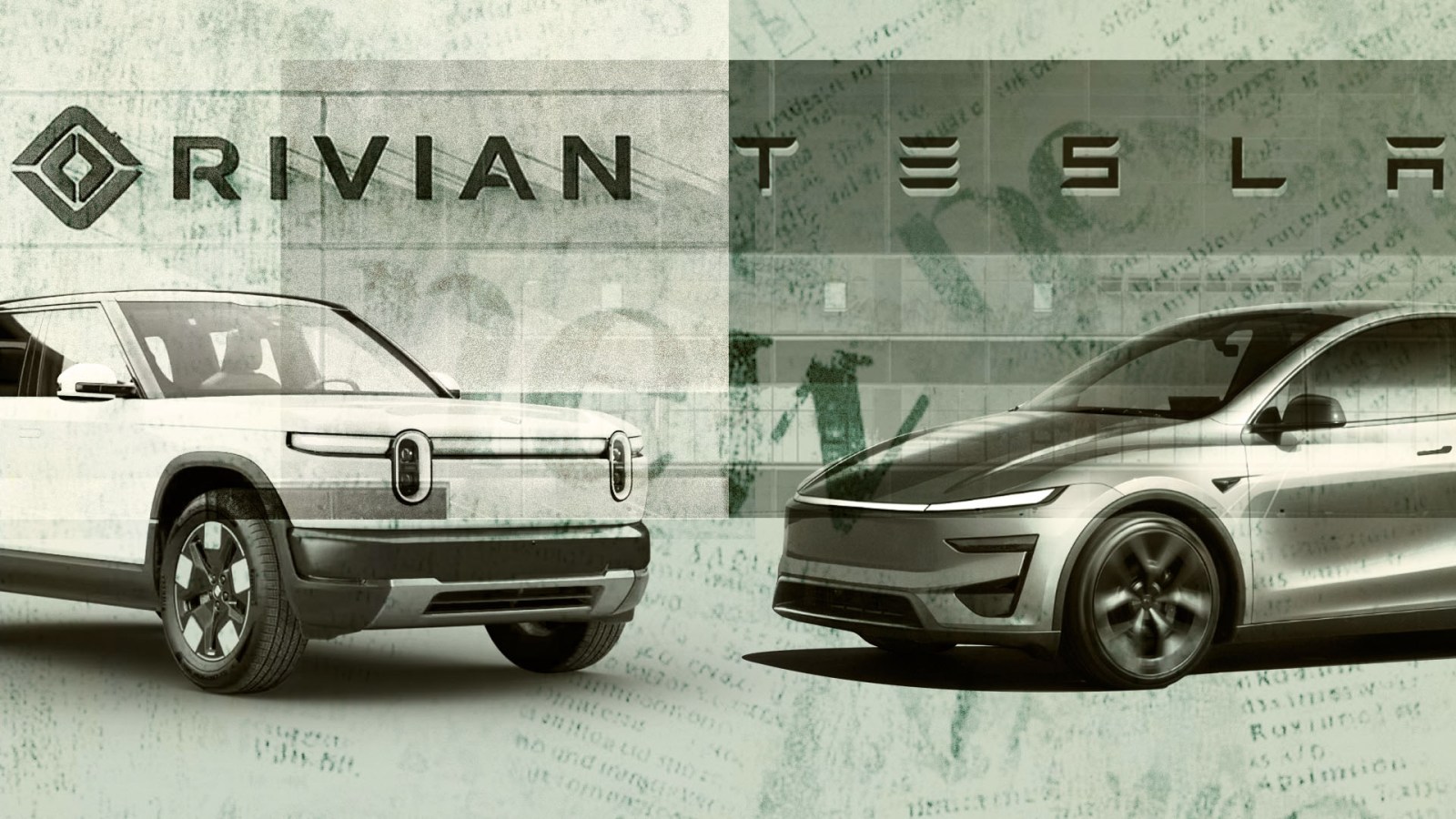

Needham analyst Chris Pierce called Rivian‘s R2 the “first legitimate competition” to Tesla‘s Model Y, warning of demand headwinds for the company’s best-selling vehicle as margins fell sharply below consensus in the second quarter.
In a new research note published on Thursday, the analyst wrote that “auto demand has perked up against temporarily elevated gas prices.”
He noted, however, that “margins missed consensus estimates despite the unit beat,” with the firm seeing “further demand headwinds ahead as the Model Y faces its first legitimate competition from Rivian‘s R2 vehicle.”
Other midsize electric SUVs — from Hyundai, Ford and Chevrolet — have competed with the Model Y on price, but failed to secure a portion of the demand.
Q2 Sales
According to data published by Cox Automotive, Tesla sold 84,863 Model Ys in the United States during the second quarter, accounting for 68.0% of all 124,800 vehicles sold during the quarter.
Rivian disclosed 12,194 vehicle deliveries.
Cox Automotive‘s data estimated that Rivian sold 11,405 vehicles in the US between April and June — a 789-unit gap that appeared to point directly at the R2, after customer deliveries began in June.
Two Mid-Size SUVs
The comparison Needham draws between the R2 and the Model Y is grounded in overlapping specifications and pricing.
Tesla‘s Model Y Performance is priced from $57,990, inclusive of a $1,640 destination fee.
Rivian‘s R2 Performance starts at $57,990 before a $1,495 destination charge, placing the two vehicles within a few hundred dollars of each other at the top of their respective lineups.
On efficiency, the R2 Performance matches the Model Y Performance exactly — both are rated at 105 MPGe combined and 32 kWh per 100 miles, according to EPA data.
The R2 achieves 330 miles of EPA-rated range on 21-inch all-season wheels, while the Model Y Performance returns 306 miles.
The 24-mile advantage comes despite the R2 carrying a curb weight of 4,998 pounds versus 4,466 pounds for the Model Y, a gap of more than 530 pounds.
The R2 Performance runs a dual-motor all-wheel-drive powertrain producing 656 horsepower and reaches 60 mph in 3.6 seconds.
DC fast charging peaks at 210 kW, with a 10-to-80% charge time of 29 minutes.
On the lower end of the lineup, price positioning diverges.
Tesla‘s Model Y Standard RWD starts at $39,990 before fees.
The R2 Standard Long Range, starting at $48,490 with a single rear motor producing 350 horsepower and over 345 miles of range, is due in the first half of 2027.
A Rivalry Building on Multiple Fronts
The R2 arrives as Rivian founder RJ Scaringe has publicly positioned his company alongside Tesla — and apart from the rest of the industry.
In May, Scaringe declared that only Rivian and Tesla have broken from the fragmented, supplier-driven software architecture that defines nearly every other vehicle on the road, calling the two companies the only automakers building true software-defined vehicles.
Scaringe has also said Rivian aims to operate the second-largest self-driving fleet after Tesla, and described the company’s point-to-point autonomous driving system as on track to match Tesla’s FSD capabilities.
The founder has simultaneously played down direct Tesla comparisons, citing Apple and Nike as closer brand analogues.
Rivian’s Earnings Ahead
Rivian is scheduled to report its full Q2 2026 results after market close on July 30.
Earlier this month, the company has already offered a preview that beat expectations.
In a preliminary disclosure filed with the SEC on July 6, Rivian said it expects Q2 revenue between $1.55 billion and $1.65 billion, above the $1.44 billion average analyst estimate.
The company reported its preliminary cash, cash equivalents and short-term investments balance at $5.3 billion as of June 30.
According to Rivian, higher vehicle deliveries drove the revenue beat but were partially offset by lower average selling prices, a result of a greater mix of commercial vans in the quarter’s sales.
Revenue also reflected increases from vehicle electrical architecture and software development services, as well as regulatory credit sales.
The company delivered 12,194 vehicles in the second quarter and raised its full-year 2026 delivery guidance to between 65,000 and 70,000 vehicles, up from a prior range of 62,000 to 67,000.
Alongside the preliminary results, Rivian announced an offering of 75 million Class A common shares, with a 30-day underwriter option to purchase up to 11.25 million additional shares.
The company said it expects to use net proceeds for general corporate purposes, including funding equity contributions tied to its amended loan arrangement with the US Department of Energy.
Needham’s Take on Tesla
Needham’s comments were part of a note that contained Pierce’s reaction to Tesla‘s Q2 earnings results published on Wednesday.
The firm, which reiterated a Hold rating on the stock, does not assign a price target to the stock and values Tesla at approximately 30 times its fiscal year 2030 estimated adjusted EBITDA, a level Pierce described as reflecting balanced risk and reward.
Tesla reported Q2 revenue of $28.24 billion, up 26% year over year and above the $26.71 billion consensus estimate.
Deliveries reached a record 480,126 vehicles for the quarter, surpassing analyst expectations of roughly 406,000 units by a wide margin.
Profitability told a different story, however.
Gross margin stood at 16.8%, below the 19.43% analysts had forecast, with automotive gross margin reaching 16.9%, or 16.3% excluding regulatory credits.
Regulatory credits collapsed to $146 million from $439 million a year earlier after changes to federal fuel-economy penalty rules eliminated the main reason rivals purchased Tesla‘s credits.
Needham’s analyst acknowledged that Tesla‘s longer-term autonomy thesis advanced in the quarter, citing rising Full Self-Driving adoption and reiterated production timelines for the Cybercab and Optimus robot.
Pierce additionally wrote that autonomous driving appeared to be gaining consumer mindshare at accelerating rates.
However, the firm sees increased capital spending to fund those future products as carrying uncertain payoffs and adding further strain on the legacy auto and energy business lines.